A study in Communications Earth & Environment has found that water scarcity could limit the United States’ effort to expand domestic lithium mining by mid-century. The research examined whether the nation’s sole operating lithium mine and 22 proposed mines likely to be active in 2050 would have enough water under future climate and development scenarios.
The finding lands at a tense moment for clean energy planning. Lithium is a key ingredient in batteries for electric vehicles and grid storage and U.S. demand is expected to grow sharply. Yet many of the richest domestic deposits sit in dry Western landscapes where farms, cities, industries, ecosystems and other mines already depend on limited water supplies.
Jennifer Dunn, a professor of chemical and biological engineering at Northwestern University, summed up the concern directly: “Future water availability under climate change may constrain whether new lithium mines will have sufficient water to operate.”
The study does point to a difficult planning problem. Mining more lithium could help support cleaner transportation and energy storage. At the same time, the water needed to extract and process that lithium may become harder to secure as climate change reshapes water availability across the country.
Why lithium mining needs so much water
Lithium mining can demand large volumes of water because the metal rarely comes ready for use. It has to be separated from deposits, concentrated and refined into battery-grade products. The amount of water required depends on the type of deposit and the method used to recover it.
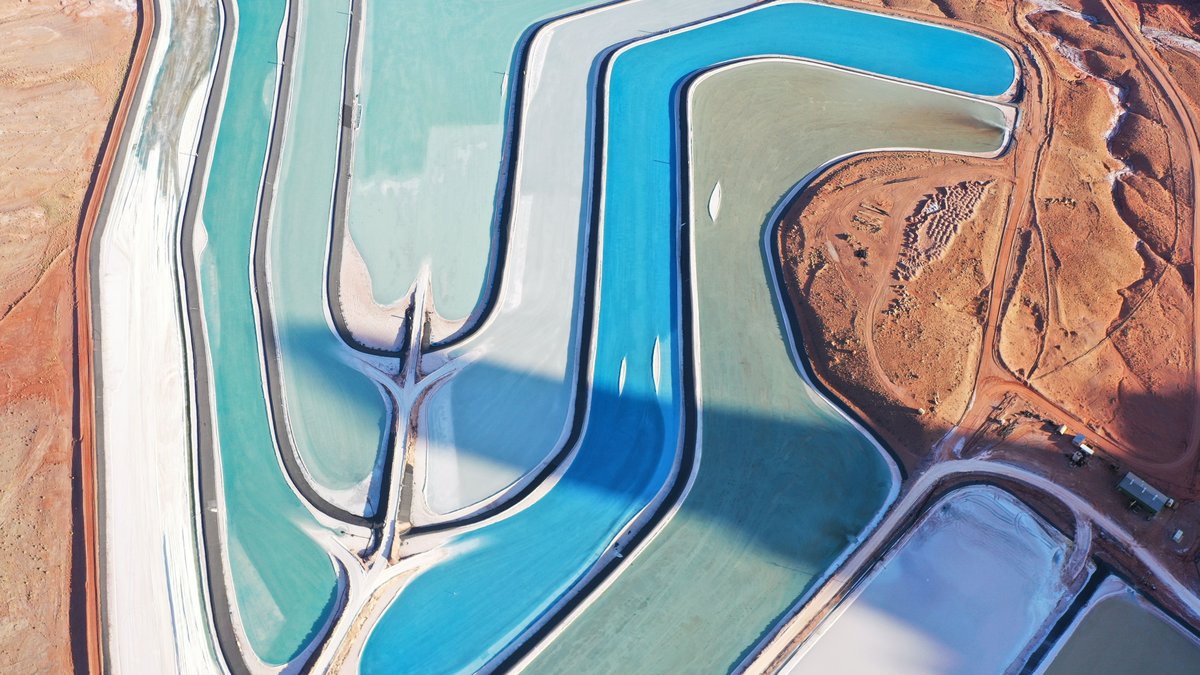
Some lithium comes from brines, which are salty underground fluids. In many brine operations, water-rich fluids are pumped to the surface and processed through evaporation or other separation steps. These systems can place pressure on local hydrology, especially in dry basins where water returns slowly.
Other lithium is found in hard rocks such as pegmatites. Mining and processing those materials can also require freshwater for crushing, chemical processing, dust control and waste handling. The study notes that each proposed mine has its own water profile because deposit type, ore grade, technology and final product all affect water demand.
That variability makes national planning harder. A single mine can look manageable on paper, yet clusters of mines can create a much larger regional burden. The research team therefore treated water availability as a local and regional issue rather than a single national total.
Battery minerals create a special challenge because they connect climate policy with land and water policy. Lithium supports low-carbon technologies, but extraction still depends on physical resources. The study’s central question is whether those resources will be available where the deposits are located.
Where the pressure is greatest
Many of the proposed U.S. lithium mines are concentrated in the West, especially in states such as Nevada, Arizona and California. These regions also face persistent water stress. Drought, groundwater depletion, population growth, irrigation demand and industrial development can all tighten the margin.
The study highlights the Salton Sea region in Southern California as one of the starkest examples. The area contains a major lithium resource and has drawn intense interest because of its geothermal brines. Yet the region is linked to the wider Colorado River system, where shrinking flows and competing water claims have become a defining challenge.
Water stress also builds through overlap. A lithium mine may share a watershed with agriculture, households, manufacturing, power production and other mineral projects. If several new mines open within the same drainage area, they can compete with one another as well as with existing users.
The researchers focused on subbasins, which are smaller drainage regions inside larger watersheds. That scale matters because water shortages can be severe in one basin while conditions look better across a larger region. For communities, ecosystems and mine operators, the local water balance is what determines pressure on the ground.
Some regions outside the driest Western basins looked more favorable. The study found exceptions, including sites in North Carolina and Arkansas, where future water availability could be more supportive of lithium production. Even there, water is only one part of the larger permitting and environmental picture.
What the 2050 models found
The research team analyzed the single existing U.S. lithium mine and 22 proposed mines that are in more advanced stages of development. They then assessed whether water would likely be sufficient around mid-century, using four socioeconomic-climate scenarios and five climate models.
This approach allowed the researchers to test different futures. Climate models estimate changes in temperature and precipitation. Socioeconomic scenarios add assumptions about population, development and water use by other sectors. Together, they show how mining demand could collide with broader changes in water supply and demand.
The results were sobering. Across many subbasins, available water would likely fall short of what new mines need, or even what other sectors need without adding new mine demand. The paper’s abstract states, “Water scarcity could hinder the ability of the United States to produce enough lithium to meet domestic demand.”
Climate change does not affect every region in the same way. Some scenarios may bring more precipitation to certain areas. Even so, more rainfall does not automatically translate into usable water for mines. Timing, runoff, groundwater recharge, legal water rights, storage and existing commitments all influence whether water can actually be used.
The study also keeps its conclusions grounded in uncertainty. It is a modeling analysis, which means it depends on assumptions about mine development, water demand, climate conditions and future socioeconomic patterns. The result is best read as a warning about likely constraints rather than a prediction of exactly which mines will operate or fail.
Why imports may remain part of the picture
The United States currently relies heavily on foreign sources for lithium. The study suggests that expanding domestic mining could reduce that dependence, but water constraints may limit how far domestic production can go.
The researchers estimated that if the 22 advanced proposed mines and the existing mine continued operating into 2050, they could produce roughly 0.14 million to 0.25 million metric tons of lithium content in products per year. Other research has estimated much higher annual domestic demand if the U.S. seeks to cover its own lithium needs.
That gap matters for electric vehicles, battery storage and energy security. Even a large buildout of domestic mines may leave the country dependent on imports from major lithium-producing regions. Those supply chains include countries such as Chile and Argentina, which are already important sources for U.S. lithium.
Domestic lithium production also depends on more than geology. A deposit has to be technically recoverable, financially viable, permitted, built, staffed and supplied with water and energy. Infrastructure, community acceptance and market conditions can all influence whether a project reaches production.
The study’s message is therefore practical. Mine planning has to account for water from the start. A promising deposit in a water-stressed basin may carry risks that are invisible in a simple mineral-resource estimate.
The trade-offs beyond water
Water availability is only one concern surrounding new lithium development. The study and public comments from the researchers point to broader social and environmental issues that can shape whether projects move forward.
Dunn noted one especially sensitive issue: “Many of the lithium deposits in the United States reside near federally-recognized Indigenous and Tribal reservations.” That proximity raises questions about consultation, land use, cultural resources and Indigenous rights. These concerns can be central to permitting and public trust.
Indigenous communities have often faced the costs of resource extraction without equal control over decisions. New battery-mineral projects can repeat those tensions if developers and agencies move faster than communities can evaluate impacts. Meaningful engagement becomes essential when mining proposals overlap with places of cultural, ecological, or historical importance.
Ecosystems also face pressure. Mines can disturb habitat, fragment landscapes, produce waste and create risks of water contamination. In arid regions, even small changes in water flow can matter for springs, wetlands, desert wildlife and plant communities adapted to narrow water limits.
The research did not test every possible technology or policy response. Improvements in water-use efficiency, recycling, direct lithium extraction and water transfers could change the outlook for some sites. Still, those approaches come with their own costs, uncertainties and local impacts.
For policymakers, the study offers a clear caution. A clean-energy transition depends on minerals, but mineral development depends on water, land, communities and ecosystems. Planning for lithium supply now means asking where mining can happen without creating new stresses in places already close to their limits.