Oceans

RSS Feed

Ocean science news, explainers, and statistics covering marine environments, currents, climate, coasts, seafloor research, and the changing global ocean.

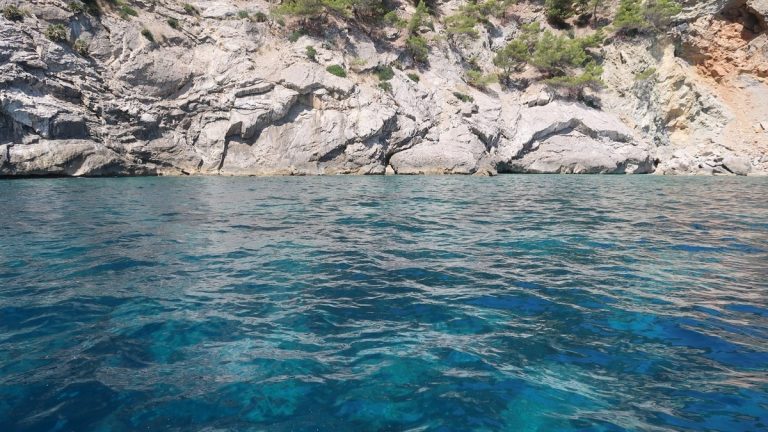
Tranquil coastal shoreline at low tide with calm blue ocean and distant horizon

Tide Table vs. Tide Chart: What Is the Difference?

A tide table lists predicted times and heights of high and low water, while a tide chart usually plots the predicted water level as a curve through time. Both may be generated from the same harmonic prediction. The table favors exact values; the chart makes the day’s changing pattern easier to see. Neither product should…

More

More in Oceans

Close-up shot of swirling ocean waves and white foam, showing natural movement

What Is the Ekman Spiral?

The Ekman spiral is a theoretical pattern in which wind-driven ocean current becomes slower and turns farther away from the wind direction with increasing depth. Earth’s rotation produces the turn through the Coriolis effect, while friction passes wind energy from the surface into the water below. Viewed as arrows stacked through the upper ocean, the…

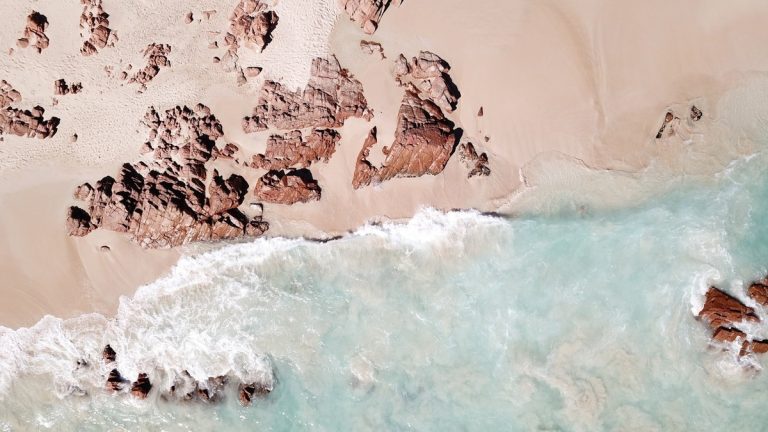
Coastal_water_and_breaking_waves_from_above

Upwelling vs. Downwelling: How Wind Moves Ocean Water

Upwelling brings deeper water toward the ocean surface. Downwelling pushes surface water downward. Along many coasts, winds and Earth’s rotation move the upper ocean away from or toward shore, forcing vertical motion to conserve mass. The two processes redistribute heat, oxygen, nutrients and marine organisms. Coastal upwelling often produces cold, nutrient-rich surface water that supports…

Waves_approaching_a_beach_at_an_angle

Longshore Current vs. Longshore Drift

A longshore current is water moving roughly parallel to the beach within the surf zone. Longshore drift is the resulting transport of sand or other sediment along the coast. Waves approaching at an angle drive both, but the terms describe different things: one is moving water and the other is sediment movement. The process can…