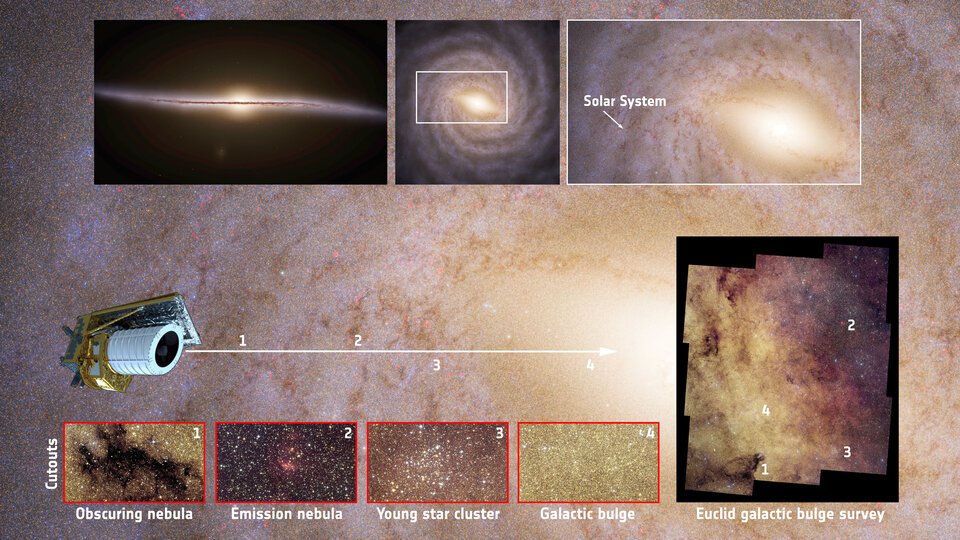
ESA’s Euclid mission has revealed the largest and most detailed visible-light image ever made of the Milky Way’s center, giving astronomers a packed new view of more than 60 million stars. The Euclid mission captured the vast stellar mosaic in about 26 hours, opening a new way to study known and future exoplanets through tiny changes in starlight.
The image looks toward the galaxy’s bright inner region, called the galactic bulge. This is one of the most crowded places in the Milky Way, where stars overlap so densely that many telescopes struggle to tell them apart. Euclid was designed to map distant galaxies and probe the dark Universe, yet its wide and sharp vision also makes it unusually powerful for peering into our own galaxy’s heart.
For astronomers who study planets beyond the Solar System, the timing matters. Euclid’s snapshot can serve as a reference view of stars before future planet-hunting alignments occur. That baseline may help researchers confirm exoplanets and measure their masses when later observations reveal small bends in starlight.
A one-day look at the galactic bulge
On March 23, 2025, Euclid turned toward the inner Milky Way for a special observing request. The telescope spent about one day collecting light from the galactic bulge, a brilliant and crowded region that lies toward the center of our galaxy.
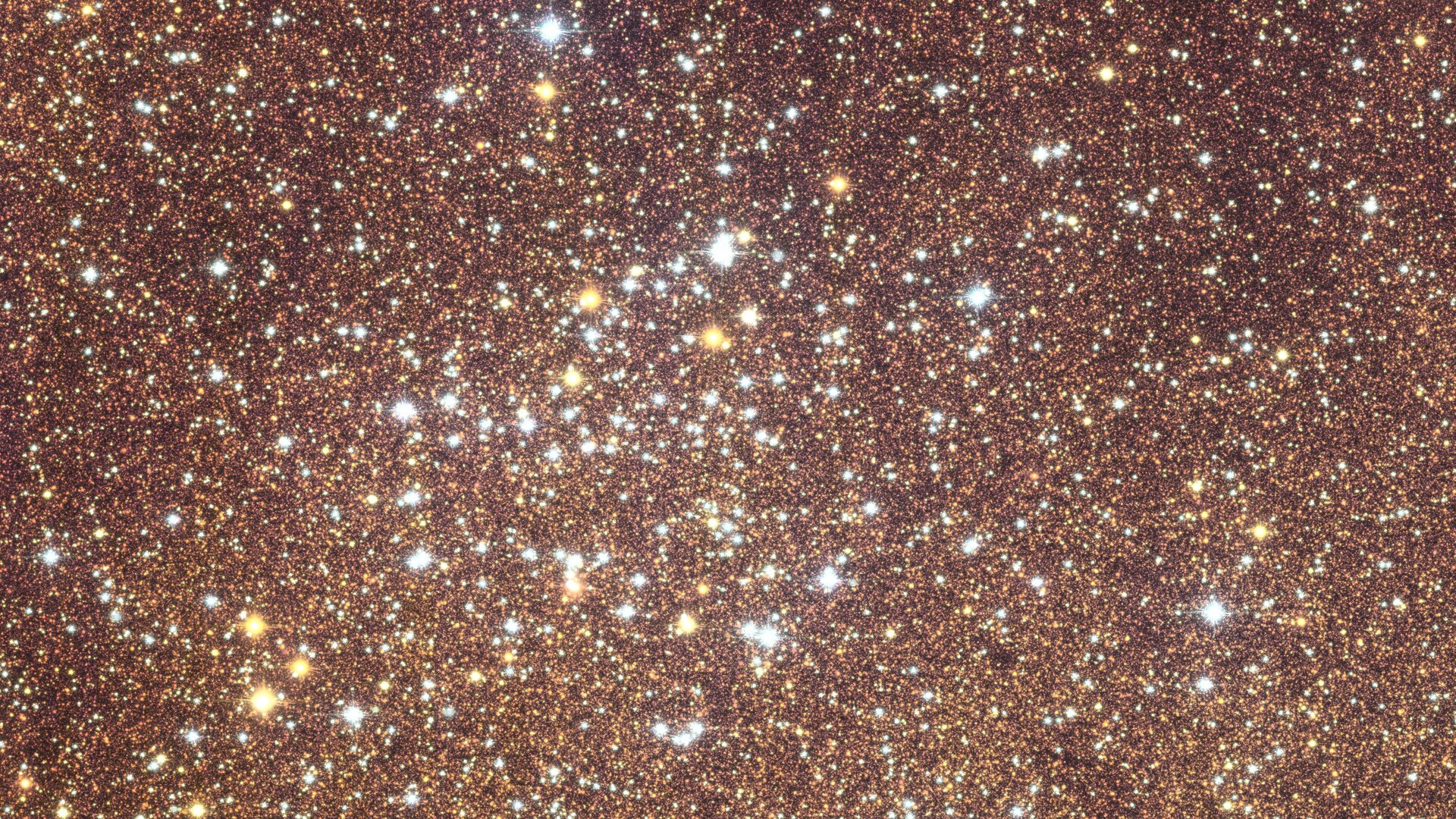
The observing run used Euclid’s visible-light camera, known as VIS. It created a mosaic from nine separate pointings. Each pointing covered a patch of sky larger than the full Moon, which let Euclid gather an enormous field in a short time.

This brief campaign took advantage of one of Euclid’s strongest abilities. It can capture a wide section of sky while keeping individual stars sharp. That combination is valuable in the galactic bulge, where an image can contain millions of overlapping points of light.
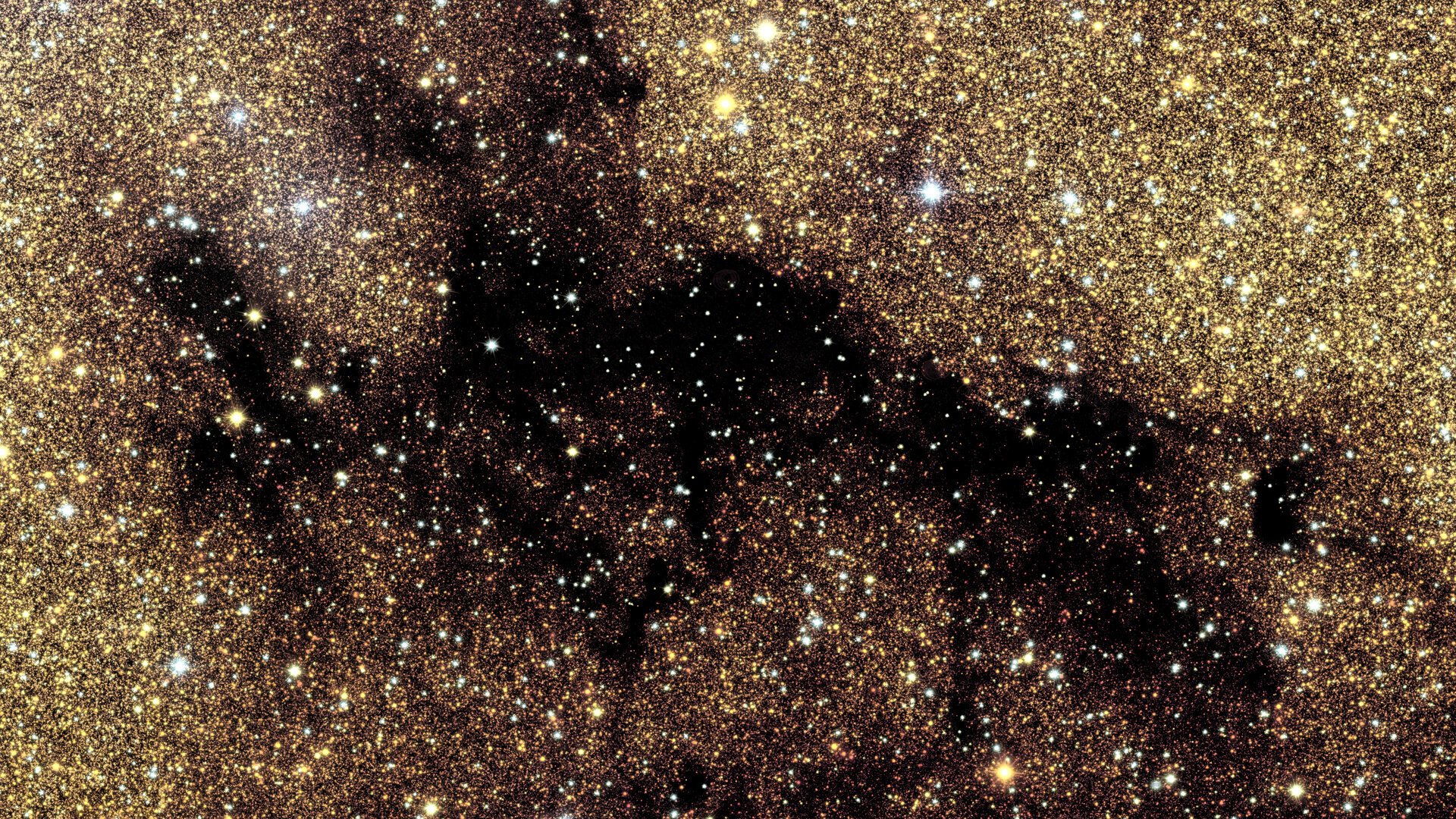
The result is a rare view of the Milky Way’s crowded center in visible light. It includes stars, star clusters, dark molecular clouds and glowing nebulae. For a telescope built to study the cosmic web far beyond our galaxy, this one-day turn toward home produced a remarkably useful record.
The largest visible-light view of the Milky Way’s center
Euclid’s new galactic bulge image stands out because of its scale. ESA describes it as the largest and most detailed visible-light photo ever made of the Milky Way’s center. That claim depends on two traits working together, sharpness and field of view.
In visible light, Euclid’s sharpness and sensitivity are similar to the wide field camera on the NASA/ESA Hubble Space Telescope. Its field of view is far larger. According to ESA, each Euclid pointing spans an area 270 times larger than Hubble’s field of view.
That speed changes what can be observed. ESA notes that the Keck Observatory would need around 2,000 hours to observe the same mosaic. Euclid gathered it in about 26 hours from space, where Earth’s atmosphere cannot blur the view.
The image also overlaps the full region that NASA’s upcoming Nancy Grace Roman Space Telescope will monitor for planet hunting. That overlap is central to the science value of the mosaic. Euclid has captured the field before many future microlensing events have occurred.
More than 60 million stars in one mosaic
More than 60 million stars fill the Euclid mosaic. The sheer number is important because microlensing planet searches depend on crowded fields. The more stars in view, the greater the chance that one star will pass nearly in front of another from our perspective.
ESA reports that the image includes 51 known planetary systems. It will also help researchers study planets that may be discovered later in the same region. Future detections can be compared with Euclid’s earlier view, when the stars were still separated in the telescope’s image.

This matters because a single microlensing event can be fleeting. A telescope may need to follow a star for more than 20 days to capture the changing brightness caused by an alignment. Euclid observed for one day, so the image itself is meant as a precise reference rather than a search for new events during that short window.
With time, stars move relative to one another across the sky. Euclid’s data can help astronomers trace that motion. By comparing positions before and after a microlensing event, researchers can better identify the lensing star and estimate the mass of any planet involved.
Star clusters, dust clouds and glowing nebulae
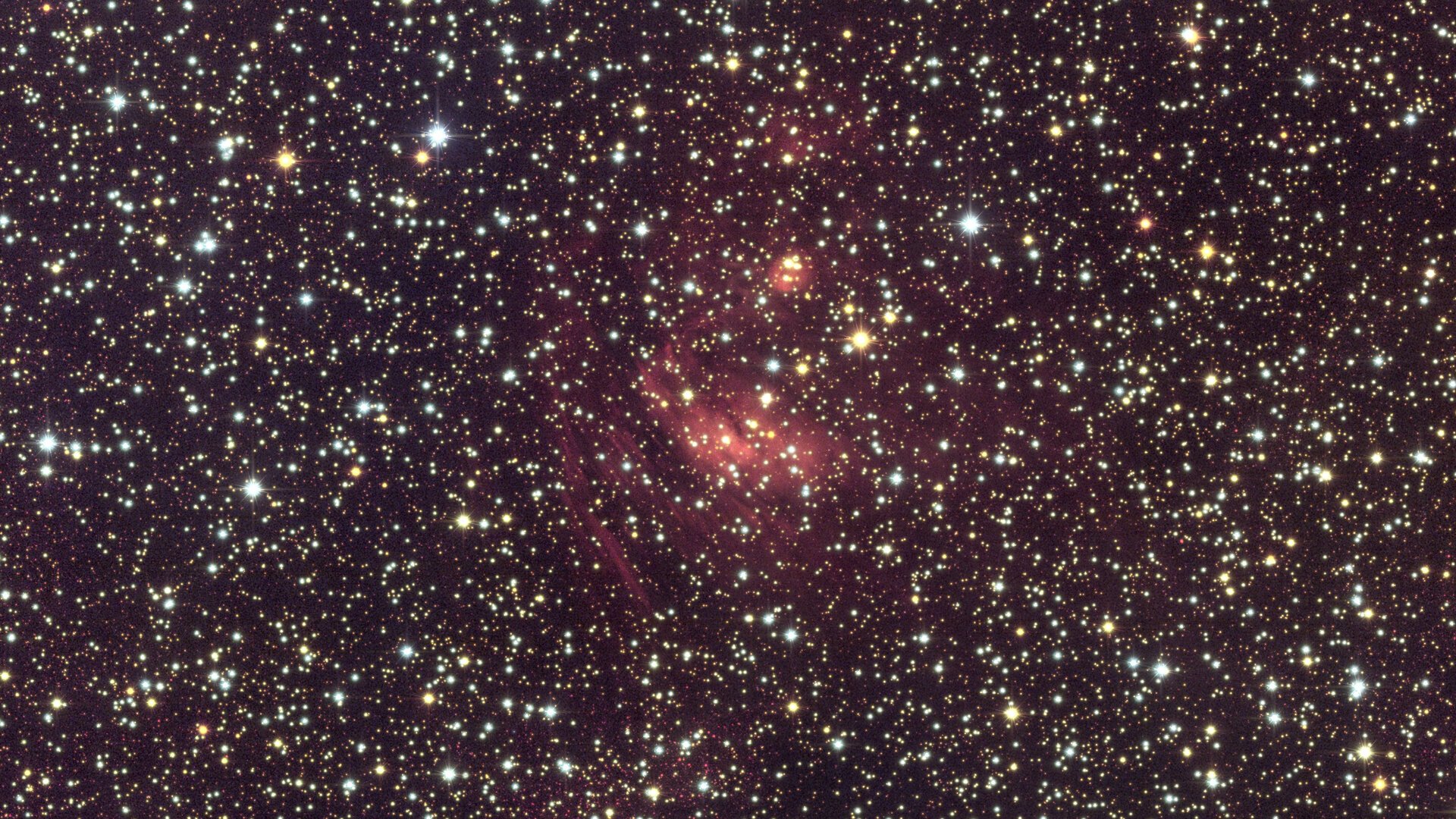
The galactic bulge mosaic is also a rich portrait of the Milky Way’s inner structure. Alongside the star-filled background, Euclid recorded star clusters, dark clouds of gas and dust and bright nebulae. These features show how crowded and complex the inner galaxy is.
Dark molecular clouds appear where dust blocks visible starlight. These clouds can hide stars behind them, creating dramatic gaps and streaks across the dense star field. In other places, glowing gas marks regions shaped by hot young stars.
Star clusters add another layer of structure. They group many stars into compact regions, which can help astronomers study stellar populations in the inner galaxy. The mosaic gives scientists a broad context for these objects rather than isolated snapshots.
Because Euclid observed from space, it could pick out faint details that ground-based telescopes may miss. The public color view combines Euclid’s visible-light data with color information from the Canada-France-Hawai’i Telescope. Euclid’s original VIS image was taken in black and white.
How microlensing can reveal hidden planets
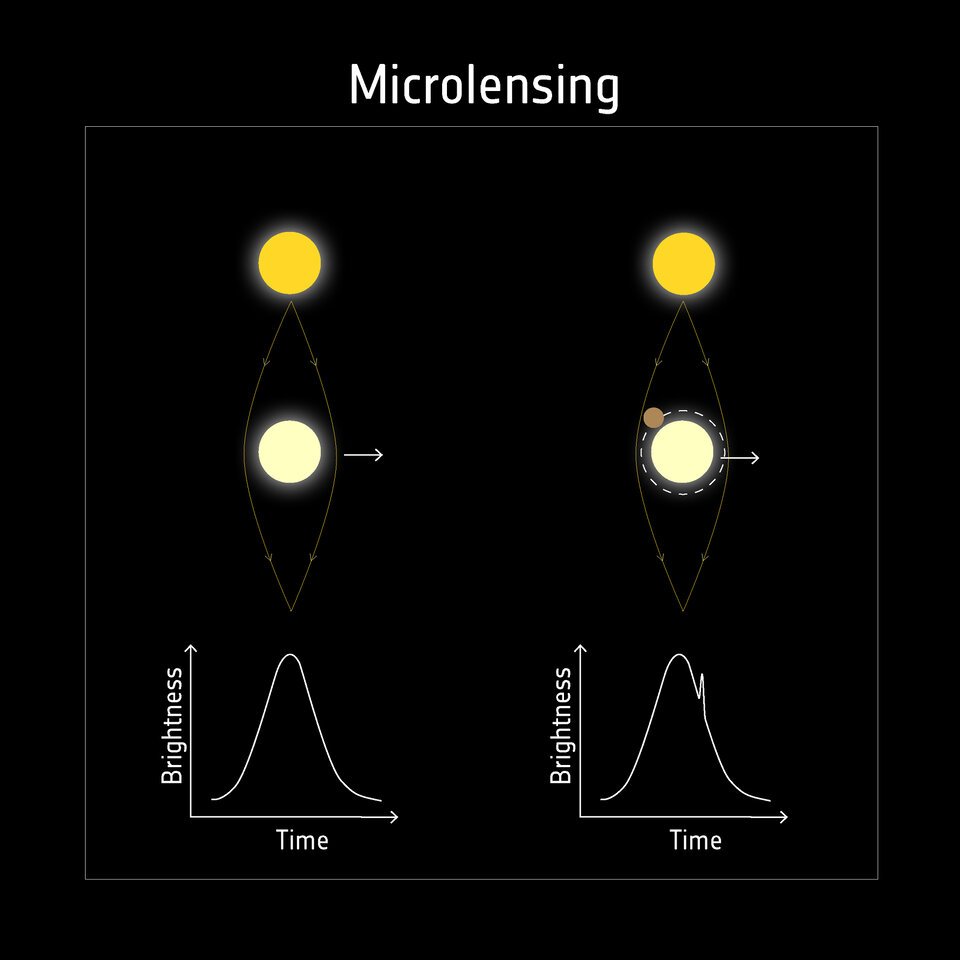
Gravitational microlensing happens when one star lines up closely with a more distant background star. The nearer star’s gravity bends and brightens the light from the background star. If the nearer star has a planet, the planet can add a smaller extra distortion to the brightening pattern.
That small signal can reveal a planet that would be difficult to detect by other methods. Microlensing is especially useful for finding cold worlds far from their host stars. It can also reveal planets around faint stars, where other planet-hunting techniques face greater challenges.
“To catch microlensing, you need to observe parts of the sky that are crowded with stars,” said Jean-Philippe Beaulieu of the Institut d’Astrophysique de Paris and the University of Tasmania. He was the original instigator of Euclid’s galactic bulge survey and co-led the exoplanet working group of the Euclid Consortium.
During the past two decades, nearly 300 exoplanets have been discovered using microlensing. ESA says those detections came from ground-based telescopes and all looked toward the center of the Milky Way. Euclid adds a space-based reference image with wide coverage and high resolution.
“This technique is unbiased, we discover whatever is out there,” said Natalia Rektsini of the Institut d’Astrophysique de Paris. She led the release of Euclid’s galactic bulge survey data for the scientific community. She also noted that microlensing is well suited to discovering cold exoplanets.
A time machine for Roman’s planet hunt
Euclid’s image has a special relationship with NASA’s Roman Space Telescope. Roman will monitor the same region as part of its planet-hunting work. Euclid’s earlier view can show what the stars looked like before later alignments blend their light together.
“In 24 hours, Euclid has already captured the stars involved in all the future microlensing events that the Roman space telescope will detect,” Rektsini said. That makes the Euclid mosaic a kind of past reference frame for future discoveries.
During a microlensing event, the source star and the lensing star can appear very close together. Their light may overlap in ways that complicate the measurement. Euclid’s earlier image can help separate the stars by showing their positions before the alignment.
After enough time passes, the stars drift farther apart in the sky. Comparing their earlier and later positions can reveal how fast they moved. That movement helps researchers confirm which star caused the lensing signal and whether a planet was involved.
Why planet masses matter
Planet mass is one of the most important details astronomers can measure. It helps determine whether a world is more like Earth, Neptune, or Jupiter. It also helps researchers compare planets found by different methods across the galaxy.
For some microlensing planets, mass can remain uncertain because the lensing star is hard to identify. Euclid’s sharp image can reduce that uncertainty in selected cases. By separating individual stars, it gives astronomers a better chance to connect a microlensing signal with the physical system that caused it.
ESA highlighted two known cold exoplanets whose host stars appear in Euclid’s data. One is OGLE-2005-BLG-390Lb, an icy planet discovered about 20 years ago by a team led by Beaulieu. Another is OGLE-2013-BLG-341Lb, a rare system with two stars and one planet.
For these systems, Euclid’s data can be combined with earlier observations from observatories such as Keck and Hubble. That combination may help separate blended stars and refine planet masses. The result would give astronomers a clearer census of cold planets in the Milky Way.
Euclid’s dark Universe mission turns toward home
Euclid was launched in July 2023 and began routine science observations on February 14, 2024. Its main mission is to explore the hidden influence of dark matter and dark energy by mapping billions of galaxies. Over six years, it will study galaxy shapes, distances and motions across cosmic time.
This Milky Way campaign shows how a telescope built for the distant Universe can also transform studies close to home. Euclid’s wide, sharp view of the galactic bulge gives researchers a data set for exoplanets, brown dwarfs, binary stars, stellar motions and dust in the Milky Way.
“In just 24 hours, Euclid has delivered unique data on the Milky Way’s centre,” said Valeria Pettorino, Euclid Project Scientist at ESA. She emphasized that the data will serve as a time reference for past and future missions.
The mission is led by ESA with contributions from NASA. The Euclid Consortium includes more than 2,000 scientists from 300 institutes in 15 European countries, the United States, Canada and Japan. NASA provided detectors for Euclid’s Near-Infrared Spectrometer and Photometer.
For one day, the dark Universe detective looked into the Milky Way’s bright and crowded heart. The image it returned is more than a spectacular portrait. It is a scientific baseline for future planet discoveries and a new map of one of the galaxy’s busiest regions.