A study in Science Advances found that Earth’s own upper atmosphere supplied most of the charged particles driving the May 2024 super geomagnetic storm. Using direct satellite measurements from Japan’s Arase mission, researchers reported that oxygen ions from Earth dominated the storm’s ring current at a level never before observed during such an intense event.
The finding changes the way scientists may think about the strongest space weather storms. Solar eruptions triggered the event, but the charged particles that filled a key region near Earth came largely from the planet itself. That matters because the ring current helps determine how deeply a geomagnetic storm disturbs Earth’s magnetic field.
For people on the ground, the storm was unforgettable because auroras appeared far from their usual polar home. For space physicists, it offered something rarer. A satellite was in the right place at the right time, carrying instruments that could separate ion types and measure how the storm was built from inside the magnetosphere.
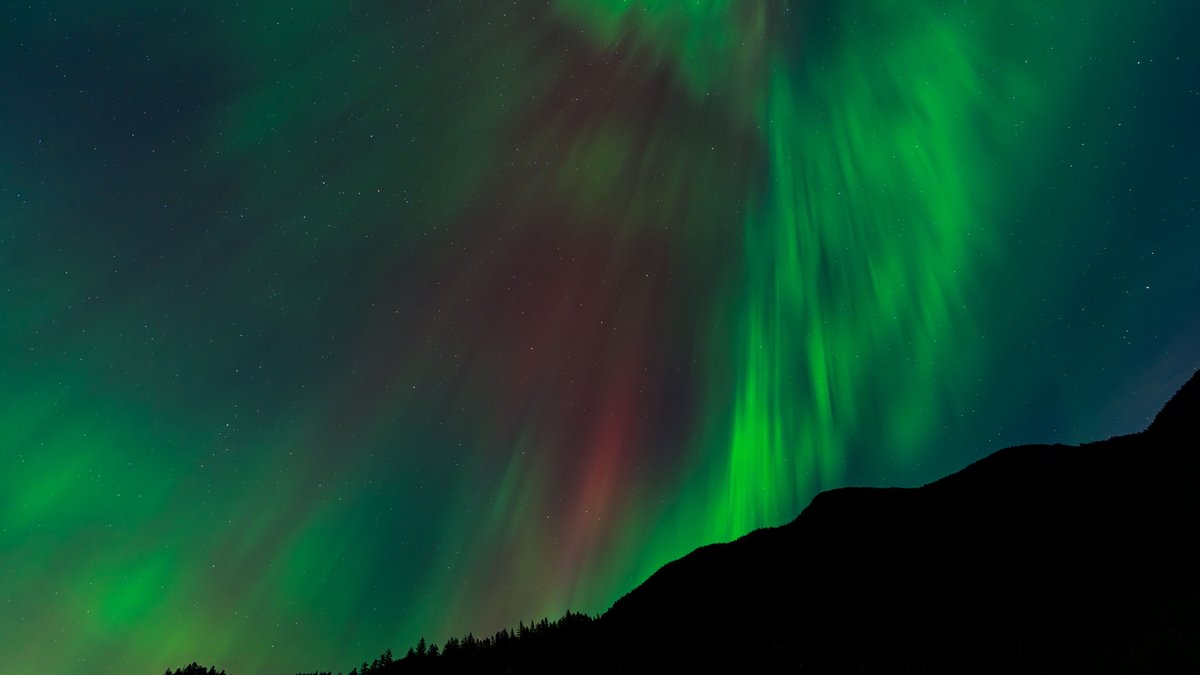
Auroras reached unusually low latitudes
The May 10 to 11, 2024, storm followed a rapid sequence of powerful solar eruptions from a large sunspot region. Clouds of magnetized plasma traveled outward from the sun and merged on the way to Earth. When they struck the magnetosphere, they compressed and energized the near-Earth space environment.
Across the world, auroras spilled into unusually low latitudes. Many people saw colorful skies in places that rarely experience visible auroral displays. Those glowing curtains marked a much larger disturbance overhead, where charged particles were being transported and accelerated through Earth’s magnetic domain.
Inside the magnetosphere, the storm reached a minimum SYM-H index of minus 518 nanotesla. That made it the second-largest storm measured by that index since 1981. The last comparable event occurred during the November 2004 superstorm.
Geomagnetic storms of this scale can affect technology as well as the night sky. They can raise radiation hazards for spacecraft, disrupt navigation and communications and drive electrical currents through power systems. The May 2024 event offered researchers a rare chance to connect a spectacular sky show with the physics that shapes extreme space weather.
Arase caught the ring current in action
Japan’s Arase satellite was launched in 2016 and is operated by the Japan Aerospace Exploration Agency. Its science center is jointly operated by ISAS/JAXA and the Institute for Space-Earth Environmental Research at Nagoya University. The spacecraft orbits through the region where the ring current develops.
The ring current is a vast belt of energized ions that circles Earth thousands of kilometers above the equator. These ions carry an electric current. That current creates a magnetic field that partly cancels Earth’s own magnetic field at the ground, which produces the magnetic disturbance detected during geomagnetic storms.
Arase carries instruments designed to identify the mass and energy of ions. That capability made it especially valuable during the May 2024 storm. The spacecraft crossed the ring current soon after the storm began and again near the storm’s peak.
Those passes gave researchers simultaneous information about solar wind conditions and ring current composition during a super geomagnetic storm. This type of direct measurement is difficult to obtain because the spacecraft, instruments and storm timing all have to line up. In May 2024, they did.
Earth’s oxygen ions dominated the storm
For decades, scientists have debated how much of the ring current comes from the solar wind and how much comes from Earth’s ionosphere. The ionosphere is the electrically charged upper layer of the atmosphere. During storms, particles can escape from that region and move into the magnetosphere.
During many geomagnetic storms, both sources contribute to the ring current. The May 2024 storm arrived with dense solar wind conditions, so solar wind particles were expected to play an important role. Arase measurements showed a strikingly different balance in the ring current near Earth.
Naritoshi Kitamura of Nagoya University, the study’s lead author, summarized the key measurement directly: “Approximately 85% of ions were oxygen from Earth’s own ionosphere.” That oxygen dominance points to a powerful upward flow of Earth-origin material during the storm.
Oxygen ions are much heavier than the hydrogen ions often associated with the solar wind. Their presence can change how the ring current stores energy and how strongly it disturbs Earth’s magnetic field. In the May 2024 storm, the ring current became unusually rich in heavy ions from Earth.
The result gives scientists a direct look at a long-standing question. The sun supplied the storm-driving disturbance, while Earth’s upper atmosphere supplied much of the material that intensified the near-Earth current system.
Heavier ions deepened the magnetic disturbance
The heavy oxygen-rich ring current appears to have helped make the magnetic disturbance stronger and more concentrated closer to Earth. According to the study, this may explain why the storm produced such a severe magnetic signature in the near-Earth environment.
Near the storm peak, Arase measured a major weakening in the magnetic field at roughly 16,000 kilometers above Earth. Kitamura said, “Near the peak of the storm, Arase detected a 40% decrease in magnetic field intensity.” That drop occurred much closer to Earth than similar large decreases documented in earlier events.
This finding is important because distance matters. A powerful ring current located closer to Earth can produce a stronger disturbance at the ground. The study suggests that the storm’s Earth-origin oxygen ions helped shape both the strength and location of that disturbance.
Arase also observed a simultaneous decrease in high-energy electrons in the same region. These electrons normally orbit Earth in that zone. When the magnetic field weakens sharply, their paths can shift and some electrons can leave their usual drift paths.
The connection between magnetic field deformation and electron loss remains a topic for further study. The May 2024 measurements give researchers a rare data set for testing how intense storms reshape radiation belts and nearby plasma populations.
Space weather forecasts may need Earth’s upper atmosphere
Space weather models often focus heavily on solar wind conditions. Those inputs are essential because solar eruptions launch the disturbances that strike Earth. The Arase findings show that the state of Earth’s atmosphere can also influence how severe a storm becomes.
If Earth’s ionosphere supplies a large burst of heavy ions, the ring current may intensify in ways that solar wind measurements alone cannot fully predict. This is especially important for super geomagnetic storms, where small differences in composition and location can affect the final magnetic disturbance.
The study also supports future mission planning. Researchers point to the FACTORS mission concept, a proposed Japanese multisatellite mission designed to study how atmospheric ions escape into the magnetosphere. Such a mission could help track the pathways that feed major storms.
For forecasters, the goal is practical. Better information about ion supply could improve predictions of storm severity. That would help satellite operators, navigation systems, communications networks and power grid managers prepare for extreme space weather.
The May 2024 superstorm began with the sun, but Arase revealed that Earth played a central role in the storm’s deepest magnetic effects. With direct composition measurements now in hand, scientists have a clearer view of how the planet’s own upper atmosphere can help fuel one of space weather’s most powerful events.