Most fish enter recurring periods of reduced activity that scientists describe as sleep or sleep-like rest. They may hover in place, settle on the bottom or wedge into a protected crevice. Their responses slow and metabolism can decline, yet many remain ready to move when a predator approaches.
NOAA’s overview of whether fish sleep emphasizes the difference from familiar human sleep. Most fish lack eyelids, so an open eye does not mean wakefulness. Researchers identify sleep through behavior, responsiveness, timing and the animal’s need to recover after rest is disrupted.
Fish include tens of thousands of species occupying habitats from shallow reefs to the deep sea. No single sleeping posture covers all of them. The useful question is how each species reduces activity safely while preserving breathing and balance in its particular environment.
Scientists recognize sleep through behavior
Sleep is more than ordinary stillness. A resting animal adopts a characteristic posture or location, becomes less responsive to mild disturbance and returns to activity when sufficiently stimulated. The state also tends to follow a daily rhythm.
Rebound sleep supplies stronger evidence. When researchers repeatedly interrupt a fish’s normal rest, the animal may rest longer or respond more slowly later. The compensation indicates a regulated biological need rather than simple inactivity caused by cold or lack of food.
Brain-wave criteria used in human sleep studies do not transfer neatly to every fish. Scientists combine video tracking, movement sensors and carefully controlled stimuli. Some laboratory species also allow neural activity to be measured during behavioral rest.
Light often sets the schedule, but feeding and predation can alter it. A daytime hunter may rest after dark, while a nocturnal species becomes quiet in daylight. Internal clocks can preserve the rhythm when lighting remains constant for a limited experiment.
Fish rest without closing their eyes
Most bony fish do not have movable eyelids. Their eyes remain visible during rest because water keeps the surface moist and removes the terrestrial need to blink. Observers must use posture and responsiveness rather than eye closure.
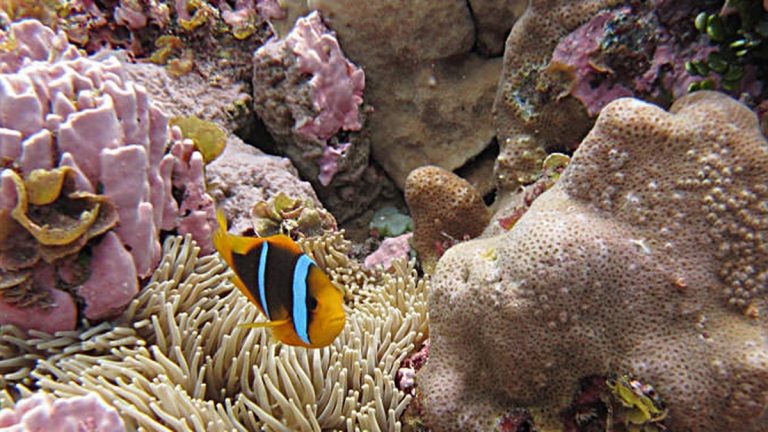
A reef fish may retreat into a hole where currents still pass its gills. A flatfish can settle against sediment and a sand lance may burrow. NOAA Fisheries lists floating in place and using mud or coral as common fish resting strategies.
Metabolic reduction saves energy during inactive periods. Heart rate and ventilation may slow in some species, although measurements vary. The fish still maintains essential oxygen delivery and can increase activity rapidly if threatened.
Color can change during rest. Some reef fish adopt a muted nighttime pattern that differs from daytime display colors. The change may reduce visibility or reflect altered nervous and hormonal control, but its function must be tested species by species.
Parrotfish from several species secrete a mucus cocoon before resting. Smithsonian Ocean describes a cocoon that can help protect against blood-feeding parasites. The behavior takes energy, suggesting that protected rest can be worth the cost.
Breathing limits the sleeping posture
Many fish pump water over their gills while staying still. Muscles around the mouth and gill covers maintain flow, allowing the animal to rest in a sheltered spot. Strong current can provide additional water movement.
Some sharks rely heavily on forward swimming to ventilate their gills, a process called ram ventilation. They cannot simply stop in stagnant water. Activity may decrease or become more automatic, while species capable of buccal pumping can rest on the bottom.
The need to breathe does not disprove sleep. Marine mammals must also coordinate rest with respiration. Sleep strategies evolve around the body’s constraints and behavioral inactivity can take forms that look unlike a person lying down.
Rest reduces exposure to predators
A quiet fish gives up feeding opportunities and may respond more slowly to attack. Choosing a crevice or nest lowers that risk. Schooling species can benefit from neighbors, although individuals still need enough space and water flow.
Rest-site fidelity occurs when a fish repeatedly returns to a suitable shelter. Familiar terrain can shorten the search at the end of an active period. Availability of safe sites may limit how many fish a reef patch supports.
Burial hides the body while stabilizing it against current. Pacific sand lance use sand for rest and refuge, then emerge to feed. Sediment type matters because coarse or compacted bottom may prevent efficient entry.
Predators also adjust their schedule. A nocturnal hunter may search places where daytime fish rest, creating an evolutionary contest between concealment and detection. The safest strategy changes with local predator communities.
Human disturbance can interrupt rest. Artificial light changes the day-night signal, while repeated boat activity or aquarium tapping can increase arousal. Demonstrating a population effect requires more evidence than observing one startled fish, but sleep disruption is a testable pathway.
Fish sleep is diverse and still under study
Zebrafish have become a laboratory model for studying sleep because their behavior and nervous system can be monitored across development. Experiments reveal rest cycles and rebound after deprivation. Results from one model do not automatically describe every wild fish.
Sleep function may include neural maintenance, energy balance and memory processing, but the contribution of each function in fish remains an active research area. A behavior can serve several purposes at once.
Researchers need field observations to complement laboratory control. Temperature, currents and predators affect how a fish rests in nature. Tags and low-light cameras can reveal behavior that bright dive lights would alter.
Sleep must fit each species’ habitat
Rest can also change color and posture. Some reef fish darken, pale or display nighttime patterns, while others wedge the body securely into shelter. These signs help divers recognize normal behavior without assuming that a motionless animal is sick.
Daily timing may be controlled by light, tides, food and predator schedules. A nocturnal hunter can rest during daylight, whereas a reef grazer may retreat after sunset. Cave fish living without normal light cycles offer researchers a natural test of how sleep evolves when darkness is constant.
Sleep duration can differ even among related populations. Mexican cavefish populations have independently evolved reduced sleep compared with surface relatives. Genetic and sensory changes appear to contribute, demonstrating that sleep is biologically regulated rather than simple inactivity caused by darkness.
Aquarium observations require suitable habitat. A fish denied its normal shelter may remain unusually alert, while an unfamiliar tank can alter activity. Researchers allow acclimation and compare repeated behavior before drawing conclusions about a species’ ordinary rest.
Rest remains responsive in a dangerous habitat
Resting in water creates special constraints. A fish must move enough water across its gills, avoid drifting into danger and retain some response to predators. Species solve those problems through different postures, locations and schedules.
Reef fish may shelter in crevices after dark. Open-water species can slow swimming or descend to a preferred depth. Bottom dwellers may settle on sand while maintaining subtle fin and gill movements.
Some sharks complicate the familiar rule. Species dependent on ram ventilation must keep moving so water passes their gills, yet they can show reduced responsiveness while swimming. Other sharks actively pump water and rest on the bottom.
Artificial light can alter activity rhythms, while noise or repeated disturbance may interrupt rest. Researchers examine these effects because impaired recovery can influence feeding, learning and stress physiology even when a fish never closes its eyes.
Behavior supplies the evidence. Scientists look for a characteristic posture, a higher response threshold and rebound after deprivation. Fish enter organized, reversible periods of reduced activity, though most remain partly responsive. Their diverse resting strategies show why sleep is defined through function and behavior rather than closed eyes or complete stillness.
Related reading: animals that live on coral reefs and marine biogeography.