Nutrient pollution occurs when excess nitrogen or phosphorus enters water and accelerates the growth of algae and aquatic plants beyond what an ecosystem can absorb. Both elements are essential to life. The problem begins when their concentration and delivery upset the balance among producers, consumers and decomposers.
Runoff from farms and cities is a major route, while wastewater and airborne nitrogen add further loads. NOAA’s nutrient pollution overview describes the process as fertilizer reaching water, where it can drive excessive algal growth.
Nitrogen and phosphorus become excessive
Plants need nitrogen to make proteins and chlorophyll. Phosphorus is central to genetic material and cellular energy transfer. In many waters, the supply of one nutrient constrains how much algae can grow.
Adding the limiting nutrient can release that constraint. More phytoplankton or attached algae then capture light and produce organic matter. A moderate increase may raise productivity, while a sustained large load can alter the entire water body.
Nutrient pollution refers to the harmful excess rather than the natural presence of nutrients. The relevant threshold varies because lakes, rivers and estuaries differ in depth, flushing and background chemistry.
The EPA defines the problem through excess nitrogen and phosphorus entering air and water from many human activities. Site-specific standards are necessary because one concentration cannot represent every ecosystem.
Farms lose nutrients through runoff and drainage
Fertilizer and manure supply crops with nutrients. Rain can wash dissolved nitrogen or phosphorus attached to eroded soil into streams when applications exceed crop uptake or arrive before heavy weather.
Nitrate dissolves readily and can move through soil into groundwater or drainage systems. Phosphorus often travels with sediment, although dissolved forms also matter. The route depends on soil, slope and management.
The EPA’s agricultural guidance recommends matching fertilizer amount and timing to crop needs. Its nutrient-loss practices include buffers and erosion control alongside more precise application.
Livestock manure contains useful nutrients, but concentrated production can create more material than nearby fields can use safely. Storage failures and poorly timed spreading increase the chance of loss.
Agricultural solutions must preserve drainage and crop production. Effective plans therefore measure soil fertility, account for manure and adapt to weather rather than relying on one fixed application rate.
Cities and wastewater add different sources
Stormwater flows across lawns, roads and construction sites, carrying fertilizer, pet waste and soil into drains. Impervious surfaces deliver runoff quickly, leaving less opportunity for vegetation or soil to retain nutrients.
Wastewater contains nitrogen and phosphorus from human waste, food and detergents. Treatment plants remove varying amounts depending on their design. Advanced processes can convert or capture more nutrients before discharge.
Failing septic systems release nutrient-rich water into shallow groundwater. Dense development near lakes or estuaries can make many small failures ecologically important.
Combustion releases nitrogen oxides to the atmosphere. Some returns to land and water through atmospheric deposition, extending the watershed beyond the visible drainage network.
Algal growth changes light and oxygen
An influx of nutrients can stimulate dense algae near the surface. The bloom shades seagrasses and other submerged plants. When those plants decline, habitat and sediment stability may decline with them.
Algae eventually die or are eaten. Bacteria consume oxygen while decomposing the resulting organic matter. If water-column mixing cannot replace oxygen quickly, bottom water becomes hypoxic.
Fish can sometimes leave low-oxygen areas. Shellfish and bottom-dwelling animals have fewer options, while eggs and larvae may be especially vulnerable. Severe depletion can produce fish kills and so-called dead zones.
Not every bloom is toxic and not every harmful bloom is caused solely by nutrient runoff. Species, temperature and circulation influence the result. Harmful algal blooms require identification rather than judgment by water color.
NOAA’s pollution tutorial follows the path from nutrients to hypoxia, including shading, plant death and bacterial oxygen consumption.
Drinking water and recreation can be affected
Nitrate can enter groundwater used for drinking. Infants are particularly vulnerable to high nitrate exposure, which can interfere with the blood’s ability to carry oxygen.
Cyanobacterial blooms can produce toxins that affect people, pets and wildlife. Health agencies may close beaches or issue drinking-water advice when monitoring detects a risk.
Even nontoxic blooms can create taste, odor and treatment problems. Thick surface scums discourage swimming, while low oxygen and habitat loss reduce fishing value.
Economic effects extend to treatment costs, tourism and waterfront property. Preventing nutrient delivery is often less expensive than managing a bloom after it forms.
Monitoring follows loads and ecological response
Water samples measure nitrate, ammonia, total nitrogen and several phosphorus forms. Flow measurements let scientists calculate a nutrient load, the mass transported over time, rather than concentration alone.
Chlorophyll provides an estimate of algal biomass. Dissolved oxygen profiles reveal whether deep water is losing oxygen and water clarity shows how much light can reach submerged vegetation.
Scientists also examine algae and bottom communities. A chemistry sample can return to normal after a storm even though biological effects persist for weeks.
The EPA’s nutrient indicators combine sources, water measurements and ecological outcomes. Repeated records help separate seasonal cycles from a worsening trend.
Reducing pollution requires watershed control
Point sources such as treatment plants can be upgraded and monitored at an outfall. Diffuse runoff requires many actions across fields, streets and properties.
Cover crops take up nutrients between main crops, buffers intercept some runoff and restored wetlands slow water. Urban rain gardens and permeable surfaces reduce rapid stormwater delivery.
Nutrient recovery can create useful fertilizer from waste streams. Removal downstream can help, yet it rarely substitutes for controlling the largest sources upstream.
Progress should be measured in both lower loads and ecological recovery. Algae may respond quickly, while seagrass or bottom communities recover slowly. Legacy phosphorus stored in soil and sediment can delay improvement.
A successful watershed plan matches controls to measured sources, then adjusts as monitoring reveals the response. Nitrogen and phosphorus remain essential nutrients; keeping them in farms, soils and treatment systems prevents them from becoming pollutants in water.
Weather and geography determine where nutrients travel
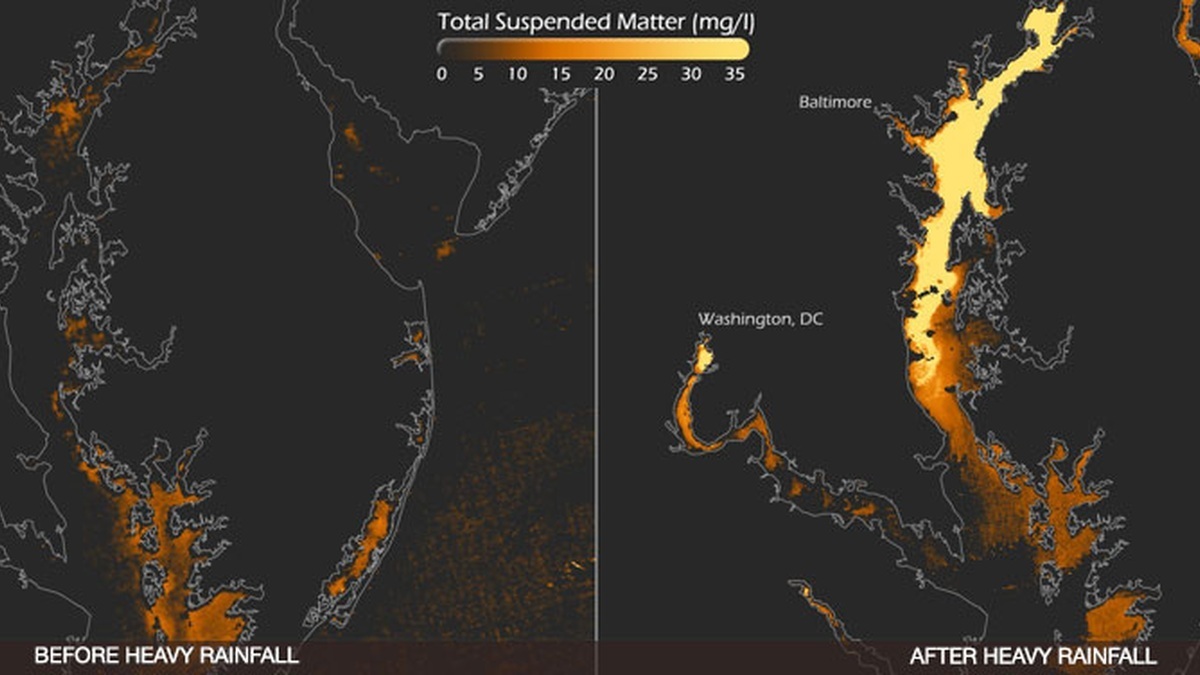
The same fertilizer application can produce very different water effects depending on soil, slope and rainfall. A gentle shower may soak into dry ground, while an intense storm can carry dissolved nutrients and eroded soil into a stream within hours. Frozen or saturated ground also limits infiltration, increasing the share that moves across the surface.
Groundwater creates a slower pathway. Nitrate that passes below plant roots can travel through an aquifer for years before reaching a spring, river or estuary. This lag helps explain why water quality may improve gradually after practices change. The USGS overview of nutrients and eutrophication connects these watershed sources with downstream ecological effects.
Landscape position affects phosphorus movement because phosphorus often binds to soil particles. Erosion from an exposed field or streambank can therefore deliver both sediment and attached phosphorus. In other settings, dissolved phosphorus can leave through field drains. Monitoring has to match the transport route rather than assume every watershed behaves alike.
Coastal waters add tides, salinity and circulation to the picture. A well-flushed estuary may disperse a load more rapidly than a restricted bay, although dispersal does not make the nutrient disappear. Understanding nutrient transport, residence time and seasonal weather lets managers place controls where they can prevent the greatest delivery.
Source tracking adds another layer of evidence. Land-use records, stream sampling and the chemical form of a nutrient can narrow the likely origin, while measurements before and after storms show when delivery is greatest. This source-based monitoring directs limited restoration funds toward changes that can measurably reduce the load.
Related reading: ocean dead zones and harmful algal bloom forecasts.