Eutrophication is the enrichment of water with nutrients that increases the production of algae and aquatic plants. The process occurs naturally as lakes age and accumulate material, but human nutrient inputs can accelerate it dramatically in lakes, estuaries and coastal seas.
Rapid eutrophication can block light, alter food webs and consume dissolved oxygen when organic matter decomposes. NOAA’s eutrophication explanation connects excessive nutrient loading with algal blooms, hypoxia and fish kills.
Nutrient enrichment raises biological production
Nitrogen and phosphorus support photosynthesis and growth. When one of them limits an aquatic ecosystem, additional supply allows phytoplankton or rooted plants to produce more tissue.
Eutrophication describes the ecosystem’s increased organic production, not one pollutant or one algal species. The outcome depends on how nutrients interact with light, temperature and water movement.
A shallow lake may respond with attached plants or surface algae. A stratified estuary can develop a phytoplankton bloom whose remains settle into deep water.
Natural eutrophication unfolds over long periods as sediment and nutrients accumulate. Cultural eutrophication is the faster enrichment linked to fertilizer, sewage, stormwater and atmospheric nitrogen from human activity.
Blooms reduce light below the surface
More phytoplankton makes water cloudy and reduces the depth reached by sunlight. Seagrasses and submerged freshwater plants can lose the light needed to maintain leaves and roots.
Loss of bottom vegetation removes nursery habitat and food. Bare sediment may resuspend more readily, increasing turbidity and making plant recovery more difficult.
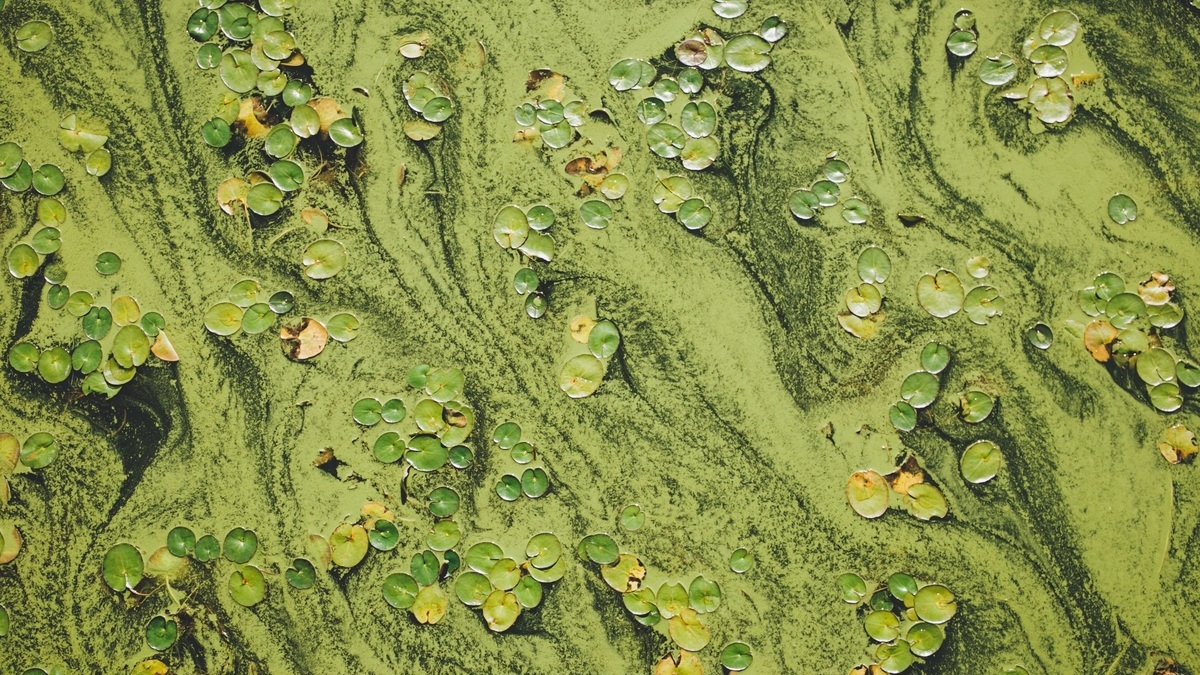
Dense surface mats can also change temperature and gas exchange locally. Species composition matters because cyanobacteria, diatoms and green algae differ in buoyancy, toxicity and food value.
A bloom is not automatically harmful. Seasonal phytoplankton growth feeds aquatic food webs. Harm begins when scale, duration or species creates oxygen, toxin or habitat problems.
The EPA’s nutrient pollution summary explains how rapid algal growth can exceed an ecosystem’s capacity and degrade habitat.
Decomposition consumes dissolved oxygen
Algae and plants eventually die. Bacteria break down this organic material and use oxygen during respiration, just as animals do.
Surface water can regain oxygen from the atmosphere and photosynthesis. Deep water replenishes slowly when warm, lighter water lies above cold, dense water and suppresses vertical mixing.
When oxygen falls below the needs of aquatic animals, the water becomes hypoxic. Complete oxygen loss is anoxia. Mobile fish may leave, while worms, shellfish and other bottom organisms cannot escape as easily.
NOAA’s Gulf assessment describes how nutrients and stratification work together. Nutrients supply organic matter, while physical layering prevents oxygen from reaching the bottom quickly.
Food webs can change before fish die
Low oxygen affects feeding, growth and reproduction before conditions become lethal. Animals avoid deep habitat, compressing predators and prey into a smaller oxygenated zone.
Species tolerant of cloudy or oxygen-poor water may replace sensitive organisms. Jellyfish or cyanobacteria can benefit under some conditions, though no single succession occurs everywhere.
Submerged vegetation loss removes structure used by juvenile fish and invertebrates. Sediment chemistry changes under anoxia and can release phosphorus back into water, reinforcing enrichment.
Repeated seasonal hypoxia can prevent long-lived bottom communities from recovering. The visible water may clear in winter while ecological effects remain in the sediment.
Some harmful algal species produce toxins. Toxin risk and oxygen depletion are separate mechanisms that can occur together or independently.
Lakes and estuaries respond differently
In lakes, phosphorus often has a strong influence on freshwater algal production. Nitrogen can also matter, especially for species composition and in systems where it becomes limiting.
Coastal waters frequently respond to nitrogen, while phosphorus or silica can constrain parts of an estuary. Management must identify local nutrient limitation rather than apply one rule everywhere.
Water residence time is crucial. A flushed river carries nutrients downstream, while a lake or enclosed bay retains them long enough for a large bloom.
Depth and mixing set oxygen vulnerability. Shallow water may mix often but suffer plant shading, whereas a deep stratified basin can accumulate oxygen-poor bottom water.
Scientists measure causes and symptoms
Monitoring programs measure nutrient concentrations and loads, chlorophyll, water clarity and dissolved oxygen. Vertical profiles show whether a low-oxygen layer forms near the bottom.
Satellite ocean-color data reveal broad surface blooms, but clouds and depth limit what satellites see. Field samples identify species and measure toxins.
Sediment cores can reconstruct past nutrient conditions from pigments, fossils and chemistry. They help distinguish recent acceleration from the natural history of a lake.
The USGS studies nutrients and eutrophication across watersheds, connecting land sources with downstream response.
Prevention focuses on nutrient sources
Wastewater upgrades can remove more nitrogen and phosphorus. Septic repair reduces leakage, while stormwater systems can slow runoff and retain nutrients.
Farm practices include matching fertilizer to crop need, planting cover crops and protecting stream buffers. Wetlands can intercept some nutrients before they reach open water.
In-water methods such as aeration or phosphorus treatment may address symptoms in selected lakes. They require maintenance and do not eliminate continued watershed loading.
Shellfish harvest can remove nutrients stored in tissue from some estuaries. NOAA research has examined oyster and clam cultivation as one component of nutrient management, with capacity limited by site and scale.
Watershed nutrient reduction remains the durable strategy because it lowers the material feeding excess production. Recovery can lag as stored nutrients continue cycling from sediment.
Recovery has several measurable stages
Lower nutrient loads may reduce chlorophyll and improve clarity first. Submerged plants need suitable sediment and propagules before they return.
Bottom oxygen improves only when reduced decomposition and physical mixing allow replenishment. A warm, strongly stratified year may still produce hypoxia after inputs decline.
Fish and benthic communities recover at different speeds. Long-lived species may require several successful reproductive seasons, while algae respond within days.
Eutrophication is therefore a chain of connected changes rather than a synonym for green water. Breaking the chain upstream and tracking light, oxygen and living communities shows whether an ecosystem is genuinely moving toward balance.
Lake depth and water movement change the outcome
Two waters receiving similar nutrient loads may respond differently. A shallow lake can mix from top to bottom during windy weather, repeatedly bringing sediment nutrients back into the water. A deep lake may separate into warm surface water and a cold bottom layer for months, allowing oxygen loss to develop out of sight.
Water residence time is equally important. Nutrients pass quickly through some rivers and reservoirs, while a long-lived lake or enclosed estuary retains them through several biological cycles. Retention gives algae more opportunities to use the material and lets organic matter accumulate. Flushing can reduce exposure, but it can also carry the problem downstream.
Light determines whether rooted plants can compete with suspended algae. Once murky water limits plant growth, wave action can disturb unprotected sediment and maintain poor clarity. Restoring submerged vegetation may therefore require both lower nutrient inputs and conditions that let young plants become established.
Managers use models and repeated field measurements to distinguish these local controls. Temperature profiles, flow records and sediment tests reveal why a response is delayed or concentrated in one basin. The diagnosis guides whether the priority should be watershed reduction, internal phosphorus control, habitat restoration or a combination suited to that water body.
Seasonal records keep short-lived improvement from being mistaken for recovery. A cool, windy summer may suppress a bloom by mixing the water, even when nutrient inputs remain high. Conversely, an unusually hot year can expose vulnerability during a genuine long-term decline in loading. Comparing several years of nutrient budgets, chlorophyll, clarity and dissolved oxygen provides a firmer basis for judging progress. Managers can then separate weather-driven variation from a durable ecological response and adjust restoration priorities using evidence from the whole water body.
Related reading: ocean dead zones and harmful algal bloom forecasts.