An anchialine pool is a landlocked coastal pond with a hidden connection to the sea. Fresh groundwater enters from the land while seawater moves through porous rock or cave passages below ground. The result is usually a small body of brackish water whose level may rise and fall with distant ocean tides, even though no stream or channel joins it to the shore.
NOAA’s anchialine pool overview describes pools in limestone and volcanic rock, especially in Hawaiʻi and Mexico’s Yucatán Peninsula. Beneath their quiet surfaces, water forms distinct layers and unusual cave life depends directly on the surrounding aquifer. A pool can therefore reveal coastal change well before the effects become obvious offshore.
The name comes from a Greek term meaning “near the sea,” but distance from the surf alone does not define the habitat. The essential feature is a subterranean marine connection. Some pools sit only a few meters inland, while others occupy caves or depressions much farther from the coast. They differ from tide pools, which exchange water directly across the rocky shore and from ordinary freshwater ponds with no underground seawater route.
How the ocean reaches an enclosed pool
Rain falling inland seeps into cracks and pores, then travels downhill through an aquifer. Near the coast, that freshwater meets denser saltwater that has entered the same rock from the ocean. Where the water table intersects a low spot in the ground, an open pool appears. The visible pond is only a window into a much larger groundwater system.
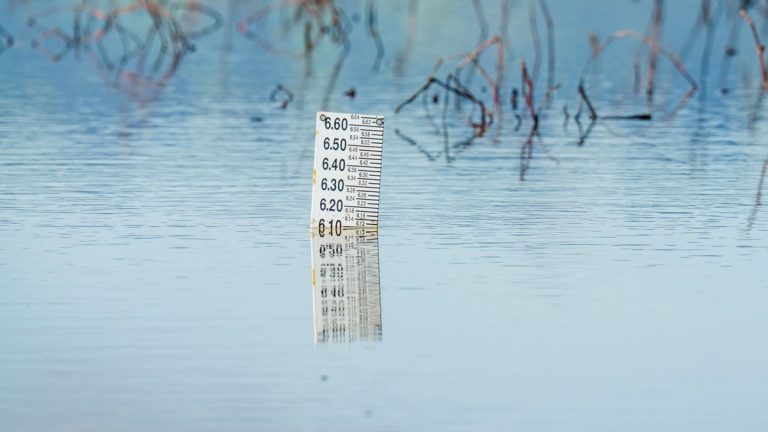
Ocean tides push pressure through the underground connection. Water levels in a pool can follow the tide with a delay and a smaller range, depending on the distance from shore and how easily water passes through the rock. The response is strong evidence of a marine link. Research at Kaloko-Honokōhau notes that pool levels rise and fall with ocean tides despite the absence of a surface channel.
Fresh and salt water do not always mix evenly. Freshwater tends to remain above the denser seawater, producing a salinity gradient that becomes saltier with depth. Wind, rainfall, evaporation, tidal pumping and the shape of the underground passages can blur or move the boundary. Each pool has its own shifting balance rather than one fixed salinity.
Hydrologists can compare the timing and height of a pool’s water-level cycle with the nearby ocean tide. A muted response may indicate narrow cracks or a long underground pathway, while a rapid response suggests easier flow. Rainfall can briefly thicken the freshwater layer and lower surface salinity. Repeated measurements reveal how strongly the coastal aquifer transmits ocean pressure and how quickly the pool recovers after drought or a storm.
A rare ecosystem in a small space
Many anchialine animals are tiny, yet their isolation makes them scientifically important. Shrimps, other crustaceans, mollusks, fish and eels may occupy different parts of the pool or cave network. Hawaiʻi’s red ʻōpaeʻula shrimp is one of the best-known inhabitants. Some species occur in only a narrow geographic area, so losing a few pools can erase a large share of their habitat.
Food enters through leaves, microbial growth, groundwater and the sea connection. In dark passages, microbes can support food webs without the abundant sunlight available in open coastal water. Animals may move between surface pools and subterranean spaces, carrying nutrients along with them. The pool’s ecology therefore extends beyond the shoreline visible to a visitor.
Cave-dwelling species often show traits suited to darkness and scarce food. Reduced eyes, pale bodies, long sensory appendages, or slow metabolism can help in submerged passages. Such traits evolved in separate lineages, making anchialine systems useful places to study how isolation and similar environmental pressures influence life.
Hawaiʻi contains more than half of the world’s known anchialine pools, according to NOAA and the U.S. Geological Survey. Kaloko-Honokōhau National Historical Park alone protects more than 200. The concentration reflects the islands’ porous young lava and coastal groundwater; extensive surveys also contribute to the known total, while other pools occur across tropical and subtropical coasts worldwide.
Connections through flooded cracks complicate the idea of an isolated pond. A shrimp population visible in one opening may use dark passages that join several surface pools and larvae or adults may move through brackish groundwater. Other species remain restricted by rock barriers or unsuitable salinity. Biologists combine cave surveys with genetics to test those links. The results help define a connected pool network for conservation instead of treating every opening as an independent habitat.
Why anchialine pools are easily disturbed
A pool depends on water moving through the surrounding land, so damage does not have to occur at its edge. Wells can alter groundwater flow. Wastewater, fertilizers, leaked fuel and sediment can travel through porous rock. Coastal construction may fill pools or sever passages. Because some resident populations are small and isolated, recovery after disturbance can be slow or impossible.
Introduced fish present another serious threat. Aquarium releases or intentional stocking can add predators that eat native shrimp and other invertebrates. They can also stir sediment and change algae. A NOAA-funded two-acre restoration project on Hawaiʻi Island used nearly 400 volunteers to remove nonnative fish and replant native vegetation, followed by twice-monthly monitoring.
Nearby vegetation affects shade, organic matter and erosion. Trampling can break fragile edges, while trash blocks small passages and degrades habitat. Visitors should stay on designated routes, avoid releasing animals and never move organisms between pools. Cave diving requires specialized training because submerged networks can be long and dark, which makes them difficult to navigate.
Water quality is especially difficult to repair after contamination enters porous lava or limestone. There may be no surface stream to divert and no practical way to excavate the hidden flow path. Nutrients can stimulate algae that changes oxygen conditions, while toxic chemicals may expose animals within caves that are impossible to inspect. Protecting the groundwater recharge area is therefore part of protecting the pool, even when that land lies well beyond the visible shoreline.
What scientists learn from the water
Researchers track water level, temperature, salinity, dissolved oxygen and nutrients to see how a pool responds to tides and rainfall. Biological surveys record native species and invaders. Comparing those measurements through time can separate a brief seasonal swing from a lasting shift in groundwater quality. Repeated sampling is essential because a single visit captures only one point in a moving cycle.
Hydrologists also use wells, current meters and chemical tracers to follow groundwater toward the coast. A USGS study at Kaloko-Honokōhau measured currents, waves, water levels, temperature and salinity to establish a baseline for groundwater-fed coastal habitats. The approach connects conditions in small pools with changes across fishponds and nearby coral reefs.
Species records add another layer to the physical data. Researchers note abundance, life stage and where an animal appears in the salinity profile. A decline in native shrimp alongside a rise in introduced fish can point to predation, whereas broad losses across several groups may indicate oxygen or water-quality stress. Photographs and standardized trapping methods make comparisons more reliable without assuming that every animal is equally easy to detect.
Healthy pools preserve endemic species and cultural resources while offering an accessible signal of aquifer condition. Protection works best at the landscape scale: conserve recharge areas, manage wastewater, prevent invasive releases and monitor the pool network. The placid water at the surface belongs to a coastal circulation system linking rainfall with rock-bound groundwater and ocean life.
Related reading: ocean-floor topography and the difference between an ocean and a sea.