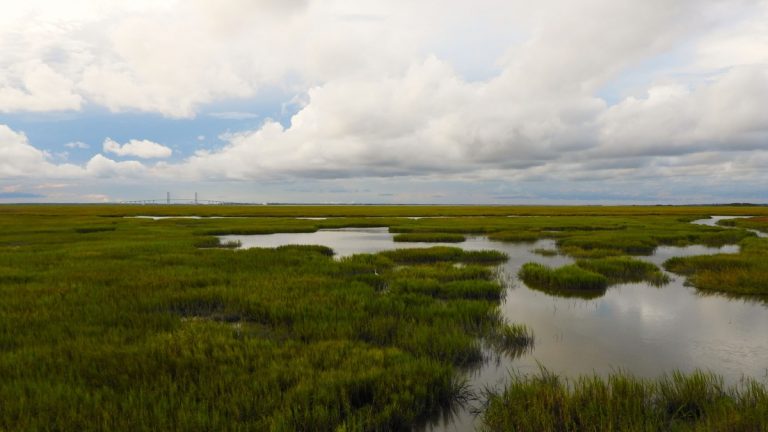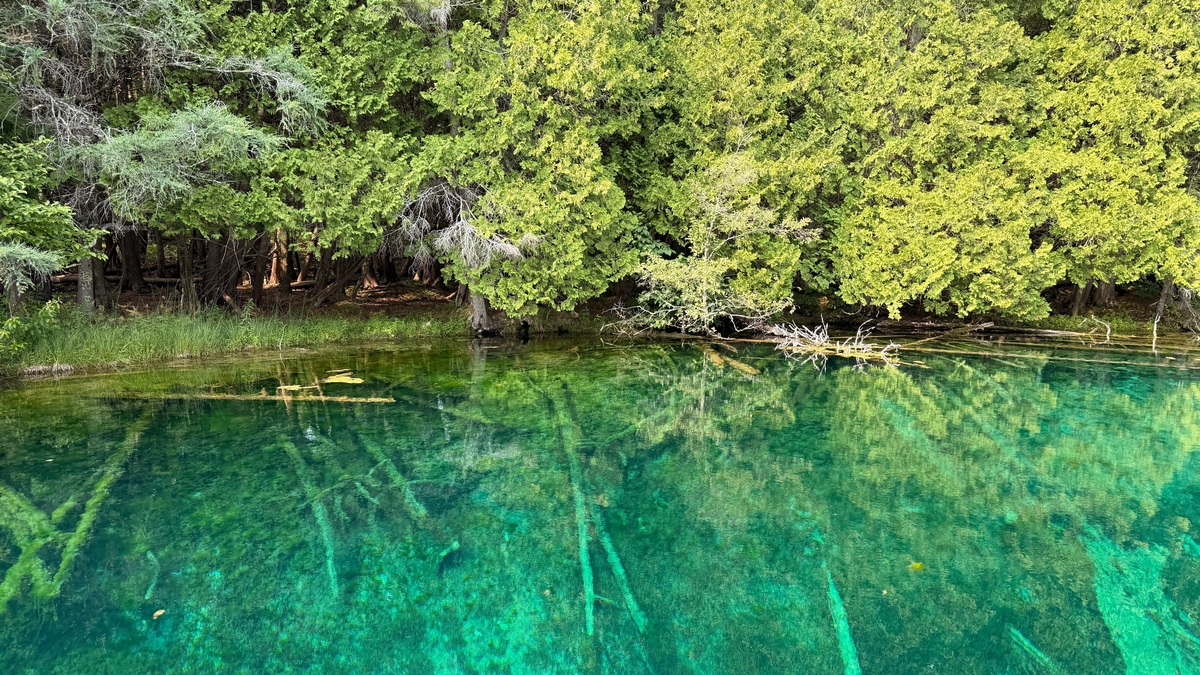
A spring-fed lake receives a substantial part of its water from groundwater that discharges through springs or diffuse seepage in the lakebed or along the shore. The term describes water supply, not a guarantee that the lake is crystal clear, cold everywhere or constant in level.
In one formal Wisconsin classification, a “spring lake” has no surface inlet, has a flowing outlet and receives most of its water from groundwater. Everyday use is broader and may call any lake with noticeable spring inflow spring-fed, even if streams also enter it.
A spring is concentrated groundwater discharge
A spring forms where groundwater naturally emerges from rock or soil at the land surface or directly into a waterbody. The USGS water-cycle guide explains that springs occur where an aquifer is filled enough for water to discharge.
Some springs appear as obvious vents or flowing pools. Others discharge underwater and are difficult to locate without temperature, chemistry or flow measurements. Diffuse seepage can supply a lake across a broad patch of sediment rather than at one opening.
The distinction between a spring and seepage is partly geometric. A USGS hydrology glossary describes a spring as a restricted point of discharge, while seepage occurs along a more extensive line or surface.
Groundwater reaches lakes through an aquifer
Rain and snowmelt infiltrate soil and recharge an aquifer. Groundwater then moves according to hydraulic gradients. Where the aquifer’s water level stands above the lake, water can discharge through the lakebed.
Flow paths may begin beyond the lake’s visible surface watershed. Wisconsin’s aquatic-community classification says spring lakes can receive groundwater from inside and outside the immediate surface drainage area.
Groundwater is part of Earth’s larger freshwater reserve. Argo’s article on where freshwater is stored shows why water beneath the ground can sustain surface ecosystems even between rainstorms.
Spring lakes can form stream headwaters
When groundwater inflow plus precipitation exceeds evaporation and seepage loss, a lake may discharge through an outlet stream. The outlet begins a channel that carries water downhill. Northern Wisconsin has many spring lakes that act as headwaters under the state’s classification.
Flow can be comparatively steady because the aquifer stores recharge and releases it over time. “Steady” remains relative. Drought reduces the available recharge, while groundwater pumping can draw down the same aquifer. The seasonal timing of recharge also changes spring discharge.
A lake with no inlet but an outlet is not automatically spring-fed. Wisconsin separates drained lakes, which receive most water from precipitation and local drainage, from spring lakes supplied primarily by groundwater.
Spring-fed and seepage are not synonyms
A seepage lake has no regular surface inlet or outlet in the same regional classification. Its principal input may be direct precipitation and runoff, with groundwater supplementing the balance. It can receive groundwater, lose water to groundwater or do both.
A spring lake has groundwater as its primary source and a flowing outlet. Everyday descriptions blur the line because submerged springs occur in many lake types. The intended definition should be stated whenever the distinction affects management.
Both types store water in a basin, which separates them from a channelized river. Argo’s lake-versus-river guide explains how residence time differs from downstream flow. It also addresses named waterbodies whose classification remains ambiguous.
Groundwater can stabilize part of the temperature
Shallow groundwater commonly reflects the region’s mean annual air temperature more closely than daily weather. A spring can therefore feel cool in summer and relatively warm during winter. Its effect is strongest near the point of discharge.
The whole lake still responds to changing weather through the seasons. Sunlight warms the surface as wind mixes some of that heat downward. Surface water may rise well above spring temperature. A deep lake can still stratify into layers. Ice can form even when a spring keeps one small area open and such open water makes nearby ice especially unsafe.
Thermal springs are a clear exception to the stereotype of cold spring water. Deep circulation through warm rock or volcanic settings can heat groundwater. A USGS study of Warm Mineral Springs traced its warm mineralized water to deep flow paths in the Floridan aquifer.
Spring water is not always clear
Groundwater often carries little suspended sediment because soil and rock filter particles. That can make a spring appear clear. Dissolved substances remain invisible and the aquifer can transmit tannins, iron, sulfur compounds or pollutants.
The USGS explicitly warns that spring water is not always clear. Its chemistry depends on recharge-water quality, rock type and the time spent underground. Microbes and industrial or agricultural contaminants are not automatically removed.
A spring-fed lake can also develop algae if nutrients and light support growth. Sediment from shoreline erosion or a tributary may reduce clarity. Water source is only one control on what a visitor sees.
Minerals influence lake chemistry
Groundwater dissolves minerals while moving through an aquifer. Calcium and bicarbonate from carbonate rock can increase hardness and alkalinity. Other geologic settings yield soft water with little buffering capacity.
The USGS groundwater-quality guide lists common dissolved constituents and notes that some wells and springs contain very high mineral concentrations. “Natural” does not mean chemically pure or suitable for drinking without testing.
Groundwater chemistry also affects aquatic life. Stable temperature and flow may support cold-water species near springs, while dissolved oxygen can be low in water that traveled deep underground. Mixing with the lake modifies those conditions.
Water levels can still rise and fall
Aquifers buffer short weather events but respond to longer changes in recharge. Several dry years can lower the water table and reduce spring discharge. Heavy precipitation can raise groundwater and increase inflow after a delay.
Pumping nearby wells can intercept groundwater that would otherwise reach a spring or lake. The effect depends on the aquifer, pumping depth, distance and connection to the lake. It cannot be inferred from one low-water season alone.
Spring-fed lakes can also flood when total input exceeds the capacity of their outlet. Argo’s article Can Lakes Flood? explains how groundwater rise differs from storm runoff. It separately covers wind setup and flooding influenced by dam operations.
Spring inflow changes habitat locally
A cool-water refuge can form near a spring during summer. Fish may use the temperature difference when the surrounding lake becomes warm, provided oxygen and other habitat conditions are suitable. In winter, flowing groundwater can weaken ice above the discharge zone.
Spring areas may also transport dissolved nutrients into the lake. The outcome depends on concentration and flow. A high-volume spring with modest nutrient levels can have a different ecological effect from a small discharge carrying contaminated groundwater.
Disturbing the lakebed near a vent can alter flow or release sediment. Shoreland development and groundwater withdrawal affect springs beyond the visible point where water emerges.
How to confirm that a lake is spring-fed
Local maps or natural-resource inventories may already classify the lake. Field evidence includes visible vents, persistent temperature differences and groundwater levels higher than the lake. Tracers and water chemistry can help identify the origin of inflow.
A USGS analysis of lake-groundwater interaction shows that many lakes receive groundwater through one part of the bed and lose it elsewhere. Measuring only one shoreline can miss the complete system.
The reliable definition is hydrologic: groundwater supplies a meaningful share of the lake’s water. Clear water may offer a clue, as may an unusually cold area near a vent. A scenic setting provides no proof of the water source. None of those appearances establishes spring-fed status by itself.
Confirmation also requires enough time to capture seasonal change. A temperature anomaly observed on one summer day may locate a vent, but repeated flow or chemistry measurements show whether groundwater supplies a meaningful share of the annual water budget.
Investigators may compare groundwater head with lake stage and sample stable isotopes or dissolved minerals. No single method fits every geology. Combining measurements reduces the chance that a cold tributary, shaded shoreline or temporary seep is mistaken for the lake’s principal source.