Earth’s freshwater is always taking a journey. Water falls as rain or snow and seeps underground. It flows into streams, freezes at high latitudes and elevations and returns to the air. At any one moment, though, its location is very uneven. Most freshwater is stored as frozen water in ice caps, glaciers and permanent snow. The next largest share sits beneath the land as groundwater. Lakes and rivers hold the small, familiar slice seen from shore. The same quantity can occupy a frozen field, tiny pores in rock, or a familiar river channel. Those settings shape when it can be used and who can reach it.
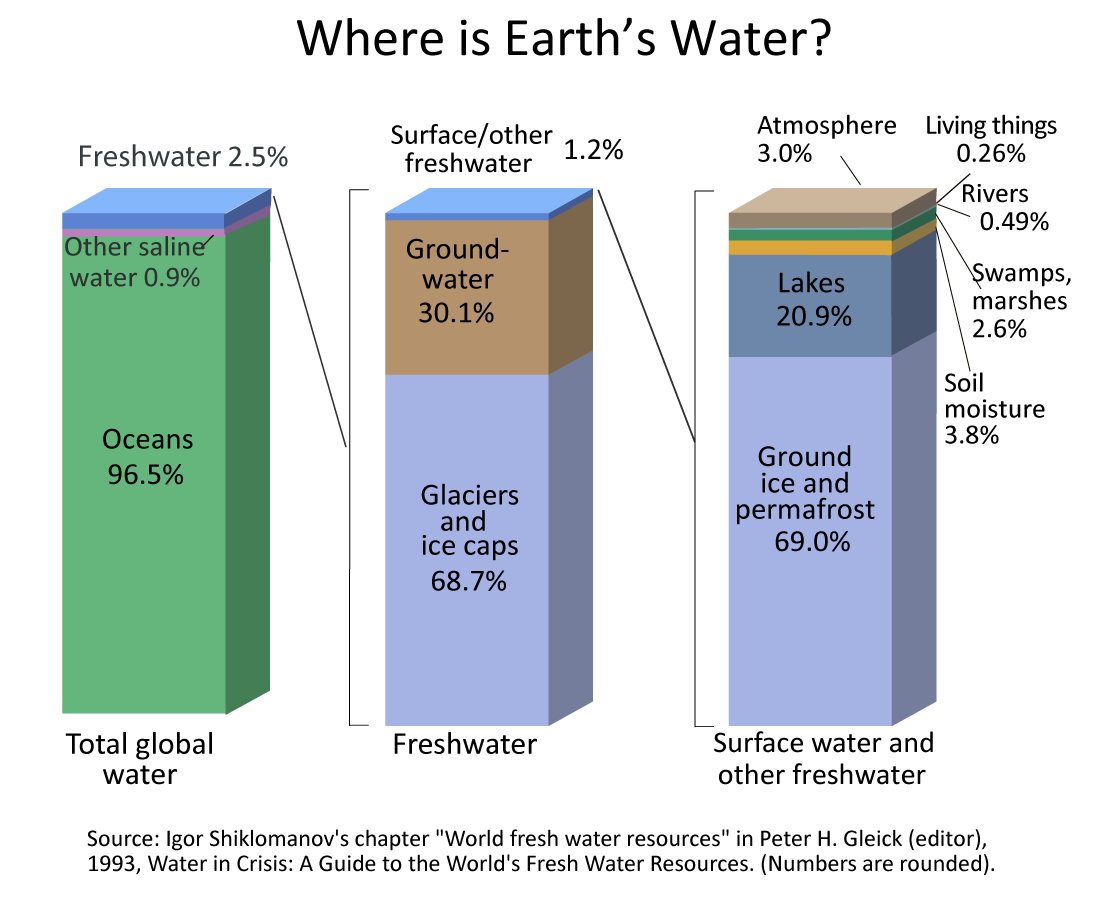
The U.S. Geological Survey’s water distribution estimate puts freshwater at about 2.5 percent of all water on Earth. Oceans contain almost all the rest and their water is saline. Within that limited freshwater share, about 68.7 percent is held in ice caps, glaciers and permanent snow. Fresh groundwater accounts for about 30.1 percent. These are rounded global estimates, so they describe a broad inventory rather than the amount that can be collected from a tap.
The biggest freshwater store is frozen
Frozen water is the clear leader. The USGS estimate assigns roughly 24.1 million cubic kilometers of water to ice caps and glaciers, along with permanent snow. That is close to seven-tenths of the planet’s freshwater. Much of it lies in Antarctica and Greenland, with additional glaciers and snowfields spread through mountain regions. This store is enormous because ice can remain in place for centuries or far longer when climate and terrain allow it.
Location matters as much as volume. Ice in a polar ice sheet or a remote mountain glacier is often far from homes, farms and cities. Its frozen state also keeps it outside the ordinary pipes, wells and canals that deliver water. Seasonal snow can feed rivers as it melts, while glacier melt can sustain some streams during dry periods. Those flows depend on local weather, temperature, terrain and the size of the frozen store.
The word permanent snow describes snow that lasts through the warm season, rather than a winter layer that melts every year. The global accounting groups it with ice caps and glaciers because all three keep freshwater frozen for long periods. Frozen water still moves within the larger cycle. Snow accumulates, melts, compacts into ice, or sublimates directly into water vapor. Glaciers also flow slowly under their own weight. Their movement fits within the larger circulation of water.
Groundwater is the second great reservoir
Beneath the surface lies the second great store of freshwater. The same USGS table estimates about 10.5 million cubic kilometers of fresh groundwater, or 30.1 percent of freshwater. It fills tiny spaces in soil and sediment, plus cracks and pores in rock. This water often remains hidden, which can make lakes and rivers seem more important than the larger underground reserve beneath them.
An aquifer is a body of rock or sediment that can store and transmit groundwater. Rain and snowmelt can enter the ground through a process called infiltration. Some water moves downward until it reaches a saturated zone, where the spaces in the material are filled with water. The USGS groundwater overview explains that this recharge can eventually support streams, lakes and the ocean. In places with little recent rain, water underground may have spent years, centuries, or longer below the surface.
Groundwater commonly occupies small connected spaces between grains of sand and gravel, or fractures in rock. The USGS guide to groundwater explains that gravity helps move this water downward and sideways. Where the water table meets a streambed, groundwater can seep into the channel. This contribution can keep a stream flowing between storms. In another setting, a stream can lose water through its bed and recharge the ground beneath it.
That large total does not translate into an equally large ready supply. Groundwater can be deep or slow to recharge. It may also be saline, contaminated, or difficult to reach. A well also draws from a specific local aquifer, rather than from a single shared underground lake. The USGS notes that water in the ground moves slowly and may discharge into rivers and lakes. Careful pumping, protection from pollution and attention to recharge all help preserve this hidden reservoir.
Lakes and rivers hold a tiny share
Most people picture freshwater as a lake, river, wetland, or reservoir. Those places are crucial, but they contain a very small part of the total. In the USGS breakdown, the entire category called surface and other freshwater makes up only a little more than 1.2 percent of freshwater. It includes ground ice, permafrost, soil moisture and lakes. It also includes water in the atmosphere, swamps, rivers and living things.
Lakes contain about 0.26 percent of Earth’s freshwater in this estimate. Rivers contain about 0.006 percent. The small percentages help explain why a major river can matter so much while representing a slender fraction of the global total. A river concentrates moving water along a route people and ecosystems can reach. Lakes store water in low places on the landscape. Both can provide habitat and water supplies. Communities also use them for transportation, recreation and irrigation.
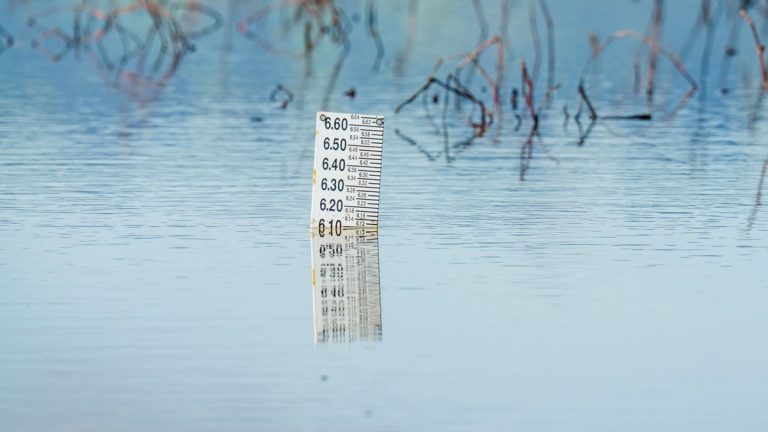
Freshwater on the land surface changes quickly compared with an ice sheet or a deep aquifer. The USGS describes lakes and rivers as stores with inflows from precipitation, runoff, tributaries and groundwater seepage. Their outflows include evaporation, seepage into the ground, river flow and withdrawals. A drought, a storm, a dam, or a heavy demand for water can therefore change conditions over a short time.
Water is always moving between stores
The percentages are a snapshot, rather than permanent labels attached to particular drops. The water cycle moves water through the atmosphere and across the land surface. It also connects ice, soil and aquifers. Sunlight helps evaporate water, while gravity brings precipitation down and carries water downhill. Infiltration moves some of it into the ground. Springs and seepage can return groundwater to streams. Freezing and melting connect liquid water with the large frozen store.
Each store has its own pace. Water vapor can move through the atmosphere in days, while a lake can rise or fall with a season. Snowpack may persist through winter and melt in spring. Groundwater can travel slowly through an aquifer and ice can remain locked in a glacier for a very long time. These different travel times shape when water is available in a watershed. They also show why water storage is more than a count of cubic kilometers. Timing affects farms and ecosystems. It also shapes hydropower, flood risk and drinking-water systems.
Definitions also shape the numbers. The USGS calls water fresh when it contains less than 1,000 milligrams per liter of dissolved solids, usually salt. That boundary separates freshwater from saline water for this overview, but water quality has many other parts. Fresh water may still need treatment before drinking because it can contain microbes, minerals, chemicals, or sediment. Availability also depends on location, timing, infrastructure and laws that protect a water source.
For perspective, the USGS estimate of Earth’s water gives rivers a volume of about 2120 cubic kilometers. More than 24 million cubic kilometers are frozen in ice caps, glaciers and permanent snow. That contrast is why the answer begins with ice. Yet the small surface share is central to daily life because people, plants and animals interact with it so directly. Protecting freshwater availability means caring for every connected store, from snowpack and wetlands to aquifers and rivers.
Groundwater becomes visible at the surface in different ways. Argo’s guides explain seepage-lake water budgets and spring-fed lake hydrology.