Ten astronauts who spent six to eight months in orbit gave researchers a striking split result: when they judged a single minute, their responses shifted in a way that made the interval feel shorter than it did on Earth, yet the same crewmembers stayed much more accurate when recalling how many days had passed since a vehicle docking or a spacewalk. The contrast reaches beyond curiosity. Space crews live by clocks, procedures and memory, so any change in felt time can affect how work feels, how effort builds across a day and how people experience long missions.
The finding comes from a 2023 study in npj Microgravity led by researchers from Normandy University and colleagues working with astronauts on the station. The team tested how long a minute felt, how long it had been since the workday began or lunch occurred and how many days had passed since key mission events. Their paper points to a human story inside the engineering story of orbit: the brain can keep some mission markers stable while letting ordinary stretches of daily life slide.
Researchers did not present one simple cause for that drift. They discussed several possibilities, including isolation, workload, performance pressure, reduced vestibular input in weightlessness, slower body motion and the fact that astronauts see and use time displays constantly during the day. Each factor belongs to everyday behavior and perception rather than science fiction. People in orbit still plan, wait, remember and pace themselves, yet they do so inside an environment that changes how the body senses movement and how the mind keeps track of passing moments.
What the astronauts were asked to judge
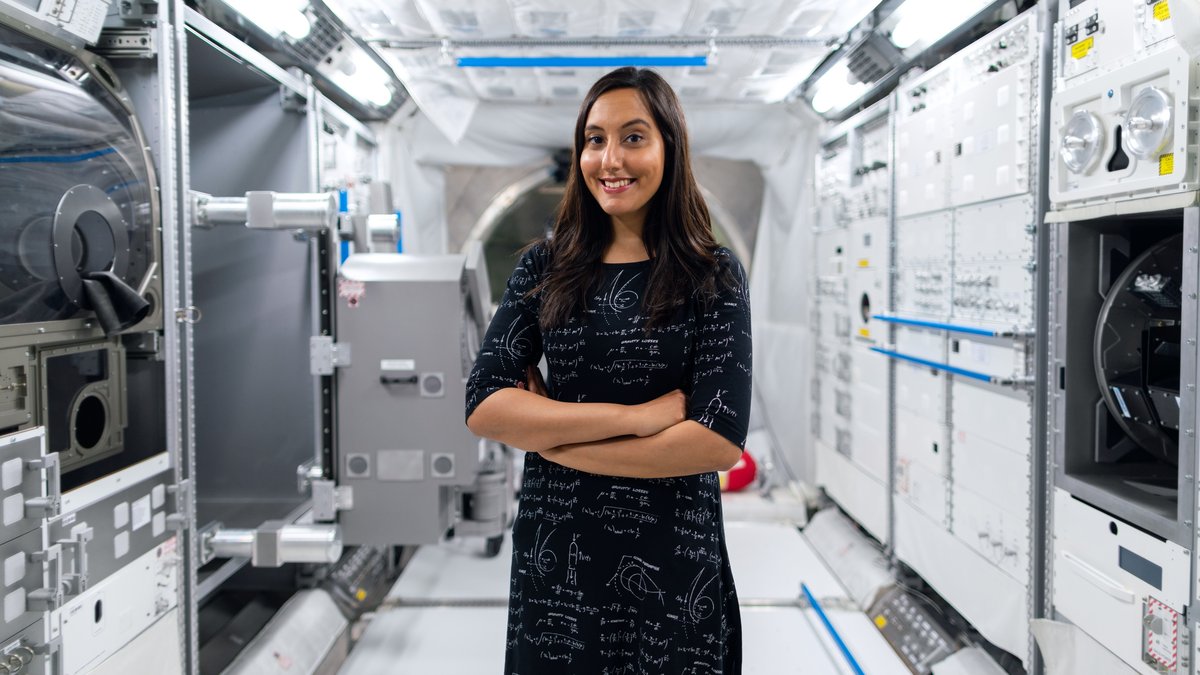
The experiment focused on crewmembers living aboard the International Space Station, where days are busy, highly scheduled and physically unlike anything on the ground. The main flight group included nine men and one woman with an average age a little above 44. A control group of 15 people completed matched tests on Earth. The goal was simple to describe, even if the mental process behind it is complex: compare how the same kinds of time judgments behave before flight, during flight and after landing.
For the one-minute task, each astronaut pressed a start button and then stopped the timer when they felt a minute had passed. They were not allowed to count seconds. The crew also answered questions about longer spans. Some were measured in hours, such as time since waking, the beginning of the workday, or lunch. Others were measured in days, including the time since vehicle dockings and spacewalks. Those mission events gave the researchers a way to compare casual daily timing with memories tied to major operations.
The schedule of testing was broad enough to show whether any drift stayed brief or lingered. The astronauts were tested several times before launch, roughly once a month during flight and again within days after return. A related PubMed record gives the same core abstract and indexing details. Inside the paper, the researchers described an average mission length of about 202 days, which let them look at time perception across many weeks of adaptation instead of only the first disorienting phase of weightlessness.
Why a minute felt shorter in orbit
The headline result is easiest to picture in plain language: the astronauts tended to stop the one-minute task early during flight, which means their internal sense of a minute ran faster than real clock time. A practical reading of the reported shift is roughly 20 percent and the study itself describes it as a relative overestimation of the one-minute interval during flight. In daily terms, a person feels that enough time has passed sooner than it really has.
One possible reason came from the crew environment itself. Near each workstation, astronauts use the Onboard Short-Term Plan Viewer, a digital schedule that lays out the day minute by minute and displays a moving red bar to show time passing. The authors suggest that constant exposure to this display may train astronauts to monitor short intervals very closely. Their paper also notes that weightlessness reduces some of the normal sensory signals that help the brain organize space and motion and those same brain networks overlap partly with time judgments.
A NASA overview of research on cognitive and sensory performance in microgravity helps place that result in a wider frame. NASA describes spaceflight as an environment that can affect perception, attention and task performance, even when highly trained crews continue to do their jobs well. Within that frame, the minute finding points to a shift in the felt pace of a short interval inside an unusual sensory world.
Why hours drifted while mission events stayed anchored
The hour-scale judgments moved in a different direction. According to the study, astronauts tended to underestimate longer daily intervals such as time since the start of the workday or since lunch. A long work block could feel shorter than it really was. That pattern differs from the one-minute task and the researchers treated that split seriously rather than forcing every result into one neat explanation. Short intervals may rely more on one set of timing processes, while longer spans lean more heavily on memory.
Daily life on the station offers many reasons why those longer estimates might become noisy. Lunch does not happen at the same point every day. Workloads vary. Different tasks demand different levels of focus. Some activities absorb attention for long stretches, while others are broken up by messages, checklists, or handovers with mission control. Under those conditions, the memory trace for a routine slice of the day may be less stable than the memory for a major operation that crews prepare for, log carefully and discuss repeatedly.
The day-scale results support that distinction. The astronauts were fairly accurate when estimating how many days had passed since spacewalks and dockings. Those events come with formal planning, checklists, communication windows and strong emotional weight. They are also stamped into the mission timeline in a way that ordinary lunch or wake-up periods are not. The paper therefore points toward a useful behavioral idea: events that are rehearsed, documented and socially reinforced may stay anchored even when the texture of everyday elapsed time drifts.
What the follow-up work says about attention
The same research group later pushed deeper into timing with shorter intervals, reaction time and dual-task conditions. In a follow-up study published in Frontiers in Physiology, the authors again tracked 10 astronauts before, during and after long station missions. They reported slower reaction times during flight, along with changes in duration judgment tasks that became more pronounced when attention had to be shared with another demand.
The follow-up adds texture to the earlier paper without erasing its caution. The authors discussed the chance that an accelerated internal clock could play a role, yet they also emphasized attention and memory load. When a person must monitor a duration while also reading digits or handling a competing mental task, errors can grow for reasons that have little to do with a single pure clock in the head. Orbit places crews inside a setting where attention is valuable, heavily managed and often stretched.
Gilles Clément and colleagues also linked their interpretation to the vestibular system, the set of sensory organs and brain pathways that help people sense balance, motion and orientation. Weightlessness changes the incoming signals that system receives. The researchers argue that these sensory changes may ripple into the brain networks used for both space and time judgments. Even so, the evidence supports a cautious verb such as suggests rather than proves. The data show altered performance. The mechanism still needs more work.
What this means for Moon and Mars crews
The practical lesson is less dramatic than movie versions of space psychology, yet it may be more useful. Future crews heading toward the Moon or Mars will depend on timing in many forms: short manual actions, long maintenance blocks, sleep schedules, medication windows, meeting times and memory for important mission milestones. A drift in felt time does not mean crews cannot cope. It means mission designers should assume that subjective time and official time may pull apart under prolonged weightlessness and isolation.
Several pieces of the 2023 paper support that measured view. The sample was small, because astronaut studies almost always are. The paper did not claim that one mechanism had been isolated beyond doubt. It also showed that mission-critical memories can remain strong. Those caveats are valuable because they keep the result grounded. A changed sense of passing minutes belongs in the category of operational human factors, alongside fatigue, attention and sensory adaptation, rather than in the category of exotic breakdown.
For readers on Earth, the study offers a familiar psychological insight in an unfamiliar place. People judge time partly by sensation, partly by memory and partly by the structure wrapped around an event. Orbit strips away gravity-based cues, adds heavy scheduling and raises the stakes of every task. Under those conditions, routine duration can bend while salient mission events remain clear. The research leaves a simple image behind: a crew member floating through a tightly planned day, feeling a minute end early, yet still knowing almost exactly when the last docking happened.