Eighty adolescents who took part in a supervised cold-water session in Norway and the United Kingdom reported a clear shift in mood before the day was over. Across all four groups, scores on a standard mood questionnaire moved in a more positive direction after the swim, with lower tension, anger, fatigue, depression and confusion, plus higher vigor and self-regard.
The study, published in the Journal of Child & Adolescent Mental Health, followed students through a half-day course rather than a long training program. That design keeps the result narrow and practical: the paper points to a short-term mood change after one guided experience and it does not claim that a brief swim can prevent depression, treat anxiety disorders, or improve mental health over months.
Even with those limits, the findings draw attention because adolescent mental health has become a major public concern, while many low-cost activities that feel manageable in daily life remain understudied. The research team worked with school groups in Kristiansand and Brighton, using settings that ranged from a lake to sheltered coastal water and the open sea. Most participants said they enjoyed the experience and might want to do it again, which gives the study a human detail that numbers alone cannot supply.
What the half-day course changed
The main result was a drop in Total Mood Disturbance, a combined score from the Profile of Mood States questionnaire. The mean pre to post difference was 23.40 points, with a 95 percent confidence interval from 16.52 to 30.28. In plain language, the group as a whole reported feeling better after the session and the size of that shift was large enough for the researchers to treat it as statistically significant.
Several parts of mood moved in the same direction. Negative feelings went down, while positive feelings rose. Because the same pattern appeared across groups in both countries, the paper suggests the result was not tied to just one lake, one beach, or one school. The study team did not run formal statistical comparisons between the Norwegian and British groups, because each individual group was small, yet the broad trend looked similar on both sides of the North Sea.
PubMed lists the paper as an exploratory study and that label is important. Exploratory research is useful for spotting a signal that deserves better testing later. It is weaker than a randomized trial with a comparison group, but it can still help researchers decide whether a larger project is worth the cost, the planning and the ethics review that adolescent research requires.
Enjoyment also mattered here, in a concrete way. According to the paper, 95 percent of respondents said they enjoyed the experience and would definitely or maybe like to repeat it. For a school-age group, that matters less as a slogan than as a practical clue: an activity that students strongly dislike is unlikely to become part of routine physical education, community programs, or preventive health work, even if it produces an interesting short-term score change.
How the students were tested
The researchers recruited 80 high school students, including 62 from two upper secondary schools in Norway and 18 from one school in Brighton. The Norwegian students were 16 to 17 years old, while the British group was 14 to 15. All were healthy adolescents who felt confident that they could enter cold water safely, which means the study does not tell us how a broader or medically more complex teen population would respond.
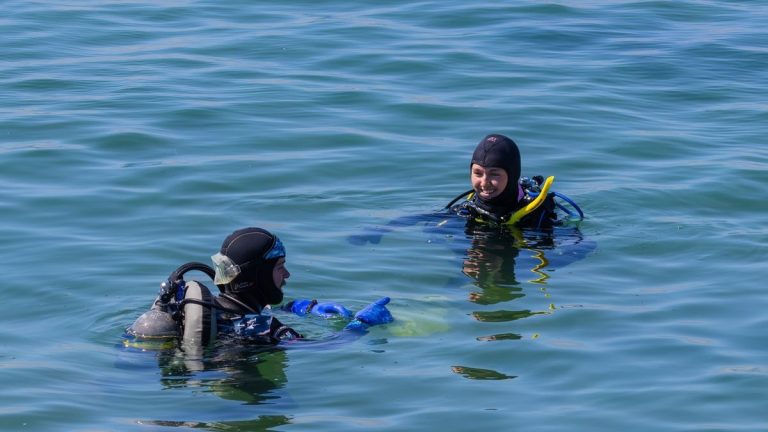
Before entering the water, the organizer explained the physical effects of cold exposure and led outdoor activity as a warm-up. The immersion itself lasted a few minutes in shallow water between 10 and 14 degrees Celsius. Those details matter because the intervention was more than a simple jump into cold water. It included preparation, supervision, movement before the swim and a group setting, each of which could affect how participants felt afterward.
After the session, students returned indoors and filled out the same questionnaire again. The team then compared the before and after scores. Readers can find the article in the 2025 issue listing for the journal, where it appears alongside other child and adolescent mental health research. The paper used a familiar mood instrument rather than a custom survey, which gives the result more structure than a simple question about whether the students liked the swim.
A short summary from the Children & Nature Network adds a useful practical detail from the study setting: participants said future participation would be easier if friends joined them, if the activity fit into the school day and if suitable swimming sites were nearby. Those answers do not prove future behavior, yet they show what adolescents themselves saw as the main barriers between one memorable session and a lasting habit.
Why cold water might lift mood for a while
Cold water immersion places the body under sudden physical stress and the first response can be intense: faster breathing, a racing heart, a surge in alertness and a strong need to regulate movement. When the experience is brief, supervised and entered willingly, that sequence may leave some people with a sense of relief, accomplishment and bodily activation once they are safely back on shore. The present study did not measure hormones, inflammation, or brain activity, so the mechanism remains a reasonable hypothesis rather than a tested explanation.
The setting may also help. A lake, a beach, cold air, social preparation and a shared challenge can combine into a powerful experience for teenagers. Researchers who study outdoor health often point out that natural settings can support attention, mood and social connection. The NAAEE research summary highlights that the intervention joined cold exposure with outdoor activity and group participation, which means the mood shift in this paper may reflect the whole experience rather than temperature alone.
Outdoor cold-water immersion also carries a special expectation effect. Many participants arrive believing the activity is bold, refreshing and personally meaningful. Expectations can influence self-reported mood scores, especially in a before and after design where students know exactly when the intervention happens. That does not erase the result, but it does narrow what can be concluded. The paper shows that the course was followed by better mood ratings; it does not separate the influence of cold water from anticipation, group energy, novelty, or pride in completing a hard task.
Adolescence is a useful age group for this question because feelings can shift quickly, daily stress can be intense and habits often form in social settings. A short intervention that feels vivid and manageable could matter if later studies show repeated benefits. For now, the strongest claim is modest: one supervised half-day session was linked with a broad positive change in self-reported mood among healthy teenagers who chose to take part.
Why the findings need a larger trial
The study gives an interesting first signal, but it leaves several major questions open. There was no control group that spent time outdoors without entering cold water, no random assignment and no long follow-up to see whether the mood lift lasted past the same day. Because of that, the paper cannot tell us whether cold-water immersion itself produced the change, whether any exciting group outdoor activity would have done something similar, or whether the effect faded within hours.
Sample size is another limit. Eighty participants is enough to notice a pattern in an exploratory project, but it is small for drawing broad conclusions about adolescents in different climates, age bands, health profiles, or cultural settings. The volunteers were already healthy and willing to try the activity, which likely selected for teenagers who were more comfortable with cold water and group challenge than average.
The authors themselves kept the conclusion careful, writing that the findings offer “substantial justification for further research into the impact of outdoor cold-water immersion on the mental health of adolescents.” That sentence fits the evidence. A stronger next step would compare cold-water immersion with warmer water, outdoor exercise without immersion, or another group challenge, then track mood, attendance and safety over weeks or months.
If later studies confirm the pattern, schools and youth programs would still need to think about access and risk. Safe sites, trained supervision, water conditions, weather, medical screening and transport all shape whether an appealing idea can work in real life. For now, the paper adds one carefully bounded result to a growing discussion: under guided conditions, cold-water immersion was followed by better mood scores in a group of adolescents and the experience was acceptable enough that most said they would consider doing it again.