A major reduction in swim training produced surprisingly few changes in athletes’ hormones, sleep quality, or desire to practice. During a 12-week program, highly trained swimmers gradually covered less distance as they approached an important competition. Their performance improved, yet most measurements remained steady.
The clearest psychological change appeared among the female swimmers, whose reported stress declined as their workload fell. Male swimmers showed a few day-to-day links between hormone levels and psychological ratings, although these relationships appeared only during certain parts of the program.
The findings come from a 12-week study published in Biology of Sport. Researchers followed 18 highly trained Polish swimmers and collected repeated saliva samples along with simple daily ratings of stress, sleep and willingness to train. The results suggest that athlete recovery can occur without large, easy-to-detect shifts in common hormone measurements.
How researchers tracked the swimmers
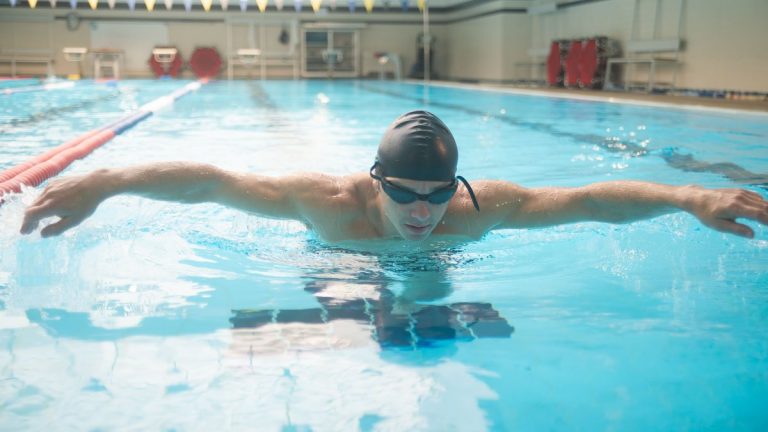
The group included 10 men and eight women who trained under the same coaching team. The men had an average age of 23.3 years, while the women averaged 17.6 years. All participants had years of competitive experience and their specialties covered the four main racing strokes across distances from 50 to 800 meters.
Researchers monitored the swimmers as they prepared for the Polish National Swimming Championships. The competition was important because athletes could earn qualifying times for international events. Testing took place during week one, week five and week 12, with the final tests ending three days before the national meet began.
At each stage, measurements were collected from Monday through Friday. Athletes rated their willingness to train, stress level and sleep quality on a five-point scale before the morning pool session. They also provided saliva samples so the team could measure testosterone and cortisol. Samples taken after selected sessions allowed the researchers to study the immediate hormonal response to exercise. Full publication details are available through the study’s PubMed record.
Training distance dropped step by step
The swimmers followed a traditional plan in which training volume fell as competition approached. Early in the program, a typical week included about 66.7 kilometers of swimming. The weekly total dropped to 54.6 kilometers during the middle testing period and reached 28.2 kilometers near the end.
Compared with the opening stage, the daily average distance was 21 percent lower at week five and 57 percent lower at week 12. Time spent in the pool also declined, from about 19.6 hours per week near the beginning to 10.3 hours during the final stage. Training still took place frequently, with six morning pool sessions and five afternoon sessions during a normal week.
Coaches adjusted intensity according to the goal of each session. Some training focused on swimming skills and easier aerobic work. Other sessions included demanding anaerobic efforts or short sprints at maximum speed. Athletes rated how hard each workout felt and those ratings generally declined along with swimming distance.
Competition performance improved
Lower training volume was followed by better registered performance scores. The swimmers’ average FINA points rose from 673 during the middle stage to 720 near the end, a statistically strong improvement. FINA points, now associated with World Aquatics scoring, allow performances from different events to be compared through a shared scale.
The program therefore achieved its central coaching goal. The swimmers improved as their workload fell before competition, a process known as precompetition tapering. A taper gives the body time to recover from months of demanding work while athletes continue practicing enough to preserve racing speed and technique.
The study cannot prove that the reduction in distance caused every part of the performance gain. There was no usable performance score from the first testing stage and the research did not include a second team following a different program. Even so, the improvement from the middle to the final stage supports the practical value of the planned taper for this group.
Testosterone and cortisol stayed steady
Researchers expected reduced training to influence testosterone and cortisol. Testosterone has roles in muscle function and recovery, while cortisol helps the body manage energy and respond to physical or psychological pressure. Both hormones change naturally through the day, which makes them difficult to interpret from a single sample.
The team collected measurements across five consecutive days during each testing stage. Repeated sampling helped reduce the influence of unusually high or low readings on any one morning. Despite the large change in workload, baseline testosterone and cortisol showed no significant overall training-related shift across the 12 weeks.
Expected differences between men and women were visible. Male swimmers had higher testosterone concentrations throughout the program, while female swimmers had higher cortisol concentrations overall. Training phase did not produce a clear baseline hormone change in either group. The paper and its formal publication information are also available through the study’s DOI page.
Morning sessions lowered hormone levels
Saliva collected after morning training revealed a clear short-term decline. Testosterone fell by about 21 to 34 percent across the sessions studied. Cortisol dropped even more sharply, with decreases ranging from 52 to 72 percent.
Morning timing helps explain the direction of those changes. Cortisol and testosterone tend to be relatively high after waking and then decline as the day advances. Because the sessions began early, the normal daily fall in hormone concentration probably occurred alongside the effects of swimming.
The size of the immediate response remained broadly similar across the three testing stages. Men and women also followed comparable patterns. Researchers therefore found little evidence that the 12-week reduction in training changed the swimmers’ acute hormonal response to a normal morning workout.
Stress fell among female swimmers
Self-reported stress produced the clearest change in the psychological measurements. Female swimmers reported significantly lower stress during week five and week 12 compared with the opening stage. Their decline in stress followed the reduction in swimming distance, even though men and women completed similar workloads.
The study abstract summarizes the result directly: “Only stress varied with training, decreasing significantly at T2 and T3 from T1 in female swimmers.” The researchers suggested that age and experience could have influenced the difference. The female athletes were younger on average and had fewer years of training experience than the men.
Menstrual cycle timing and oral contraceptive use could also affect hormone measurements in women, but the researchers did not collect enough information to control for those factors. With only eight female participants, the study could not determine which personal or biological influences contributed to the lower stress scores.
Sleep and willingness to train barely changed
The swimmers’ reported sleep quality stayed stable as training distance declined. Their willingness to train also remained similar from the beginning of the program through the final taper. Large workload changes therefore produced little movement in these brief daily ratings.
Several explanations are possible. Highly trained athletes may become accustomed to frequent practice and early mornings, allowing their motivation to remain steady across different training phases. A simple five-point rating may also miss smaller changes that a detailed questionnaire or sleep-monitoring device could detect.
Earlier work involving the same training environment used a broader set of sleep measurements and biochemical markers. The present research focused on quick tools that coaches could use beside the pool without disrupting practice. Such ratings provide speed and convenience, although they capture less detail than a full laboratory assessment.
Daily links appeared only among men
The researchers also examined whether daily changes in one measurement moved alongside another. Significant relationships were sparse. Among men during the high-volume opening stage, baseline testosterone and cortisol tended to rise and fall together within individuals.
Near the end of the taper, male swimmers also showed a link between daily sleep-quality ratings and stress scores. The direction of that relationship was unexpected and it appeared during only one testing stage. No significant hormone-to-psychology relationship was detected among the women.
Daily swimming distance from the previous day was unrelated to the main morning measurements. Perceived effort after training also showed no clear connection with the hormone or psychological ratings. The limited findings suggest that daily athlete monitoring may reveal personal patterns, although those patterns can change with training phase and may differ between individuals.
What the small study means for coaches
For coaches, the results support a stepwise reduction in swimming volume before a major competition. Performance improved even though testosterone, cortisol, sleep ratings and willingness to train showed little change. A successful taper may therefore be visible in racing results and falling stress before it appears in common biological markers.
Simple stress ratings may offer useful information, especially when collected regularly. They require little time and can alert coaches when an athlete’s mental load is moving in an unusual direction. Combining those ratings with workout distance, perceived effort and performance data could give a clearer picture than relying on one saliva measurement.
The sample remained small, with 18 athletes from one training group. The researchers partly addressed that limit by testing each swimmer on 15 days, which created many repeated observations. The study still had limited power after the results were separated by sex and training stage. Dry-land exercise, menstrual timing and contraceptive use also remained outside the main analysis.
Future research could use wearable sensors and more detailed recovery measures while following larger groups through several seasons. For now, the findings published by Olga Surała and colleagues show that hormone levels can remain steady during a major taper, while performance rises and perceived stress eases for some swimmers. Coaches may gain the most practical insight by watching several signals over time and judging each athlete against their own normal pattern.