Across harsh jobs where isolation, danger and long stretches of stress can wear people down, a new six-item scale tried to answer a simple question: does the work still feel meaningful and enjoyable enough to support performance? The answer came from 855 people spread across three very different settings and the study found that the short measure held together well in each group.
Researchers reported the new tool, called the Meaningful Work and Enjoyment Scale, in a Military Psychology study. The paper drew on Antarctic expedition personnel, senior US Navy officers and participants in NASA HERA, the Human Exploration Research Analog that simulates isolation and confinement during exploration missions.
For space agencies, polar programs and military organizations, a short check like this could help identify crews that still feel connected to their mission before fatigue starts eroding morale. The findings also need careful framing: the HERA results linked higher scores with better emotional and team outcomes, yet those links do not prove that meaningful work directly caused those gains.
Why researchers built a shorter scale
People in extreme operational environments often live where privacy is limited, workloads stay high and support from home is far away. Under those conditions, long surveys can become one more burden. The authors built MeWES as a brief tool that could fit inside demanding schedules without losing the core idea they wanted to measure.
The paper grounded the scale in the job demands-resources model, which treats psychological resources as a buffer against strain. Meaningful work can act as one of those resources. If a person still sees purpose in the job and still enjoys carrying it out, that outlook may help them keep functioning when isolation, pressure or monotony build over time.
A short instrument also matters for applied settings. Mission planners and supervisors rarely need a dense personality profile in the middle of an analog campaign or an expedition season. They need a quick reading that can sit beside other health and performance checks and still tell them whether mission purpose feels alive for the people doing the work.
Three cohorts faced different kinds of pressure
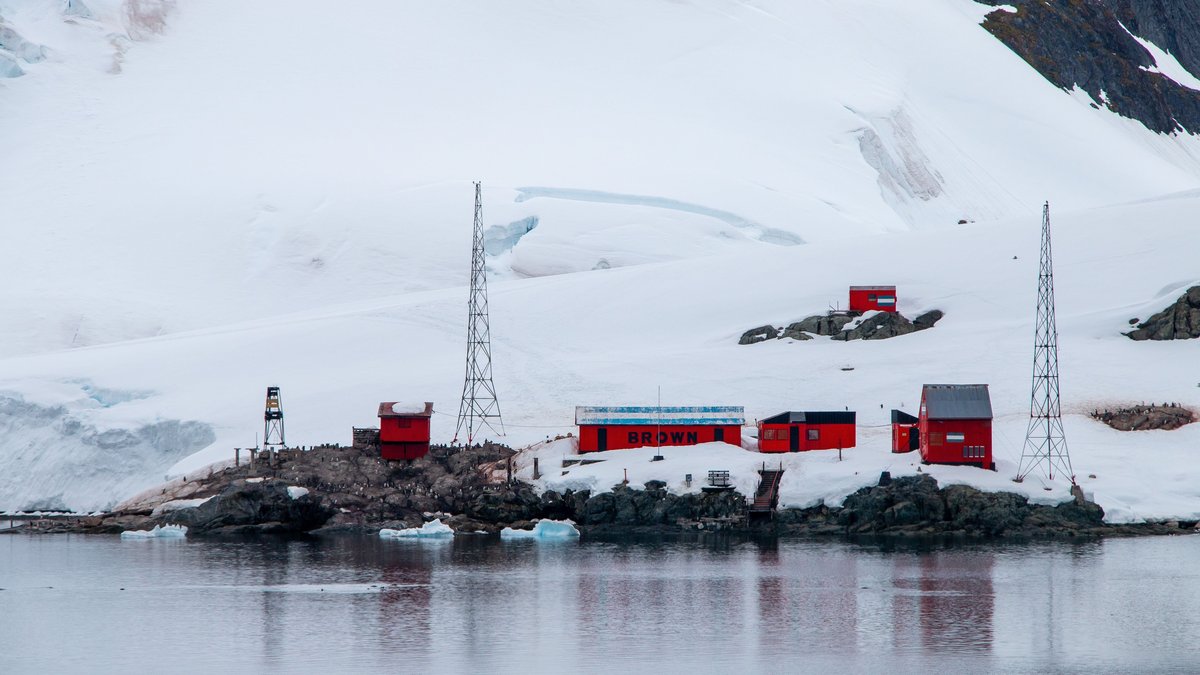
The study did not treat all 855 participants as one interchangeable pool. One cohort came from Antarctic expeditions, where crews work through extreme cold, remoteness and months of confinement. The authors acknowledged support from the Neumayer Station III program operated by the Alfred Wegener Institute, a useful example of the kind of isolated polar setting involved in this line of research.
A second cohort involved senior Navy officers. Their environment differs from a polar station because the stress can come from operational tempo, leadership demands and responsibility for teams under pressure. A third cohort came from HERA, NASA’s closed habitat in Houston where small crews live in a mission analog designed to study isolation, confinement and remote operations.
Each cohort shares the broad theme of sustained stress, but the daily reality is distinct. Antarctic personnel face geographic isolation and seasonal darkness. Navy officers work inside a leadership structure with real operational stakes. HERA participants enter a research habitat built to imitate parts of future exploration missions. Distinguishing those groups matters because a scale that works across all three settings has to survive more than one kind of hardship.
What the six questions were designed to capture
MeWES asks whether people experience their work as both meaningful and enjoyable. That pairing is important. Purpose alone can describe duty carried out under strain, while enjoyment adds a sense that the work still feels worth doing in daily practice. The authors then tested whether those answers behaved like one coherent measure instead of a loose stack of reactions.
According to the paper, the final six-item version showed strong internal consistency and a one-factor structure. It also lined up with the Work and Meaning Inventory, an established measure used as a comparison point. In practical terms, that means the new short scale did not drift far from existing ideas about work meaning even though it was built for more extreme settings.
NASA’s broader analog missions program helps explain why a brief measure has value here. Crews in such studies already complete many tasks and assessments. A six-question tool stands a better chance of being used repeatedly, which is often what researchers need if they want to watch how a person’s sense of purpose changes as a mission or deployment unfolds.
What rose with higher HERA scores
The paper reported predictive and incremental validity, meaning MeWES scores tracked outcomes that matter and added information beyond older measures. Across the full study, the scale related to morale, career satisfaction, affect, team cohesion and performance. Those connections support the idea that meaningful work can function as a practical psychological resource in hard settings.
Inside HERA, higher MeWES scores traveled with better mood and stronger crew cohesion. That is the most attention-grabbing result in the paper because HERA is built as a spaceflight analog and because crew interaction can influence how well a confined mission holds together. NASA describes HERA as a habitat for studying isolation and remote conditions, while the Life Sciences Data Archive stores research data that support human spaceflight studies across the agency’s Human Research Program.
Association, however, is the right word here. The study does not show that raising meaningful work scores would automatically improve mood or make a crew more cohesive. A crew that is already functioning smoothly may also find the work more rewarding. The paper supports a close relationship between those features and future intervention studies would be needed to sort out direction and cause.
Why the result matters beyond one Mars analog
Space agencies want crews who can stay effective during long missions when isolation stops feeling novel and starts feeling routine. Polar organizations and military units face related human problems even when the hardware and geography are different. A brief measure that works across those settings offers a common language for asking whether people still feel connected to the mission they carry out every day.
Operational research also benefits from tools that can travel across institutions. The article’s data note says NASA datasets from the study are available through the archive, while Navy data cannot be released publicly because they belong to the Department of Defense. That split captures a wider truth about this field: extreme-environment research often depends on partnerships between civilian science programs, mission analogs and defense organizations that do not share data in the same way.
If later work confirms the measure in more crews and over longer missions, MeWES could become one small part of a broader monitoring system for human performance. It would still need to sit beside sleep, physical health, workload and social dynamics, because no six-question scale can summarize the whole strain of life in isolation. Its real value is narrower and more practical: it offers a fast way to notice whether purpose and enjoyment are still present while the job stays hard.
Where the paper draws its limits
Several cautions belong in the same conversation as the headline result. The study validated a measure, which is different from proving that one psychological resource drives later outcomes. It also combined evidence from three cohorts with different cultures, demands and mission structures. That broad reach helps the scale’s usefulness, yet it also means readers should avoid treating one setting as a direct stand-in for another.
HERA itself is especially easy to overread because it resembles a Mars mission in some ways and departs from one in many others. The habitat is an analog, not deep space. Antarctic expeditions are real field operations on Earth. Senior Navy officers work in a command environment with its own pressures and incentives. The study’s strength lies in showing that the same short measure can travel across these contexts, while the remaining gaps define the next round of research.