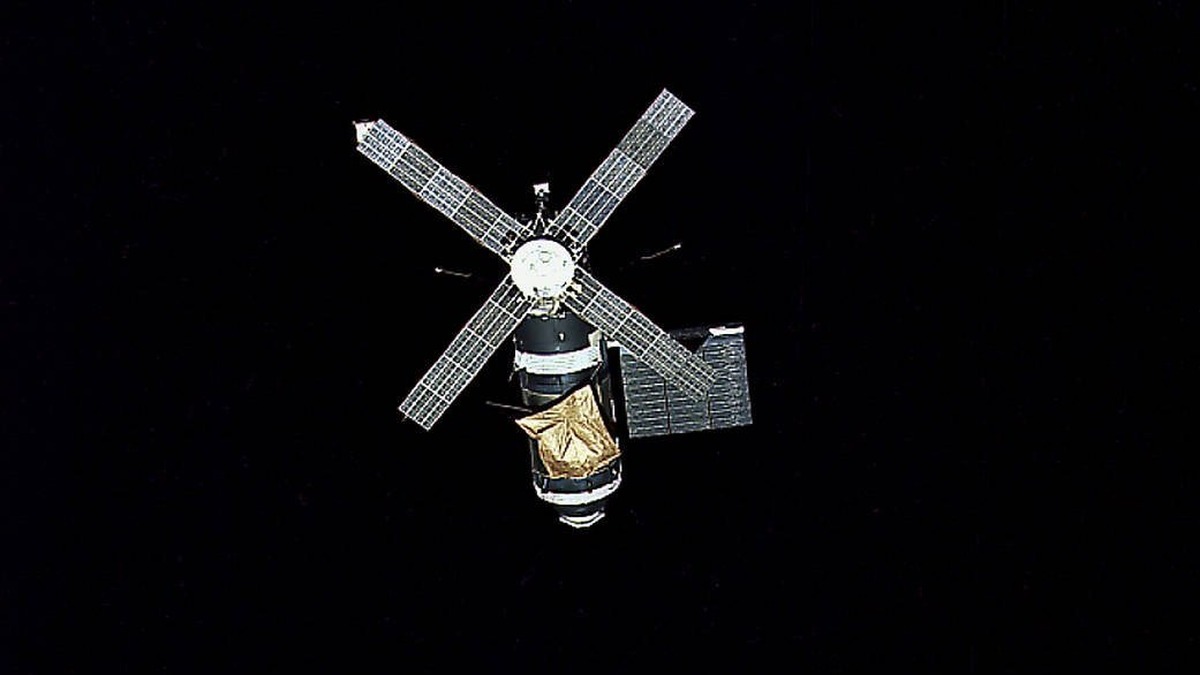
Three astronauts spent much of late 1973 trying to keep up with a timeline that had grown faster than their ability to absorb it. During the first half of Skylab 4, Gerald P. Carr, Edward G. Gibson and William R. Pogue were expected to handle an 84-day mission, new medical work, added exercise, observations of Comet Kohoutek and extra spacewalk duties while they were still adapting to life in orbit. The strain built into a communication problem between the crew and Mission Control, then into a repair session that changed how the rest of the mission was run.
NASA’s detailed history of Skylab 4 shows a story that is more practical than dramatic. The crew did not stop working and drift through a day of rebellion. They kept carrying out medical tests, solar observations, Earth photography, television transmissions and spacewalk preparation while also asking the ground for a more realistic schedule and a clearer assessment of how they were doing.
The reason this episode still matters is that it reveals how long missions depend on workload design as much as endurance. Mission Control had to decide what could fit into a day, the crew had to protect enough time to recover and set up the next task and both sides had to repair a working relationship before irritation hardened into mistrust. Skylab 4 finished with more science than planned, but it did so only after the schedule itself became part of the mission problem.
Why the timeline became too tight
Skylab 4 launched on Nov. 16, 1973 with a crew already facing an expanded assignment. Earlier crews had stayed 28 days and 59 days. The third crew’s mission had been provisionally stretched from 56 days to 84, which meant more experiments, more daily exercise and more chances for small delays to compound across the flight.
According to NASA’s program history in SP-4011, Skylab had already become a station where crews proved they could exceed expectations. That success helped create a hidden trap. Mission planners built the opening weeks of Skylab 4 as if Carr, Gibson and Pogue had already reached the smooth, practiced tempo that the previous crew achieved only after nearly two months in orbit.
The overload came from several directions at once. Daily exercise time increased by 50 percent, new medical experiments were added and Comet Kohoutek observations brought two extra spacewalks and more observing sessions. NASA later summarized the result bluntly: the early timelines left little room for familiarization, cleanup between tasks, or recovery from ordinary mistakes and hardware trouble.
How the crew kept working while the tension grew
Repeated requests to lighten the schedule did not bring a quick fix and that is where the communication problem sharpened. The crew felt the pace directly because every unfinished job rolled into the next one. The ground felt pressure from the other side because each day’s science return depended on keeping the plan moving. A large station made the friction worse, since moving between tasks took time that paper timelines could underestimate.
NASA’s later mission history in SP-4219 describes an especially revealing point near midmission. Carr asked Mission Control for an assessment of the crew’s performance and for a follow-up discussion. That request did not come from a day of refusal. It came after days filled with cardiovascular tests, Apollo Telescope Mount observations, Earth-target photography, television transmissions and preparation for more work.
The official record from Dec. 25 through Dec. 29 also shows how easy it was for later storytellers to turn ordinary operational details into legend. One orbit passed without contact because of tracking geometry. Dec. 26 was a scheduled off-duty day after a Christmas spacewalk, although the astronauts still carried out observations and conferences. On other days they were busy enough that the idea of a blank, workless protest simply does not fit the sequence NASA preserved.
What the 30-minute conference actually changed
Near the end of Dec. 30, the crew and capsule communicator Richard H. Truly used three consecutive tracking-station passes to hold what NASA called an operations conference. The talks added up to about 30 minutes. Carr later called it the first sensitivity session in space, which captures the tone better than any headline about a strike.
The conference focused on control of the workday. The crew wanted off-duty days protected every 10 days, less scheduling pressure during pre-sleep and post-sleep periods, more time to clean up and translate across the station between jobs and exercise periods that were not split apart. Those requests were less about comfort than about building a rhythm the crew could actually sustain for the rest of the flight.
Mission Control also responded with something concrete: a five-page summary of the crew’s accomplishments and an assurance that they were performing well compared with earlier crews. Carr closed the exchange by telling Truly, “I do appreciate all your hard work on this little session we had tonight. I think it did a world of good.” Truly answered, “I do too, Jerry. I feel real good about it.” The key change was not a burst of emotion. It was a repaired channel for discussing workload, timing and trust.
Why the repair improved both communication and output
Team repair worked because the conference dealt with the mechanics of frustration. A space mission schedule is also a control system. If rest, setup time and exercise are squeezed too hard, the crew spends more energy chasing the clock and less energy doing science cleanly. Giving the astronauts more say over those edges of the day helped both sides regain a shared picture of what good performance looked like.
NASA’s history says that from that point forward there were no further incidents about the timeline and the crew’s productivity rose markedly. That outcome makes sense in ordinary human terms. When people believe their concerns are being heard and the plan now matches real conditions, communication becomes less defensive. Fewer minutes are wasted arguing with the schedule and more minutes can go into the task itself.
The crew still worked hard after Dec. 30. They completed another spacewalk, more Apollo Telescope Mount sessions, Earth observations, medical studies and the long end of an already record-setting mission. What changed was the balance between workload and autonomy. Crew autonomy did not replace the ground. It gave the astronauts enough control to work with the ground instead of fighting a calendar that had stopped fitting the station’s real tempo.
Why the strike story lasted after the evidence was available
The myth survived because a dramatic label travels faster than an operational explanation. NASA’s history traces the public strike claim to a 1976 article and book by Henry S. F. Cooper, then to a Harvard Business School case study that repeated the story without interviewing the astronauts or NASA staff who were directly involved. Once that version entered circulation, later writers had a tidy conflict to repeat.
Yet the mission record points elsewhere. A review of the days usually cited for the supposed walkout shows a crew still performing observations, medical work, conferences with scientists and spacewalk preparation. On Christmas Day, Capcom Russell L. Schweickart even joked that the crew could take the next day off because Dec. 26 was already planned as an off-duty day and Carr replied that they would have their answering service up tomorrow. Later readers could mistake that joking exchange, or a silent orbit caused by tracking coverage, for evidence of a shutdown.
Workload planning, crew-ground communication and schedule control tell the more useful story. Skylab 4 shows how a team can drift into conflict when a timeline outruns the people living inside it and how a relatively short conference can restore trust when both sides speak plainly about the real source of the strain. The mission ended on Feb. 8, 1974 after 84 days in orbit, with more science accomplished than planned, which is a stronger conclusion than the later myth ever was.