Thirteen men lived through 13 months at Concordia station in Antarctica while researchers checked their sleep, fatigue, sleepiness and reaction speed every six weeks. The study found a broad pattern that Mars planners care about immediately: psychomotor speed dropped, sleep onset often lengthened and breathing during sleep showed strain linked to altitude. At the same time, the differences between one crew member and another stayed surprisingly steady across the campaign.
The paper, published in Sleep and indexed by PubMed, followed the winter-over crew at Concordia because the station reproduces several pressures expected in deep-space travel. Crew members remain cut off for months, live under an artificial schedule, experience prolonged darkness and work at an altitude that stresses breathing. Those conditions gave researchers a practical way to study how people hold up when a mission cannot simply send everyone home.
Concordia is often described by the European Space Agency as a high-fidelity Mars analog. That label does not mean Antarctica reproduces every part of spaceflight. It does mean the station combines isolation, confinement, chronic hypoxia and an extreme photoperiod in one place. For sleep scientists, that combination offered a rare chance to watch how performance changed across an entire year rather than across a short training block.
Why Concordia is used as a Mars stand-in
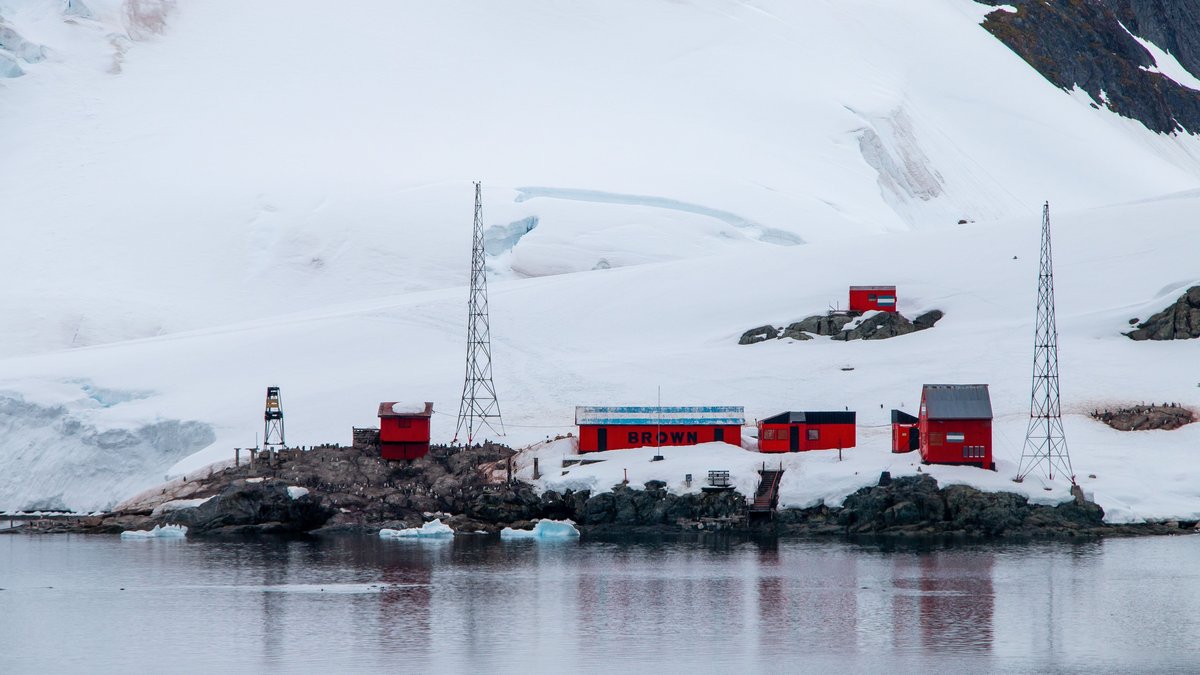
Concordia sits high on the Antarctic plateau, far from the coast, where winter conditions make outside travel nearly impossible for months. ESA’s station overview says the base is built around separated quiet and noisy areas, a detail that helps daily operations but does not remove the strain of remote living in a sealed environment. The crew has limited privacy, repeated routines and little direct contact with the outside world, which makes the station useful for studying long-duration missions.
Altitude adds a second layer of stress. An older ESA Concordia field description explains that the plateau’s dryness and elevation can disrupt sleep while simulating some of the physiological strain of a remote mission environment. Concordia’s height exposes winter crews to chronic hypobaric hypoxia, meaning lower oxygen pressure than most people experience at sea level. The study reported periodic breathing during sleep, a pattern consistent with that environment. If a Mars mission ever combines confinement with altered atmosphere and disrupted light exposure, planners need to know whether sleep problems hit everyone in the same way or whether some astronauts consistently struggle more than others.
Light is the third major pressure. Concordia passes through a polar night when the Sun does not rise for months, then a period when daylight lingers. ESA’s Concordia program highlights circadian disruption as one of the station’s defining research targets. A crew can obey a schedule on paper while still drifting biologically. The study’s authors suspected phase delays, meaning some participants appeared to slide later even when bedtimes were formally imposed.
What the 13-month measurements actually found
The research team used polysomnography, the detailed overnight recording method that tracks sleep physiology, rather than relying only on diaries or quick surveys. They paired those measurements with self-reported fatigue, situational sleepiness and psychomotor testing. Repeating the same protocol every six weeks gave the investigators a long run of observations, enough to compare a participant with himself over time and with the rest of the crew across the same winter-over campaign.
The headline results were direct. Crew members showed increased sleep onset latency, so many took longer to fall asleep. They also showed reduced psychomotor speed, meaning their responses slowed on the performance tasks used in the study. The paper reported that most measured variables stayed fairly stable across the year after the initial adaptation, while obstructive apneas were an exception. Stability here did not mean perfect sleep. It meant the pattern each participant displayed often persisted.
That distinction gives the study its strongest human angle. The researchers found that individual differences in respiratory variables were especially robust, followed by fatigue, situational sleepiness, sleep fragmentation and psychomotor speed. In plain terms, the station environment pushed on everyone, yet the way each person responded retained a trait-like character. A mission doctor interested in future crew selection would read that result as a warning that averages can hide real operational differences between otherwise healthy candidates.
Why reaction speed slipped while personal patterns stayed stable
Reaction time is a simple measure with serious operational value. In a station, spacecraft or remote field site, slower responses can affect instrument use, emergency decisions and error recovery. The paper reported a significant decline in psychomotor speed over time among participants with self-selected bedtimes. That result suggests structure may help some crews preserve performance, although the study was too small to claim a universal rule about forced schedules versus personal choice.
The stronger message is that prolonged exposure did not smooth everyone into one common average. Some crew members consistently showed more disrupted breathing. Others carried heavier fatigue or slower performance across repeated measurements. The authors examined those patterns with intraclass correlations, which test how strongly repeated scores cluster within the same individual. Their results support the idea that individual differences are not background noise. In extreme settings, they can remain operationally relevant for many months.
A Mars crew would face additional burdens that Concordia cannot reproduce, including microgravity and radiation. Even so, the Antarctic findings still sharpen one planning question: should mission designers rely on broad group averages, or should they prepare for a crew in which one person handles circadian disruption well while another repeatedly loses speed under the same conditions? The Concordia data point toward the second view and support more personalized monitoring before a mission leaves Earth.
How darkness, isolation and thin air affect sleep
Sleep at Concordia is shaped by several pressures acting at once. Lower oxygen pressure can destabilize breathing. Months of darkness can unsettle circadian timing. Isolation narrows the range of social and environmental cues that usually anchor the day. ESA’s cognition and performance program links Concordia research with broader work on isolation and confinement because these environments challenge attention, mood and routine together rather than one at a time.
The study does not claim that every crew member became severely impaired. Its value lies in showing which changes appeared broadly and which stayed personal. Increased sleep onset latency points to difficulty initiating sleep. Sleep fragmentation and situational sleepiness varied in a way that remained fairly characteristic for each participant. That pattern helps explain why identical work rules do not guarantee identical outcomes. Two people can share the same bunk schedule, the same weather and the same station, yet carry different biological costs.
The findings also strengthen the case for objective sleep monitoring. The authors recommended ad hoc polysomnography with respiratory monitoring when selecting candidates for extraterrestrial sojourns. That recommendation is practical rather than theatrical. A mission planner who knows a candidate is prone to altitude-linked breathing instability or prolonged sleep onset can plan countermeasures, staffing and watch schedules more intelligently than one who assumes a clean medical exam tells the whole story.
What Mars mission planners can learn before launch
The first lesson is that analog stations are useful because they expose slow problems. A short simulation can reveal whether equipment fails or tempers flare. A 13-month campaign can reveal whether a crew member’s sleep timing drifts, whether fatigue scores settle into a stubborn pattern and whether a modest slowdown becomes the new normal. ESA’s Concordia program exists partly because these long trends are hard to capture during ordinary laboratory studies.
The second lesson is that astronaut screening may need more than one baseline test. The paper argues for respiratory function monitoring during sleep because the most stable individual differences appeared there. For crews heading into deep-space conditions, selection could benefit from repeated measures that test whether a candidate adapts quickly, adapts slowly, or keeps showing the same vulnerable pattern after months of exposure. That approach fits a mission culture built around redundancy, forecasting and prevention.
The final lesson is more human than mechanical. People do not respond to isolation, darkness and altered atmosphere in a uniform way, even when they share training and motivation. Concordia showed that a crew can remain functional while still carrying marked personal limits that deserve attention. For a Mars-era program, the best preparation may come from treating sleep and performance as mission systems of their own, with crew adaptation measured as carefully as fuel, power or life support.