Six volunteers sealed inside a spacecraft simulator for 30 days showed one of the warning signs mission planners worry about most: the brain began working harder to manage attention before routine task scores showed the full size of the problem. The result points to a gap between how people seem to perform on the surface and what their nervous system may already be doing under prolonged isolation.
In a Neuroscience Bulletin study, researchers recorded EEG signals while the crew completed the Attention Network Task on days 2, 14 and 26. A control group of 10 people, tested on the same schedule outside isolation, gave the team a way to separate practice effects from the impact of the sealed environment.
For space agencies, the question reaches beyond one small simulator mission. Crews on long flights must keep focus during repetitive routines, equipment checks and sudden problems, even when daily life has become socially narrow and physically monotonous. The same question also reaches into human behavior on Earth, because people in remote bases, submarines and polar stations often describe the same slide in concentration after weeks of confinement.
Why the researchers looked at attention
People in what scientists call isolated, confined and extreme environments have reported attention problems for years. Reviews of human health during space travel describe concentration as one part of a much larger strain on mood, sleep, physiology and daily performance. Reports from polar expeditions tell a similar story after long periods of darkness, social restriction and distance from ordinary life.
The researchers wanted to test that experience in a more precise way. Attention is not a single switch in the brain. Their task split it into separate functions: staying alert, pointing attention in the right direction and resolving conflict when distracting information competes for a response. Those last moments, when a person must ignore interference and still pick the correct action, often decide whether a complicated job stays safe.
Earlier work had already suggested that isolation acts as a chronic stressor. The paper points to findings from missions such as MARS500 and NASA-linked analog studies, where long confinement was associated with lower overall cortical activity and higher stress markers. The new experiment moved a step further by measuring how the brain responded during an active attention task instead of only at rest.
Where behavior first began to slip
The clearest behavioral change appeared in the task’s hardest moments. When participants had to respond to an incongruent target, meaning the surrounding information pushed them toward the wrong answer, accuracy in the isolation group dropped by the third test. The control group did not show the same decline and the easier congruent trials stayed stable. The problem was narrow, but it landed in the part of attention most closely tied to mental control under pressure.
The authors identified that function as the executive control network. In plain terms, it helps a person suppress a tempting but incorrect response. A crew member using a checklist, monitoring alarms, or sorting useful information from distraction depends on that kind of control again and again. The study therefore suggests that isolation may leave simple task performance looking fairly normal while making conflict-heavy moments more fragile.
Interviews with a psychologist after the mission support that reading. Five of the six isolated participants reported concentration difficulty during the latter half of the experiment. They also described persistent stress, loneliness and an oppressive atmosphere that was hard to shake. Those interviews do not replace objective measurements, but they line up with the direction of the task data.
What the brain signals revealed before the full decline
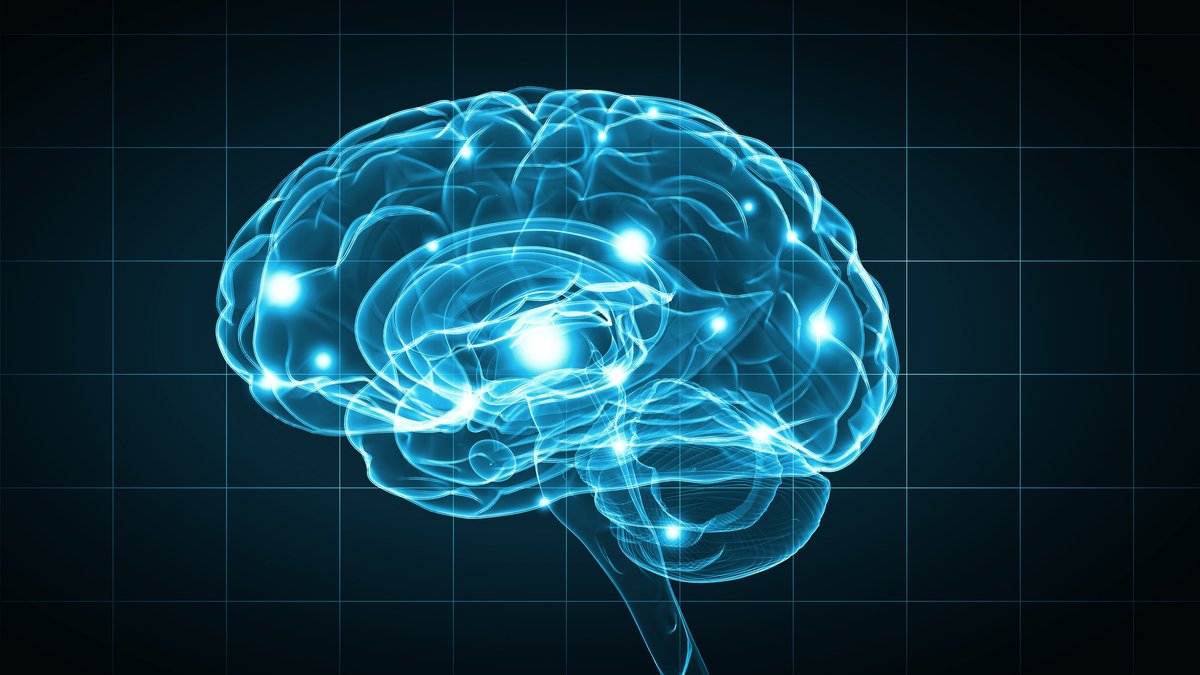
The most revealing part of the study came from the electrical patterns in the brain. Compared with the control group, the isolated crew showed larger early responses known as N1 in alerting and orienting conditions, plus a larger N2 response linked to conflict detection. On its own, a bigger signal does not automatically mean better function. In this setting, the pattern fits the idea that the brain was recruiting extra effort while dealing with the stress of confinement.
Later in the experiment, the conflict-related differences began to flatten. The gap in N2 between incongruent and congruent targets shrank with time in isolation and the same broad trend appeared in P3, a later signal often connected with response control and the allocation of mental resources. The researchers also saw an overall decline trend in P3 amplitude in the isolation group. Behavior showed a drop mainly at the hardest target condition, but the neural record suggested that strain had been building across a wider slice of processing.
That sequence is the study’s most interesting human-behavior result. A person can keep producing acceptable answers for a while by spending more neural effort, then start losing ground when the task becomes more demanding or the strain lasts longer. For astronauts and other isolated crews, that means hidden cognitive cost may appear before a supervisor or even the individual can see an obvious mistake rate rising.
Why isolation may hit control systems harder than simple alertness
The authors argue that prolonged confinement may weigh most heavily on brain systems involved in conflict monitoring and behavioral control. Those systems rely strongly on the frontal cortex and related networks that help people filter distraction, hold goals in mind and choose the correct action when signals compete. A general feeling of stress can raise the load on those systems; a monotonous environment with reduced outside contact can keep that load in place day after day.
Other research has pointed in the same direction. A 2014 review of cognitive performance in spaceflight and analogue environments found a mixed behavioral record, with some tasks holding steady while others faltered depending on the context and the demands. A broader deep space exploration roadmap also treats behavior and performance as central mission risks, especially when crews face isolation, confinement, stress and limited novelty for long periods.
That helps explain why the study did not find strong behavioral damage across every branch of attention. Basic alertness and orienting may remain workable for longer, while executive control starts carrying more of the burden. Daily life offers familiar examples. People under chronic strain can still notice a signal and start a task, yet they struggle more when they must ignore interference, switch plans, or resolve conflict quickly and accurately.
What mission planners can take from a small study
The experiment is informative, but it is also narrow. Only six people completed the isolation mission and the measurements came from a simulated capsule rather than an actual spaceflight. The authors also note that they could not fully separate attention changes from related factors such as emotion, stress intensity, or sleep rhythm shifts. In a sealed habitat, those influences travel together and likely interact.
Even with those limits, the study offers a practical lesson. Monitoring attention in isolated crews may require more than accuracy scores and reaction times. Neural measures, repeated interviews and task designs that stress conflict control could detect problems earlier. That idea fits with broader planning around NASA human performance research, which treats cognition and behavior as operational issues rather than side topics.
For psychology, the article adds something concrete to a familiar human story. Extended isolation seems able to narrow concentration first at the moments that demand control over interference and the brain may show that cost before outward behavior fully gives it away. Future work with larger crews and longer missions will need to test how early these neural warnings appear, how long they last and which countermeasures can keep focus steady when people live far from ordinary social life.