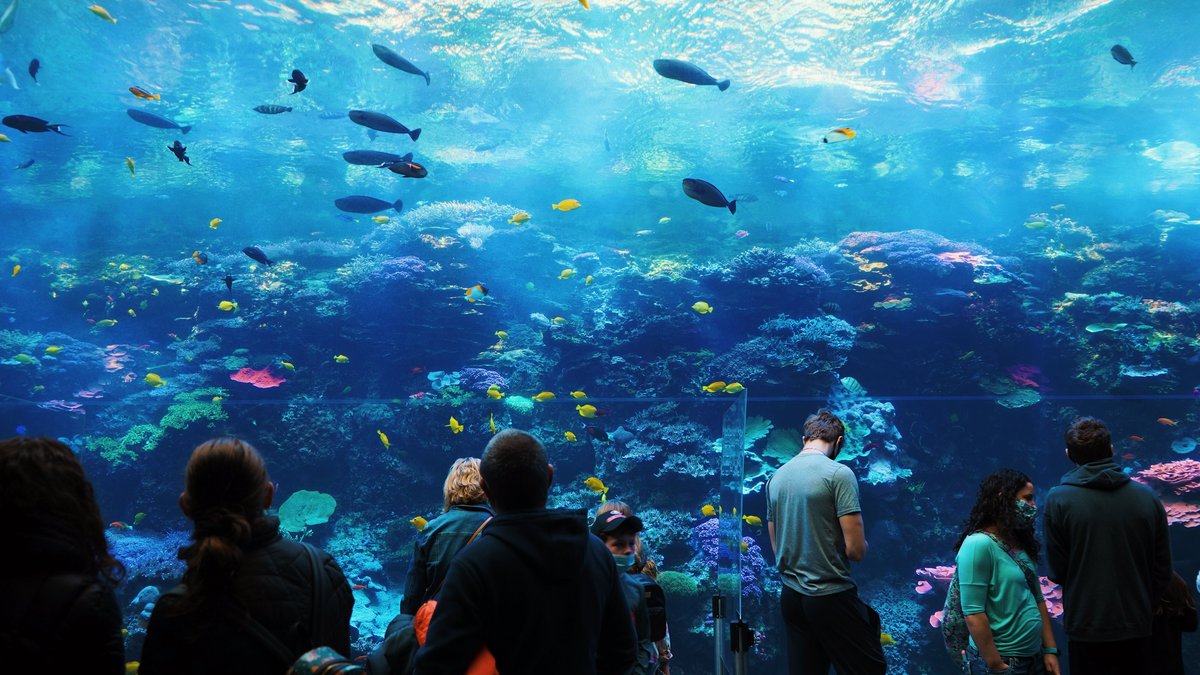
An Environment and Behavior study used a rare chance at the National Marine Aquarium in Plymouth to watch a single 550,000-liter exhibit move from seawater and artificial rockwork to a tank filled with marine life. Because the setting stayed the same while the animals changed, the researchers could ask a simple question with unusual clarity: does a richer living display hold attention longer and leave people calmer than water alone?
The answer was encouraging, especially for mood and physiology. People tended to feel better and more relaxed after watching the tank in every condition, but the effects grew stronger once fish and invertebrates were added. The strongest heart-rate drops appeared in the two stocked conditions and the fullest display produced the clearest improvement in positive mood over time.
The paper treats the restocking as a quasi-experiment and that is the right level of confidence. Visitors were not randomly assigned to different tanks created under laboratory control. They encountered one public exhibit during three real stages of refurbishment. Even with that limit, the design gave the team a valuable way to compare water alone, partial restocking and full restocking in the same place.
A restocking event became a rare quasi-experiment
The study grew out of routine aquarium operations rather than a custom-built lab setup. The main tank had been emptied and refurbished, then restocked in stages. First came an unstocked condition with seawater and decoration but no live animals. Next came a partially stocked condition. The final stage reached 22 species and 151 animals, including 138 fish and 13 crustaceans.
Researchers split the work into two parts. They quietly observed 112 visitors to see how long people stayed in front of the exhibit. They also brought in 84 university students for more structured testing, measuring mood, blood pressure and heart rate after baseline readings, then again after five and 10 minutes of viewing. That second group let the team track physiological calming instead of relying only on what people said they felt.
A real public aquarium also carries some built-in constraints. Species richness and sheer animal numbers rose together, so the study cannot cleanly separate whether people responded more to variety, movement, abundance, or all of those at once. Weather, visitor traffic and ordinary day-to-day differences also changed across the three stages. The authors still gained something powerful from the design: the physical tank, lighting and viewing position stayed essentially constant while the living content changed.
Living displays held attention longer
The most public-facing result came from the visitor observations. People stayed in front of the exhibit longer when it was fully stocked than when it held no marine life. The pattern fits the broader idea that richer natural scenes create more fascination and are easier to keep watching without mental effort, even though the observation alone cannot establish a direct health effect.
The monitored participants showed the same pattern in a more deliberate form. After 10 minutes in front of the tank, people in all three conditions said the experience was enjoyable and made them feel better. Scores rose when the exhibit moved from unstocked to partially stocked and some ratings rose again after full restocking. The paper reports that willingness to keep watching increased by almost four extra minutes between the unstocked and partially stocked stages.
The University of Plymouth summary put the practical takeaway in plain language: higher numbers of fish helped hold attention for longer while also improving mood. That framing stays close to the data. The living display did not simply make the tank look fuller; it made the experience more engaging, which is important when interest and calm are both part of the restorative effect people seek from aquariums.
Heart rate fell fastest in the first five minutes
The physiological pattern was more modest than the mood pattern, but still meaningful. Blood pressure and heart rate generally dropped in all three conditions, which suggests that simply sitting in front of the large tank was calming. The more interesting result came when the stocked conditions were compared with the unstocked control. Heart-rate reductions were significantly greater when marine life was present.
The paper also found that most of the gain arrived early. Across conditions, heart rate dropped substantially during the first 5 minutes, then changed only a little more between five and 10 minutes. That matters for the real-world appeal of the finding. If a calming effect begins quickly, an aquarium does not have to hold someone in place for a very long session before a measurable physiological shift appears.
The European Centre for Environment and Human Health summary highlights the same point, noting reductions in blood pressure and heart rate as viewers watched the displays. The strongest causal wording should still stay narrow. The study shows a stronger calming association when the exhibit contained biota, not proof that adding a few more fish will always lower pulse in any setting for any visitor.
Mood improved most when the tank was full
The mood results are where the staged restocking looks most persuasive. In the paper’s affective measures, valence rose over time, which means participants felt more positive, while arousal fell, which means they generally felt calmer. Watching water alone nudged people in that direction, but the changes were stronger once living animals were present, especially in the fully stocked condition.
The timing pattern is also worth noting. In the partially stocked tank, positive mood improved after five minutes and then leveled off. In the fully stocked tank, positive mood improved after five minutes and kept improving after 10. That suggests a dose-response pattern in both content and duration: more biota helped and under the richest viewing condition a little more time still added something.
Deborah Cracknell’s Plymouth thesis record places the aquarium paper inside a larger line of work on restorative public aquariums. That wider context helps explain why the authors gave so much weight to positive valence and calm rather than to a single dramatic blood-pressure change. The main story is an immediate shift in attention and feeling: a living marine scene seems better than water alone at drawing attention gently and improving how people feel in the moment.
Why the result is promising and limited
Several cautions keep the paper grounded. The researchers note that baseline mood and heart rate were somewhat worse in the fully stocked phase than in the other phases, so part of the stronger improvement could reflect ordinary variation from day to day. They also report that their stress task did not really elevate stress before viewing, which means the study says more about everyday calming than about recovery from a strong laboratory stressor.
Another limit is the confounding of species richness and abundance. A fuller tank brings more individual animals, more movement, more visual complexity and more chances to notice behavior. The experiment cannot separate those ingredients cleanly. It also cannot tell us whether the same response would appear in a small waiting-room aquarium, a reef tank at home, or a very different public display with other species.
Even so, the practical message holds up well. The article came from a real aquarium under normal opening conditions, not an artificial digital simulation. The findings suggest that managed contact with marine life can support brief improvements in attention, mood and physiological calm for people who may never spend much time in the sea itself. The related Plymouth research record points toward the next step: testing how tank size, exhibit design, species behavior and viewing time change the balance between fascination and relaxation.