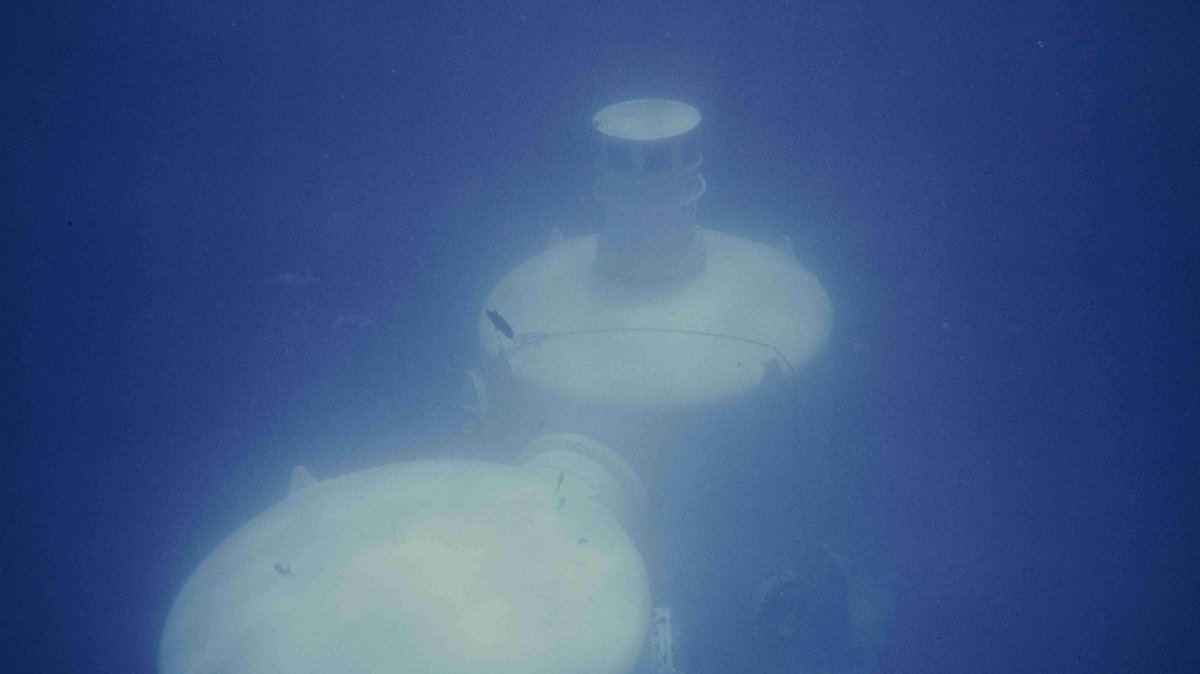
The NASA report on Tektite II reads like an early manual for environmental psychology in space. During the 1970 missions off St. John, 48 aquanauts lived in five-person teams under the sea for 14, 20, or 30 days while researchers tracked attitudes, moods, complaints, leisure and work. NASA wanted more than marine science. It wanted evidence about how people manage when exit is slow, privacy is thin and the social world gets very small.
Each mission placed one engineer with four scientists inside a compressed habitat and a return to the surface required about 23 hours of decompression. The crews could not simply climb out after a difficult day. That constraint made the habitat a useful stand-in for later orbital missions, where confinement, separation from home and dependence on a few other people would also define daily life.
Why NASA treated an undersea base like a spaceflight test
The study team measured the habitat from several angles at once. Aquanauts filled out attitude forms while still underwater, logged daily moods, completed interviews and left behind a trail of behavioral clues in how they worked, rested, complained and used free time. An official NASA discussion of an underwater analog of future space operations makes clear that NASA saw Tektite II as a way to learn about small crews in confining quarters before such questions became harder and more expensive to study in space.
Researchers did not ask only whether people could endure the setting. They asked whether the habitat actually supported the mission. That distinction ran through the findings. The strongest driver of overall habitability was task support, meaning whether the interior helped the crew do science, maintenance, writing and routine work without needless friction.
That focus kept the project grounded. A crew can tolerate discomfort for a while, yet still lose efficiency because the layout is noisy, crowded, or badly organized. Tektite II therefore became a study of performance under pressure as much as a study of emotion in confinement.
Privacy became an operational need, not a luxury
The report’s most durable message concerned privacy. In its summary, the authors wrote that “Privacy, variety and leisure time were valued more by the aquanauts than had been expected.” That was not a small design detail. Areas for private reflection received some of the lowest ratings in the habitat and crews said the cupola and bunks were too small and not private enough.
Complaint counts showed the same pressure point from another direction. Twenty-seven complaints were coded as inadequate privacy, eighteen as no individual study space and thirteen as sleep interference. Those numbers sat beside practical irritants such as noise, poor toilet ventilation, cramped work areas and too many wet-room functions, which meant privacy was tangled up with the basic layout of the station.
A later NASA habitability guideline drew the design lesson directly from Tektite II. It said crew members “did not disturb each other when they were in the privacy of their own bunk area.” From there the document argued for personal compartments, clear territorial boundaries and flexible interiors that each person could adjust to fit individual habits and tastes.
Isolation flattened mood as missions grew longer
Tektite II did not show a dramatic psychological collapse. It showed something quieter and more useful for designers to notice. With longer stays, moods tended to become flat and dull, positive attitudes toward the habitat declined and the share of time spent working slipped. People also showed less activation and less concentration, while average sleep time rose.
The links between morale and behavior were concrete. Aquanauts who felt more pleasant emotions tended to rate the habitat more favorably and to do more total work. Those who reported more depressed feelings spent more time in solitary recreation and idling, slept less well, complained more and were more likely to say there was not enough privacy. Anxiety tracked with lower stability ratings, less positive views of topside and more complaints overall.
Free time became a window into the same problem. Reading books and listening to audio cassettes were among the most valued leisure activities and short non-mission conversation was the most common one. Crews also spent surprising amounts of time looking out viewports for something new. The pattern points to variety as a psychological resource, especially when the setting, schedule and companions rarely change.
Support from the surface affected morale inside the habitat
The underwater crew never functioned alone. Debriefings and complaint records showed repeated frustration with the surface team, including topside unresponsiveness, poor organization and insufficient information. When researchers looked across the data, attitudes toward topside support moved together with attitudes toward the habitat itself. Social climate above the water therefore spilled into daily life below it.
NASA treated that result as a leadership problem in the broad sense, not as a search for one commanding personality type. A 1974 NASA review of isolated-group research listed leader selection, early identification of disruptive trends and preventive methods among the practical questions still needing better evidence for long missions. Tektite II added a grounded example: crews worked better when support systems reduced uncertainty instead of adding it.
The design-guideline report pushed the lesson further. It said two-way television on Tektite helped reduce hostility between the underwater crew and topside personnel because each side could see the other at work and at leisure. Communication mattered here as a form of leadership. Visibility, timely information and informal contact made coordination easier and limited the small grievances that isolation can enlarge.
Leadership in confinement looked more like structure than dominance
Nothing in these reports suggests that isolated crews mainly needed harsher control. The stronger pattern points toward supportive coordination, clear boundaries and room for personal choice. Food complaints fell sharply when aquanauts could choose what they would eat. Leisure mattered more than planners expected. Private areas mattered even when missions were relatively short and workloads were heavy.
The same logic shaped the guideline report’s idea of personal territory. If each crew member has a space that others recognize as theirs, many small conflicts lose force before they grow into resentment. If work zones fit the job, less energy is wasted negotiating access, noise, equipment and interruption. In a confined habitat, environmental design does part of the leadership work.
The sex findings also demand caution. The Tektite II report said women aquanauts adapted positively, but it immediately added that there were too few women to analyze the results statistically. Later paragraphs state that no distinguishing differences were found after inspection of the measures, yet the sample still remained too small for strong claims. The evidence supports restraint, not theory building about male and female behavior in isolation.
What Tektite II still teaches spacecraft designers
Modern NASA standards still carry echoes of these underwater lessons. In NASA-STD-3001 Volume 2, long missions require individual privacy facilities, sleep accommodations with an appropriate degree of privacy and recreational capabilities that support behavioral health. Those requirements sound technical on paper, yet they rest on a simple human truth: people function better when isolation includes places to withdraw, recover and reset.
Tektite II also reminds designers that privacy cannot be separated from work. The crew wanted more individual study space, better support for research and maintenance, more current information and more control over daily routines. Those demands sit in the middle of environmental psychology because mood, performance and social strain kept moving together.
More than fifty years later, the study still feels current because it refused to separate habitat design from leadership, or leadership from lived experience. Small groups in confinement need competence from the surface, room to be alone and enough variety to interrupt monotony. Tektite II showed that a habitat becomes safer and more productive when its social structure and physical structure support each other.