A survey linked daily habits with future crew trust
A Frontiers in Psychology study followed 83 astronauts and analog crewmates across 24 teams and asked a simple question with large consequences for long missions: which small habits make people easier to live with when there is no easy escape? The teams lived and worked in the International Space Station, in NASA’s Human Exploration Research Analog and in the SIRIUS isolation facility. Their missions lasted from 45 to 240 days, long enough for ordinary annoyances to become serious stressors.
Researchers focused on what they call group living skills, which the paper describes as being tidy and considerate of other people. Those words sound mild compared with rocket launches and docking maneuvers, yet they sit close to daily survival in a sealed habitat. A misplaced personal item, a messy shared work area, or repeated disregard for another person’s routines can wear down patience much faster when the same crew eats, sleeps and works in the same confined volume for weeks or months.
The main result was practical. When the authors added group living scores to models of crew functioning, the extra information sharply improved estimates of team viability, a measure that captures whether people feel their team could keep working together effectively in the future. In one crew-level model, the marginal R-squared rose from 0.342 to 0.742, an increase of about 40 percentage points. For mission planners, that is a sign that the quiet business of cleaning up after yourself and reading the room may reveal something important about who a crew will still want beside them deep into a mission.
NASA has treated group living as a mission skill for years
Long missions force astronauts into a kind of social pressure cooker. The paper notes that private crew quarters on the station are only about the size of a telephone booth and even that small refuge is valued enough that NASA requires private quarters for missions longer than 30 days. The same paper also points out that astronauts remain on call for emergencies and do not go home at night. Under those conditions, social friction does not stay confined to dinner. It can spill into work, sleep and morale.
NASA’s own history helps explain why psychologists wanted a better way to measure this. The study cites earlier job analyses in which NASA psychologists ranked group living skills as the third most critical factor for long-duration missions. A later update, using input tied to the ISS and future exploration missions, ranked those skills even higher as isolation increased, reaching second place for a 12-month communication-delayed mission in a smaller vehicle and third for a 36-month Mars-like mission. The message was consistent: longer and tighter missions raise the cost of everyday social strain.
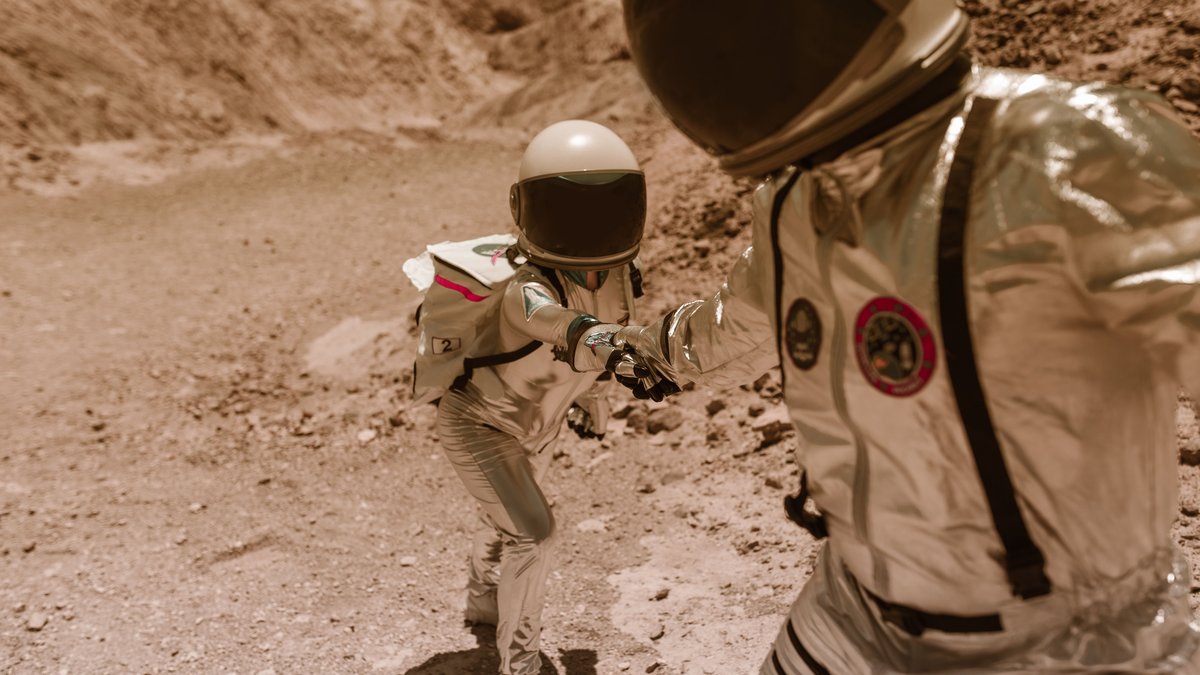
Official NASA descriptions of the analogs used in the study show why Earth-based stand-ins are so useful. HERA is a small habitat at Johnson Space Center built to study isolation, confinement and remote conditions in missions of up to 45 days. NASA’s SIRIUS program page says those missions are designed to examine how isolation and confinement affect psychology, physiology and team dynamics, with missions that have included four months and eight months of isolation. The ISS facts page shows the real operational setting those lessons feed into, a station that circles Earth continuously while crews share limited living volume and a demanding work schedule.
The survey measures tidiness, humor, respect and shared-space care
Behind the long article title and statistical tables, the new tool is strikingly short. The authors built a six-item Group Living Skills Survey after NASA experts reviewed astronaut job analyses, mission journals, debriefs, interviews and psychology research on teams in isolated settings. The goal was to separate living-together behavior from broader teamwork traits. A person can be highly skilled at technical work and still be hard to live with. NASA needed a way to isolate that second issue.
The items stayed close to concrete behavior. The paper lists statements about being clean and tidy with personal items, being clean and tidy with work items, using humor appropriately, appreciating other people’s knowledge and abilities, being considerate of other people’s preferences and communicating regularly. Those items did not remain a loose checklist. Statistical testing supported a two-factor structure that the authors labeled Tidy and Considerate. That split is intuitive for readers and it is useful for researchers because it organizes daily behavior into two recurring sources of friction or ease.
Methods mattered here because the team was trying to validate a measure, not just tell a story about one crew. Across the sample, the survey was administered 115 times, including repeated crew-level ratings in HERA, SIRIUS-19, SIRIUS-21 and across 10 ISS crews. The researchers also examined individual peer ratings and roommate-style ratings where those were available. The result was more than a one-off anecdote about a messy astronaut. It was an attempt to show that behavioral health researchers can measure these social habits consistently over time and across different mission settings.
Added living-skill scores sharply improved viability models
Numbers in the paper make the psychological point clearer. Crew-level group living scores were positively associated with team cohesion, team viability and team performance, but the strongest jump appeared in the viability model. After the survey score was added, the model’s marginal R-squared moved from 0.342 to 0.742. The cohesion model also improved, from 0.35 to 0.64, while the performance model rose from 0.35 to 0.43. Those changes suggest that how people handle shared living conditions tells researchers something that ordinary mission variables and baseline crew differences do not fully capture.
Roommate-style ratings pointed in the same direction. In the HERA data, higher roommate quality scores were strongly associated with higher ratings of team viability and the model’s marginal R-squared rose from 0.599 to 0.750 after that living-quality measure was included. The study also found that mission day sometimes carried a slight negative relationship, which fits common sense. Small irritations often accumulate with time, especially in confined environments where privacy is limited and routines repeat.
Another useful feature of the survey is that it can work as a sociometric tool, meaning it helps show how each person is seen by others in the group. That matters for intervention. If a mission support team can see whether strain is clustering around shared-space tidiness, around respect for preferences, or around communication habits, they have a much clearer target for coaching than they would from a broad warning that morale is slipping. NASA’s human system standard already treats habitability and crew well-being as engineering concerns and this survey gives psychologists one more way to quantify the social side of that work.
The result reaches beyond space crews, though limits remain
Extreme missions are the clearest use case, but the authors argue that the idea travels well. Any job that combines work with shared living can run into the same patterns: submarines, Antarctic stations, military deployments, global shipping, remote field camps and disaster-response teams. Once people cannot separate the workplace from the kitchen, the bunk room, or the narrow bit of private storage they call their own, minor habits carry more weight. A tidy workstation becomes part of trust. Consideration becomes part of recovery time. Appropriate humor becomes part of conflict control.
The study still has limits that should keep readers careful. The sample is valuable but modest, especially once it is divided across several mission types. The article is about validating a survey, so it cannot prove that raising tidiness or consideration scores will automatically create a better crew. Some models were stronger for viability than for performance, which means the survey may be especially good at capturing whether a team feels livable and sustainable, rather than directly predicting every part of mission output. That distinction is still useful because crews who are willing to keep working together are less likely to waste energy on avoidable social strain.
Even with those limits, the paper gives mission planners and space psychologists something they did not have before: a compact tool built from spaceflight experience that can flag a quiet but powerful part of crew life. Space missions depend on engines, software, procedures and training, yet they also depend on whether one person wipes down a shared surface, respects another person’s routines and keeps humor from turning mean. The new survey suggests those habits are measurable and in some cases they explain a large additional share of whether a crew looks viable for the long haul. On a journey to the Moon, to Mars, or through months in an Earth-based analog, that kind of social durability can be as valuable as any hardware checklist.