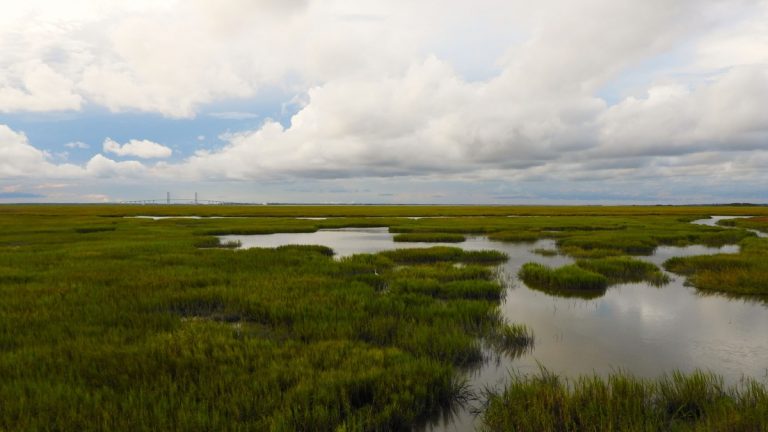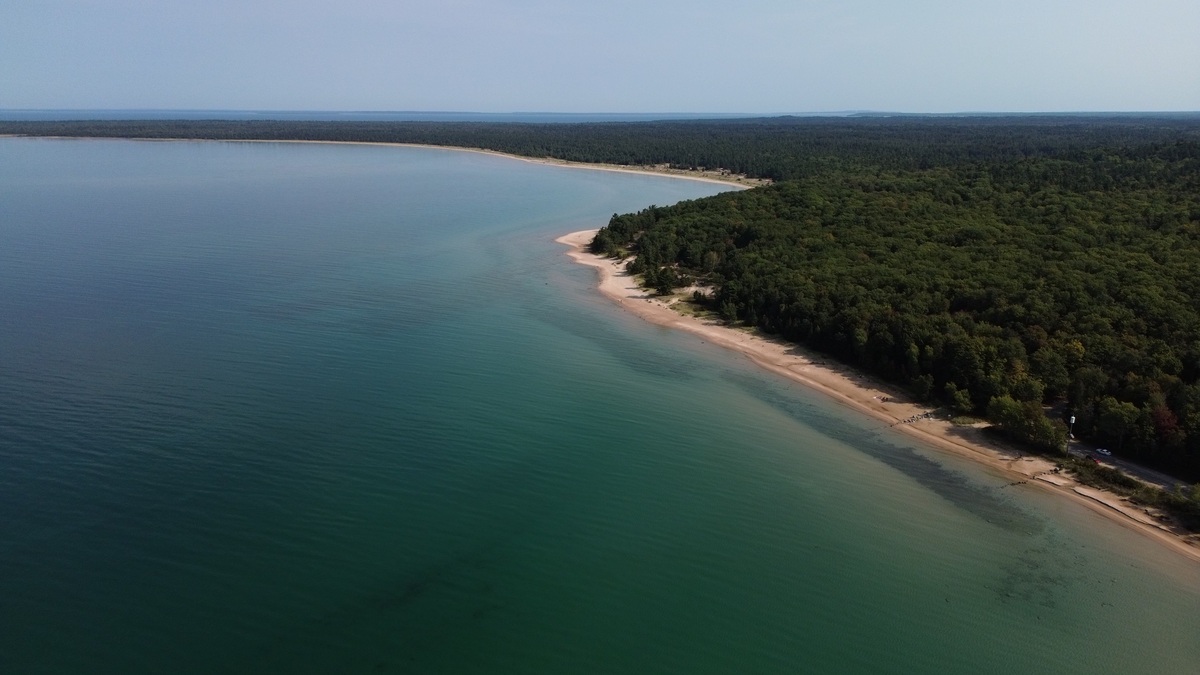
Michigan has 10,899 inland lakes of at least five acres, according to the Michigan Department of Natural Resources. The familiar rounded claim of “more than 11,000 lakes” describes the same watery landscape, but the exact official figure depends on a size threshold and a legal definition.
The DNR’s natural-resources summary supplies the 10,899 figure. Michigan’s inland-water definition includes natural lakes as well as artificial ponds and impoundments that meet the threshold. It excludes the Great Lakes, Lake St. Clair and waters smaller than five acres. A count that includes every named pond or mapped depression will therefore be much larger.
Why Michigan has two common lake counts
State pages use both 10,899 and “more than 11,000.” The first is a precise inventory for inland lakes five acres or larger. The second is an easy public description and may reflect rounding or different database versions. The two figures are close enough to describe the same defined set rather than a discovery of hundreds of missing lakes.
Michigan’s 10,899 figure counts qualifying water bodies, not lake names. Different lakes can share a name and one lake may have alternate local names. Inventory identifiers and mapped boundaries prevent those naming quirks from changing the total.
Some reports estimate about 65,000 inland lakes and ponds when smaller waters are included. Many of those ponds fall below the five-acre threshold used in the regulatory count. Readers comparing states should check whether each number includes tiny ponds, reservoirs and unnamed waters before declaring one state the winner.
What Michigan means by an inland lake
Under Michigan’s Part 301 framework, an inland lake can be a natural or artificial lake, pond or impoundment. It must have a surface area of at least five acres for the standard definition. The state’s inland-lakes explanation also excludes the Great Lakes and Lake St. Clair.
The legal definition serves water-resource regulation, so it is not designed as a geological catalog. A dammed reservoir can qualify alongside a glacial lake. Conversely, a permanent natural pond under five acres can remain real water on the landscape while sitting outside this particular count.
Part 301 also covers rivers and streams, but those flowing waters are not added to the inland-lake number. Michigan separately reports more than 52,000 miles of streams. Combining miles of channel with a count of lake basins would mix measurements that answer different questions.
The Great Lakes are counted separately
Michigan borders Superior, Michigan, Huron and Erie. Those four enormous waters are central to the state’s identity, yet none adds to the 10,899 inland-lake total. Lake St. Clair, between the St. Clair and Detroit rivers, is also treated separately under the definition.
This separation prevents a common arithmetic mistake. Adding four Great Lakes to 10,899 would mix two inventory categories. Argo’s answer to how many Great Lakes there are explains the five-lake system, while the inland count describes smaller waters within the state.
Glaciers created much of the lake-rich landscape
Continental ice covered Michigan repeatedly during the Pleistocene. As the last ice retreated, buried blocks melted and left kettle depressions. Ice also deepened older basins, rearranged drainage and deposited ridges that trapped water. The result was a landscape capable of holding thousands of lakes.
Not every basin has the same origin. Some lakes occupy glacial channels, while others lie behind natural deposits. Human-built dams created additional impoundments. The state’s inventory therefore records water bodies that differ in age, depth and hydrology even when they satisfy the same area rule.
Five acres is a practical dividing line
An acre covers 43,560 square feet, so five acres equals 217,800 square feet, or about two hectares. Shape matters: a narrow five-acre pond can look smaller from one viewpoint than a compact basin of the same area. Surface area says nothing about maximum depth.
A threshold gives agencies a consistent way to administer permits and inventories. It also creates a sharp statistical edge in a continuous landscape. A water body measuring 4.9 acres and one measuring 5.1 acres may function similarly, although only the latter enters the standard count.
Natural lakes and reservoirs share the total
The official definition includes both natural and artificial waters. Michigan has many glacial lakes, but impoundments formed behind dams are part of the inland-water network too. A count presented as entirely natural lakes would overstate what the 10,899 figure measures.
Mine pits and excavated ponds introduce further classification questions. Whether they appear in a particular dataset can depend on permanence, size and how agencies map them. A defensible comparison should name the dataset instead of implying that every body of water has been counted under a universal rule.
Mapping coverage is different from the lake count
Michigan DNR offers inland-lake maps for about 2,700 waters. Its map directory cautions that maps may not represent current conditions. The smaller number of maps does not mean that Michigan has only 2,700 lakes. It means detailed public maps are available for that subset.
Bathymetric mapping requires depth measurements across a basin, which is more work than confirming the surface outline of a lake. Older soundings can also miss local holes or changes in sediment. Anglers and boaters should use current navigation information rather than treating an archival fishing map as a survey-grade chart.
Michigan’s lake number can change
Shorelines move as water levels change, wetlands grow in and dams alter storage. Better aerial imagery can split what appeared to be one basin or combine features that had separate names. Database cleanup can revise duplicate records. An exact count should always be associated with an agency and date.
Climate and land use also affect small waters near the cutoff. A shallow basin may shrink below five acres during drought, while an impoundment may expand after construction. Agencies generally need a stable administrative method, so the inventory does not fluctuate with every seasonal change.
How Michigan compares with the Land of 10,000 Lakes
Minnesota reports 11,842 lakes of at least ten acres. Michigan reports 10,899 at five acres or larger. The thresholds differ, making a direct ranking misleading. Minnesota also uses its state boundary when deciding which waters count, while shared waters require additional conventions.
The useful conclusion is that both states have exceptionally lake-rich glacial landscapes. Michigan’s distinction comes from combining thousands of inland lakes with access to four Great Lakes. The state’s inland-lake habitat program notes that development around shorelines can remove woody cover and aquatic plants that fish depend on.
The clearest answer uses the definition
For a quiz or general reference, 10,899 is the strongest current official answer to “How many inland lakes does Michigan have?” Add the phrase “five acres or larger” so the figure can be interpreted correctly. “More than 11,000” remains a reasonable rounded description.
The count alone cannot describe lake quality, public access or ecological condition. Some waters are private, some have public launches and others are difficult to reach. Argo’s Lake Michigan watershed overview places many inland lakes within the rivers and groundwater routes that eventually connect to the Great Lakes.
Those connections also explain why inland-lake protection affects larger waters. Nutrients and invasive organisms can move downstream, while fish and other species depend on linked habitats. Argo’s discussion of Great Lakes connections shows the broader drainage network and its guide to Great Lakes formation separates basin origin from administrative classification.
For careful citation, use the exact 10,899 count with the Michigan DNR page and record the access date. Use “about 11,000” when a rounded narrative figure is sufficient. Keeping the precision matched to the source avoids creating a false disagreement between state publications.