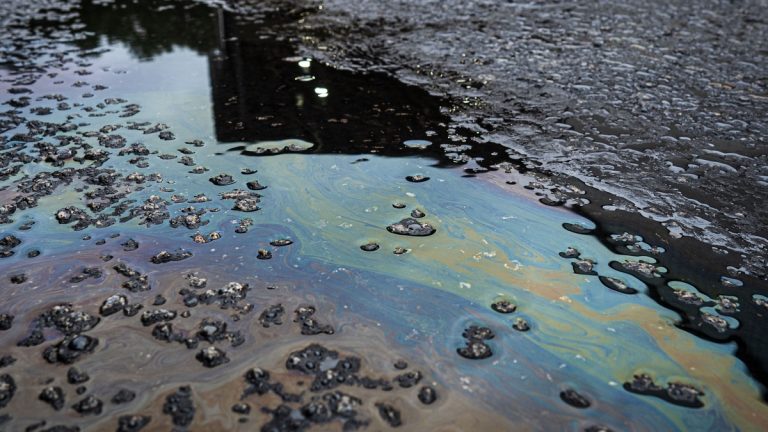
Oil spills harm marine life through physical coating and chemical exposure. Oil can destroy the insulating function of feathers or fur. Toxic components may enter an animal through breathing, feeding or contact with sensitive tissues. Habitat damage can continue after the visible slick has disappeared.
The consequences vary with the product released and the location of the spill. NOAA’s summary of oil-spill effects on marine life describes injuries to birds, mammals and developing fish. Timing determines which species or life stages are present when oil arrives.
A small release in a confined wetland can expose organisms more intensely than a larger slick dispersed offshore. Response decisions therefore begin with the oil’s behavior and the resources at risk, not volume alone. Currents may move contamination away from the release point, while tides repeatedly carry it across the same shoreline. Maps of the slick must be updated as conditions change.
Different oils create different hazards
Petroleum is a complex mixture rather than one chemical. Light products can spread and evaporate quickly, but some components are acutely toxic while present. Heavy fuel oils may persist and coat shorelines for much longer.
Weathering begins as soon as oil enters the environment. Volatile compounds evaporate. Waves may break a slick into droplets and water can become incorporated into the oil. Sunlight also changes some petroleum compounds. Microbes can degrade selected components, but rates depend on temperature and nutrient availability. Weathering changes the exposure rather than guaranteeing that the environmental hazard has ended.
NOAA’s guide to oil toxicity explains why crude oils from different sources cannot be treated as chemically identical. Toxic effects depend on concentration and exposure duration, along with an organism’s biology.
Feathers and fur can lose their insulation
Seabird feathers create a water-resistant insulating layer when their fine structure remains aligned. Oil disrupts that structure. Water can reach the skin, causing a bird to lose heat even when the petroleum itself does not deliver a lethal chemical dose.
Sea otters and fur seals also depend on dense fur. Once oil reduces its insulating performance, animals may develop hypothermia. They must spend more energy staying warm at a time when feeding may already be difficult.
Birds preen contaminated feathers in an effort to restore them. Grooming can lead to ingestion, adding internal exposure to the physical damage. Oiled animals may also become dehydrated or exhausted.
Cleaning is specialized wildlife care rather than a simple wash. Responders first stabilize an animal and assess whether it can tolerate treatment. Release requires restored waterproofing and normal function, not merely clean-looking feathers. Untrained handling can stress wildlife or spread contamination. Spill plans identify qualified rehabilitation facilities before an emergency so animals can enter a controlled process.
Animals at the surface may breathe oil vapors
Whales must surface to breathe, as do dolphins and sea turtles. A slick at the air-water boundary creates a route for vapor exposure. Direct oil contact can also irritate eyes or skin.
NOAA’s discussion of oil at the water surface notes that risk depends on where animals are when the slick passes. Plankton blooms or feeding flocks can make biological exposure highly uneven.
Fish effects depend heavily on life stage and setting
Mobile adult fish may avoid some surface oil and can metabolize certain contaminants. They are not universally protected. Light fuel in shallow or confined water can cause acute exposure, while dissolved compounds can pass across gills.
Fish eggs and larvae are especially vulnerable because developing organs can be affected at low concentrations. Early life stages cannot simply swim away. Exposure may impair heart development or reduce later survival.
Shellfish face a different problem. Many remain in one location and filter water for food, increasing contact with dispersed contaminants. Some species eliminate petroleum compounds slowly enough to raise seafood-safety concerns.
NOAA’s review of fish and whale exposure explains that effects vary sharply by oil type and habitat. An absence of floating oil does not prove that every edible tissue is safe.
Fisheries can close while agencies collect samples. Reopening depends on testing and risk assessment. The closure protects consumers while preventing uncertainty from being transferred to commercial markets. The Food and Drug Administration’s Gulf spill record describes sensory and chemical testing used before closed harvest areas reopened after Deepwater Horizon. A reopening decision refers to tested seafood safety, not proof that every ecosystem effect has disappeared.
Sea turtles can encounter oil throughout their lives
A turtle may inhale vapor when it surfaces inside a slick. Feeding can bring oil into its mouth, while heavy coating can interfere with swimming. Floating juvenile turtles may share convergence zones where oil and drifting food collect.
Nesting beaches create another route. Oil in sand can contact females or developing eggs. NOAA’s sea turtle impact guidance describes risks that extend from inhalation to contaminated prey.
Indirect effects can outlast immediate contact. Loss of seagrass or prey reduces feeding opportunities. Disturbance from response crews can also affect nesting habitat unless operations account for seasonal use.
Coastal habitats can hold oil after open water clears
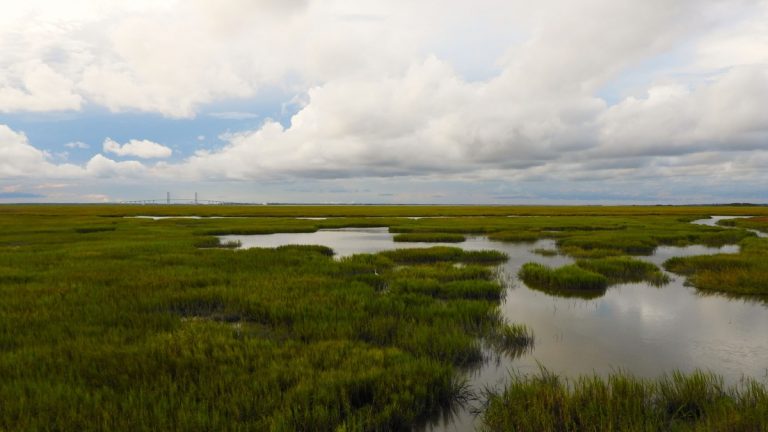
Marsh vegetation slows water and can trap petroleum. Oil may coat stems or enter sediment, where reduced oxygen and limited sunlight slow breakdown. Aggressive access by heavy equipment can damage roots even as crews try to remove contamination.
Mangroves are sensitive because oil can cover breathing structures around their roots. Damage to trees also removes shelter used by juvenile fish. Recovery depends on the amount retained and whether new growth can reestablish.
Corals may be exposed when oil mixes into the water column or settles with sediment. The NOAA coral-spill assessment notes that early life stages are sensitive and that chronic low exposure can also be harmful.
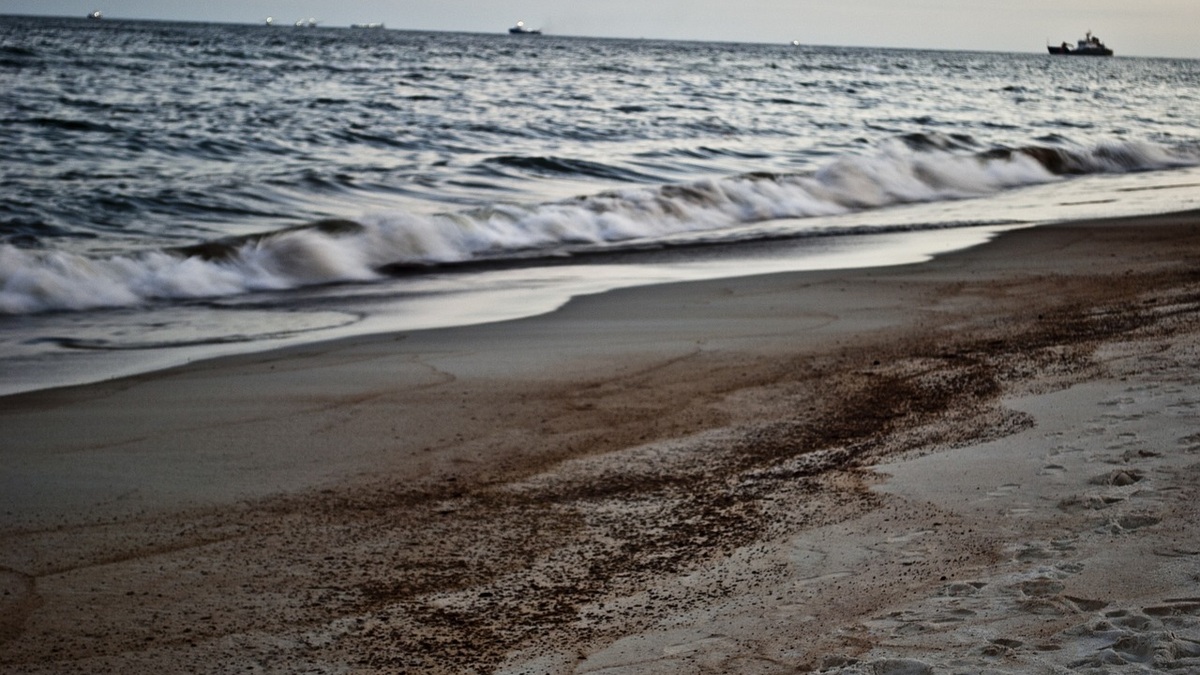
Shoreline cleanup involves tradeoffs. Removing every visible trace may disturb habitat more than leaving weathered residue in place. Responders compare the likely benefit of an action with the added injury it could cause. Low-pressure flushing or manual removal may suit one shoreline, while another is too sensitive for intrusive work. The decision depends on habitat and oil condition.
Damage assessment continues beyond emergency cleanup
Emergency response aims to control the source and limit spreading oil. Natural resource damage assessment asks a different question: what ecological services were lost and what restoration can compensate for that loss?
Scientists compare exposed areas with reference conditions and track recovery over time. They may examine survival or reproduction in selected species. Habitat use and contaminant persistence provide further evidence without assuming that one measurement represents the entire ecosystem. The U.S. Fish and Wildlife Service describes its role in protecting and restoring wildlife after illegal discharges. Multiple agencies act as trustees for different public resources.
The U.S. Environmental Protection Agency’s summary of the Oil Pollution Act describes federal planning intended to reduce releases and improve response. Prevention remains more reliable than trying to reverse ecological damage after petroleum enters the sea.
Long-term monitoring must distinguish spill effects from other pressures. Temperature shifts or disease can influence the same populations. A well-designed assessment documents exposure and evaluates plausible biological pathways before attributing a change to oil. Baseline information collected before an accident is especially valuable, but comparable reference sites can help when such records are incomplete.
Impact is a combination of exposure and vulnerability
There is no single biological outcome called an oil-spill effect. Exposure pathways differ between a diving bird and a buried shellfish. Sensitivity also changes between an embryo and an adult of the same species.
Reliable assessment follows the oil through water and habitat, then connects measured exposure with biological evidence. The approach avoids assuming that the largest visible slick caused the greatest injury. It also keeps response focused on the organisms and places that face the highest risk. Recovery time differs among resources because a mobile fish population can respond differently from a damaged marsh. Continued monitoring tests whether restoration is producing the intended ecological benefit.
Related reading: how hurricanes affect marine life and the biggest threats to seabirds.