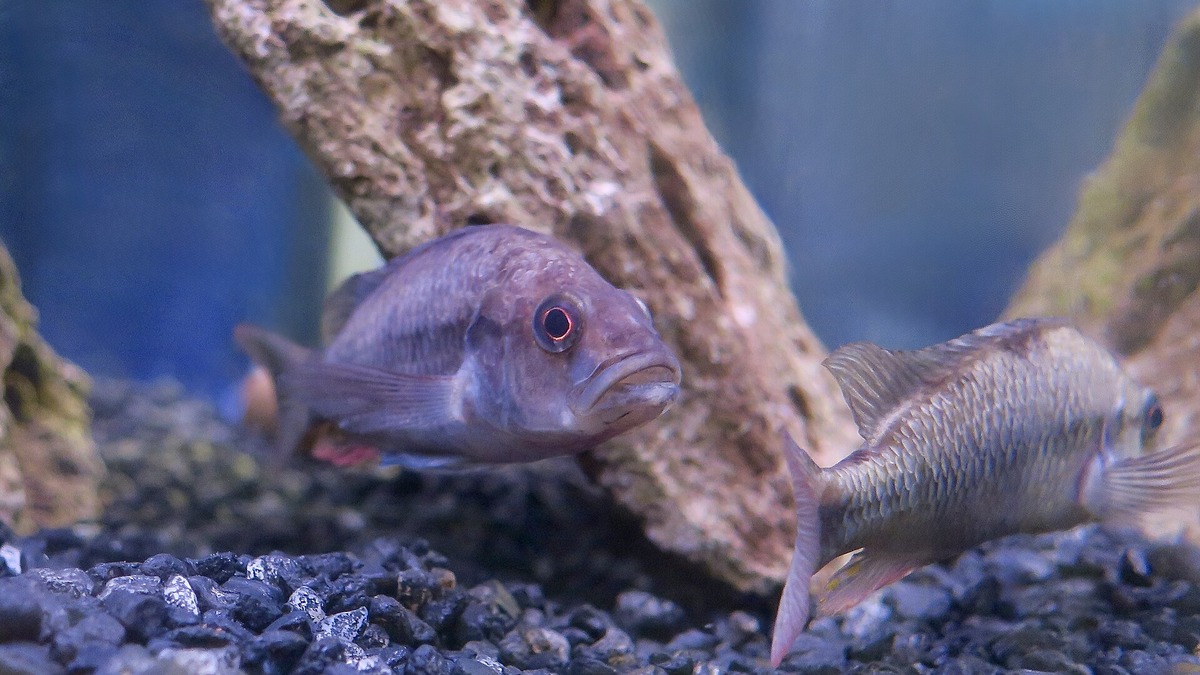
Lake Victoria supports cichlid fish, Nile perch, dagaa, lungfish, catfish, freshwater prawns, snails, insects and many waterbirds. Reptiles and mammals live along its wetlands and islands. The wildlife of the wider basin is richer than the open lake alone because papyrus swamps, rocky shores, river mouths and remnant forests add distinct habitats.
Its animal community has also changed profoundly. Introduced Nile perch and Nile tilapia, heavy fishing, nutrient pollution and shoreline habitat loss altered a food web once dominated by hundreds of endemic haplochromine cichlids. Some cichlid species disappeared, many declined and others survived or recovered, so a claim that all endemic cichlids went extinct would be inaccurate.
Cichlids, the lake’s signature fish
Haplochromine cichlids evolved into an extraordinary range of forms within the Lake Victoria region. Closely related species feed on algae, plankton, insects, mollusks, fish eggs or other fish. Differences in jaws, teeth, color and behavior allow them to divide food and habitat with remarkable precision.
Historical species totals vary because scientists continue revising names and discovering populations. An FAO review reported that Lake Victoria may have held more than 250 cichlid species before the Nile perch expansion of the 1980s. More recent regional assessments use higher counts for the broader Victoria system, but figures may include satellite lakes and connected waters.
Many species occur only in a limited gulf, reef or depth band. Bright male breeding colors help females recognize mates in clear water. Experiments and field data on sensory-drive speciation show how light conditions, vision genes and mate choice interact. Murkier water can weaken visual separation among some forms.
Nile perch and a transformed food web
Nile perch are native to other parts of the Nile basin but were introduced into Lake Victoria during the twentieth century. As the population expanded, these large predators consumed enormous numbers of haplochromine cichlids. Fishing and declining oxygen also contributed to ecological change, so the collapse cannot be explained by one pressure everywhere.
Contemporary records show how quickly the fish community shifted. A 1987 FAO report found that the expanding perch population had a much larger effect on haplochromine stocks than fishing in the areas examined and documented severe regional declines. The evidence supports dramatic loss, but not the blanket extinction of every species.
Nile perch diets change with body size and available prey. Young fish eat invertebrates and small fish, while larger perch can take bigger prey and sometimes other perch. Freshwater prawns and the small native fish dagaa became important in the reorganized food web as many haplochromines declined.
Dagaa, tilapias and other native fish
Dagaa, Rastrineobola argentea, is a small silver cyprinid that schools in open water. It is indigenous to the Lake Victoria basin and supports a major fishery. People dry the catch for food and animal feed, linking a tiny plankton-eating fish to markets far from the shore.
Nile tilapia was introduced and is now one of the main commercial species. Native tilapias such as Oreochromis esculentus and Oreochromis variabilis suffered from competition, hybridization, fishing and habitat change. Some persist in satellite lakes or protected habitats even where they became scarce in the main lake.
Other native fishes include African lungfish, Bagrus catfish, Clarias catfish, mormyrids and several barbs. Lungfish can breathe atmospheric air, an advantage in warm wetlands where dissolved oxygen falls. The fish assemblage therefore includes lineages with very different responses to shallow, oxygen-poor water.
Prawns, snails and lake flies
Caridina nilotica, a small freshwater prawn, became a prominent prey item for Nile perch after cichlid numbers fell. Earlier surveys recognized that its biomass must be substantial because so much appeared in perch stomachs. The prawn feeds on fine organic material and microorganisms, helping transfer energy from detritus toward fish.
Snails and bivalves graze surfaces or filter particles. Mollusk-eating cichlids once exerted strong predation on some of them. Introduced water hyacinth later created dense root mats that offered habitat to invertebrates while blocking light, slowing boats and worsening oxygen conditions when plants decomposed.
Lake flies are aquatic insects during their larval stage and emerge in huge swarms as adults. FAO’s lake comparison linked their abundance partly to the decline of insect-eating haplochromines. Swarms are a natural food pulse for birds, spiders and people in parts of the basin, although abundance varies with season and location.
Birds of wetlands and open shores
Fish eagles, pied kingfishers, cormorants, pelicans, herons and egrets are among the conspicuous birds around Lake Victoria. Their feeding strategies differ. Kingfishers plunge for small fish, cormorants pursue prey underwater and herons stalk shallows along reed margins.
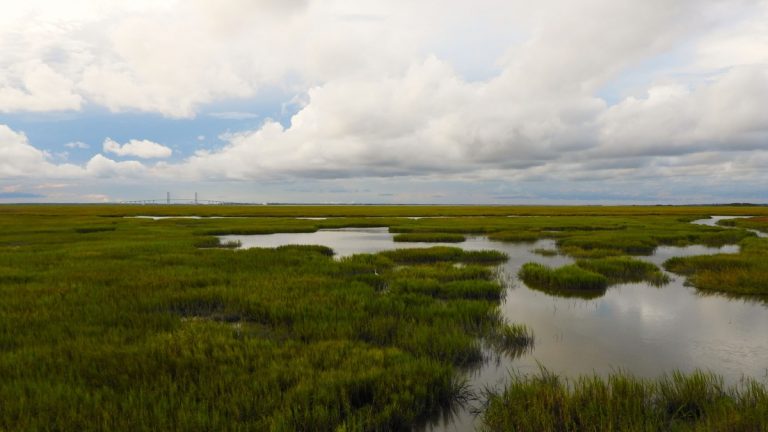
Papyrus wetlands support specialists such as the papyrus gonolek and papyrus canary. Shoebills occur in suitable extensive swamps within the basin, where they hunt lungfish and other aquatic prey. The Ramsar information sheet for Mabamba Bay documents globally threatened birds and sitatunga in a Lake Victoria papyrus wetland.
Bird communities respond to water level, vegetation and fish availability. A shoreline converted to buildings or cropland loses shallow feeding areas, while an intact wetland filters sediment and provides nursery habitat. The Lake Victoria Basin Commission describes forests, wetlands and savanna as connected parts of the regional ecosystem.
Reptiles and mammals
Nile crocodiles occur in the Lake Victoria basin, though their distribution is uneven and human activity limits them around many settled shores. African rock pythons and other snakes inhabit islands, wetlands or nearby terrestrial habitats. Reptiles use the lake edge rather than the deep open water.
Hippopotamuses survive in some quieter bays and river mouths, but they are absent from heavily developed stretches. Their grazing connects land and water because they feed on shore at night and spend much of the day in water. Otters also use parts of the basin and prey on fish or invertebrates.
Sitatunga antelope are closely associated with dense papyrus and other swamp vegetation. Flexible hooves help them move across soft ground and floating plants. Monkeys, bats and small mammals live in island forests, placing them within the Lake Victoria basin even though they are not aquatic animals.
Islands expand the habitat mosaic
The lake’s islands range from tiny rocks to large, permanently inhabited landmasses. Forest remnants on islands such as Bugala and Mfangano support terrestrial animals, while offshore rocks provide resting and nesting places for birds. Sheltered channels may hold different fish communities from exposed coasts.
Island isolation can preserve local populations, yet it does not guarantee protection. Forest clearing, charcoal production, settlement and introduced animals can quickly alter a small land area. Boat traffic and fishing pressure reach remote shores as markets and transport routes expand.
The islands of Lake Victoria include major Ugandan, Tanzanian and Kenyan groups. Their country, area and settlement patterns explain why wildlife management cannot rely on one stable island count or one national agency.
Pollution, low oxygen and invasive plants
Nutrients from wastewater, farms and eroding soil stimulate algae. When organic material sinks and decomposes, microbes consume oxygen in deeper water. Lake Victoria is relatively shallow, with a mean depth near 40 meters, but its deeper offshore layers can still become oxygen-poor.
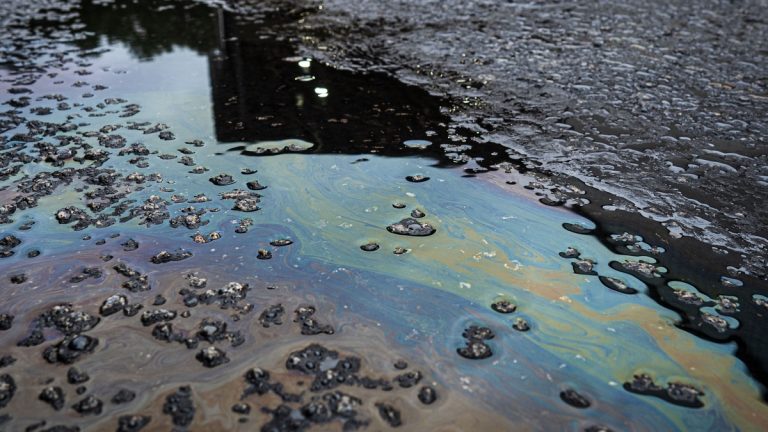
Reduced clarity changes feeding and mating conditions for sight-dependent fish. Plastic, industrial contaminants and untreated sewage add other local risks. The effects vary around a shoreline spanning three countries, so measurements from one gulf should not be generalized to the entire lake.
Water hyacinth, native to South America, spread across sheltered sections during the 1990s. Biological control insects and physical removal reduced major mats, but the plant can return when nutrient-rich conditions and currents favor growth. Root mats shelter some animals while creating serious costs for oxygen, transport and fishing access.
Fishing and wildlife conservation
Lake Victoria is one of the world’s most important inland fisheries. A current regional Nile perch management plan identifies Nile perch, dagaa and Nile tilapia as the dominant commercial species. Illegal gear and harvest of immature fish threaten long-term production.
Protecting wetlands and rocky breeding areas can conserve many species at once. Satellite lakes are especially valuable for cichlids that disappeared from portions of the main lake. Captive breeding may help a few species, but maintaining living habitat preserves ecological relationships that an aquarium cannot reproduce.
The Lake Victoria Fisheries Organization coordinates regional fisheries research and management under the East African Community. Broader conservation also depends on sanitation, erosion control and wetland protection. An aquatic food-chain overview helps trace how plankton, prawns, small fish and predators exchange energy.
A living ecosystem after major change
Lake Victoria should be described as transformed rather than biologically ruined. Nile perch remain influential, introduced tilapias are established and several endemic cichlids have been lost. At the same time, surviving cichlid lineages, invertebrates, birds and wetland mammals continue to form a dynamic ecosystem.
Recovery reports require careful interpretation. A species may reappear in surveys because it survived at low density, occupied an unsampled refuge or received a revised scientific name. Local improvement does not prove lake-wide recovery, just as a local disappearance does not establish global extinction.
Lake Victoria’s position among Kenya, Tanzania and Uganda is explained in the Lake Victoria location profile. For a comparison with another East African lake where island breeding grounds are central to conservation, see the wildlife of Lake Turkana.