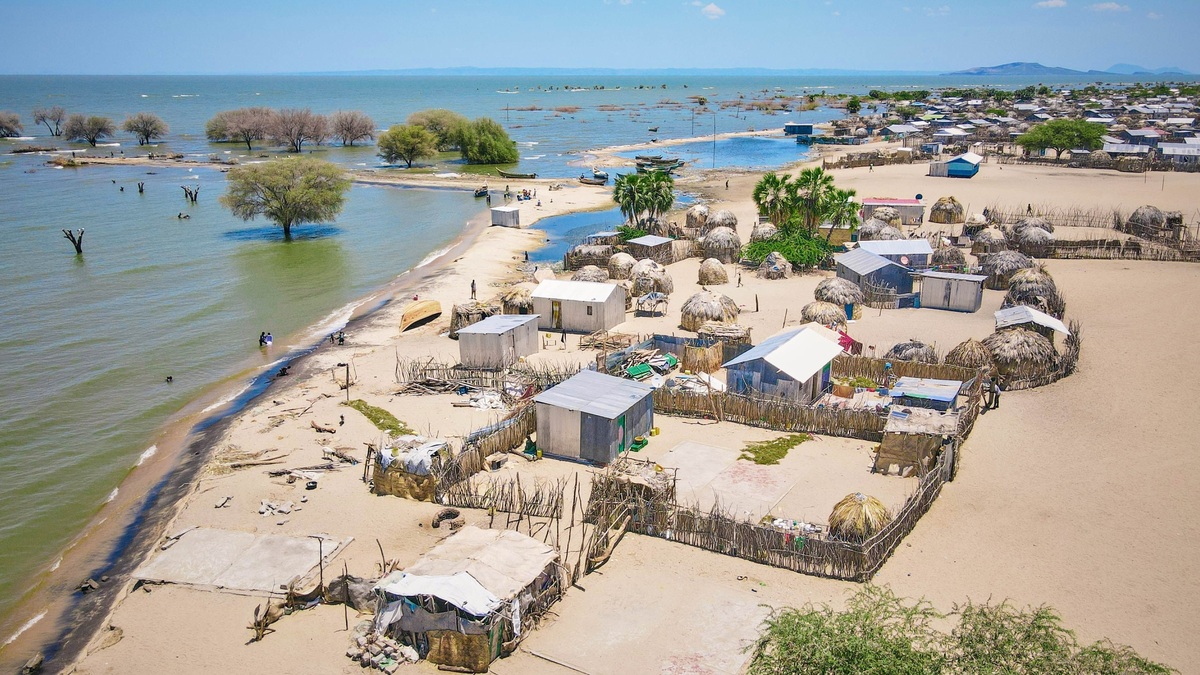
Lake Turkana supports Nile crocodiles, hippopotamuses, dozens of fish species and more than 350 recorded species of aquatic and terrestrial birds in its protected areas. Giraffes, zebras, antelope and large predators occupy parts of the surrounding drylands. The islands are especially important for crocodile breeding and migratory waterbirds.
Present wildlife should be kept separate from Turkana’s celebrated fossil record. Koobi Fora preserves remains of ancient hominins, mammals and mollusks that reveal past environments, while the living ecosystem consists of animals using the lake, islands, river delta and desert margins today.
A saline desert lake with living food webs
Turkana is the world’s largest permanent desert lake and the most saline of Africa’s large lakes. It remains far less salty than seawater, allowing freshwater-origin fish and crocodiles to survive. Salinity varies with river inflow and evaporation and organisms differ in their tolerance.
The UNESCO World Heritage profile describes the Lake Turkana National Parks as a natural laboratory for plant and animal communities. Sibiloi National Park, Central Island National Park and South Island National Park protect portions of a much larger basin rather than the entire lake.
Most water enters from Ethiopia through the Omo River. Because the lake has no outlet, water leaves mainly by evaporation and dissolved salts accumulate. Changes in Omo flow can alter lake level, shoreline habitat and the productivity of shallow nursery areas.
Nile crocodiles and island nesting grounds
Nile crocodiles are Turkana’s most famous living animals. Sandy shores and volcanic islands provide nesting places, while fish supply much of the food for adults. UNESCO identifies Central and South islands as major breeding habitat and describes the wider property as supporting an exceptionally important crocodile population.
Central Island’s crater lakes include one known as Crocodile Lake. The UNESCO description of the island parks emphasizes their breeding concentration. Claims about the world’s largest colony depend on survey date and method, so the defensible point is its globally significant breeding role.
Nesting success depends on suitable shore material, temperature and protection from disturbance. A changing lake level can flood low nests or leave feeding areas farther from nesting beaches. Crocodiles also come into conflict with fishers and livestock keepers along inhabited shores.
Hippopotamuses and aquatic mammals
Hippopotamuses occur around the lake and its island parks, especially where shallow water and nearby grazing are available. They spend daylight hours in water to limit heat exposure, then feed on land. Their numbers and distribution are patchy in this arid landscape.
Hippos move nutrients between shore and water through grazing and waste. Concentrated use of a bay can influence local water chemistry and plant growth. Drought, competition with livestock and human conflict can reduce access to quiet shoreline habitat.
Turkana is not a lake of abundant large aquatic mammals. Its extreme heat, saline water and sparse shore vegetation limit suitable hippo habitat compared with wetter East African waters. Their presence nevertheless adds a major herbivore to the island and delta food webs.
Fish adapted to changing conditions
Lake Turkana’s fish fauna has strong connections with the Nile basin. Nile perch, several tilapias, catfish, tigerfish, barbs and other groups occur in the lake. Species totals vary by source and whether river mouths or the lower Omo system are included.
UNESCO nomination material reported 47 fish species in waters surrounding the parks, including seven endemic to the lake. Those figures describe the assessment and boundaries used at the time, not an immutable count. Taxonomy and sampling can change how species are recognized.
Submerged plant beds in muddy South Island bays shelter spawning fish. River deltas and shallow margins provide nurseries where juveniles can avoid larger predators. Offshore food webs depend on plankton production, which responds to nutrient inflow, wind mixing and water level.
Birds on a continental flyway
More than 350 species of aquatic and terrestrial birds have been recorded in the protected property. Pelicans, cormorants, herons and fish eagles feed around the lake. Flamingos use suitable saline shallows and crater lakes when food and water conditions align.
Turkana also serves as a passage and stopover for Palearctic migrants traveling between Eurasia and Africa. Birds need places to rest and feed during long journeys, making remote islands and undisturbed shallows valuable beyond Kenya. South Island is recognized as an Important Bird Area.
The 2018-2028 national parks management plan identifies Central and South islands as important flyway stops. Seasonal presence should not be confused with year-round residence. A bird seen during migration may use Turkana for days before continuing across the continent.
Flamingos and the crater lakes
Central Island contains three crater lakes commonly called Crocodile, Flamingo and Tilapia. Each is physically separated from the surrounding main lake and can develop different salinity, chemistry and food conditions. Their names describe notable associations rather than exclusive inhabitants.
Flamingos feed on microscopic algae and small invertebrates filtered from shallow water. They may gather where salinity favors abundant food, then leave when levels or chemistry change. A single photograph cannot establish the usual population for the year.
Volcanic terrain gives the island steep, dark slopes and enclosed basins. Those landforms create sheltered habitats within an otherwise wind-exposed lake, helping explain why a five-square-kilometer island holds disproportionate ecological importance.
Snakes, lizards and other reptiles
Several snake species breed or live on the islands, including venomous species noted in park records. Reptiles benefit from hot conditions and rocky cover, though they still need prey and suitable refuges. Lizards occupy lava fields, scrub and settlement edges.
Exact island snake lists require current field surveys. General statements that every island is crowded with venomous snakes exaggerate limited records and ignore habitat differences. Central and South islands are large enough to contain distinct shore, crater and upland environments.
Crocodiles dominate public attention, but smaller reptiles may be important predators of rodents, birds, eggs and insects. Their role links terrestrial island food webs to aquatic ones when they scavenge fish or use shoreline debris.
Wildlife of Sibiloi and the eastern shore
Sibiloi National Park protects drylands along Turkana’s northeastern shore as well as the Koobi Fora fossil region. The World Heritage inventory identifies Grevy’s zebra and Somali ostrich among its desert-adapted wildlife. Distribution and abundance have changed over time under drought and human pressure.
Gerenuk, beisa oryx and Grant’s gazelle are adapted to arid vegetation and limited free water. Predators follow prey across a landscape with few permanent barriers. Mount Kulal, east of the lake, provides a cooler highland watershed and wildlife dispersal area.
Park descriptions should not imply that every named mammal is readily seen or evenly distributed. Some populations are threatened, sparse or locally absent. UNESCO monitoring has raised concerns about declines in large terrestrial wildlife since inscription.
Plants that support animal habitat
Vegetation can look sparse but remains essential. Acacia woodland, doum palms and desert date occur where groundwater and soils permit. Grasses support herbivores after rain and submerged pondweed beds shelter fish in shallow bays.
Central and South islands hold Salvadora shrubs and other drought-tolerant plants. Along seasonally exposed shore, grasses colonize wet sediment. Plant zones move as water rises or falls, changing nesting cover and access to forage.
The Omo delta is particularly productive because river sediment and freshwater build wetlands at the lake’s northern end. Delta channels, floodplains and vegetation create habitat unlike the rocky volcanic islands, allowing the basin to support animals with very different requirements.
The Omo River and wildlife connections
The Omo supplies most of Lake Turkana’s inflow. Seasonal floods historically expanded delta wetlands and delivered nutrients. Flow regulation, irrigation withdrawals and climate variability can change the timing and size of those pulses.
Fish spawning and grazing cycles may respond to inundation. A lower or more stable flood pulse can alter nursery habitat even if the lake remains present. Lake-level change can also shift salinity, pushing tolerant and sensitive species into new distributions.
Because much of the Omo basin lies in Ethiopia while the lake lies mainly in Kenya, conservation is transboundary. Wildlife management near islands cannot by itself control the river processes that sustain the northern delta and much of the lake’s water balance.
Conservation pressures
UNESCO lists drought, climate change, poaching, overfishing, livestock encroachment, siltation and receding water level among major concerns. The pressures interact. Drought concentrates people, livestock and wildlife near the same limited water, increasing conflict and grazing pressure.
Fishing rules need to protect breeding grounds while recognizing that lakeshore communities depend on fish. The national parks management plan organizes conservation across Sibiloi, Central Island and South Island, but much of Turkana’s water and shoreline lies outside those parks.
The World Heritage Committee placed Lake Turkana National Parks on the List of World Heritage in Danger in 2018, reflecting concern about cumulative impacts including developments in the Omo basin. The designation is a conservation warning, not a statement that the living ecosystem has vanished.
Fossils are evidence of past life
Koobi Fora’s fossils include hominins and other animals that lived under climates different from today’s arid conditions. Petrified wood and sediment layers help researchers reconstruct former forests, grasslands and water bodies. Fossil species do not belong on a list of present Turkana wildlife unless a living population also occurs there.
UNESCO recognizes the parks under both geological and biological criteria. One concerns Earth’s history and the fossil record; the other concerns living biodiversity. Keeping the two lines of evidence separate makes Turkana’s significance clearer rather than smaller.
For comparison, Lake Tanganyika’s wildlife evolved in a far deeper freshwater basin, while the animals of Lake Victoria occupy a broad, relatively shallow lake. The regional setting appears in the Lake Victoria location overview and basic energy relationships are covered in aquatic food chains.