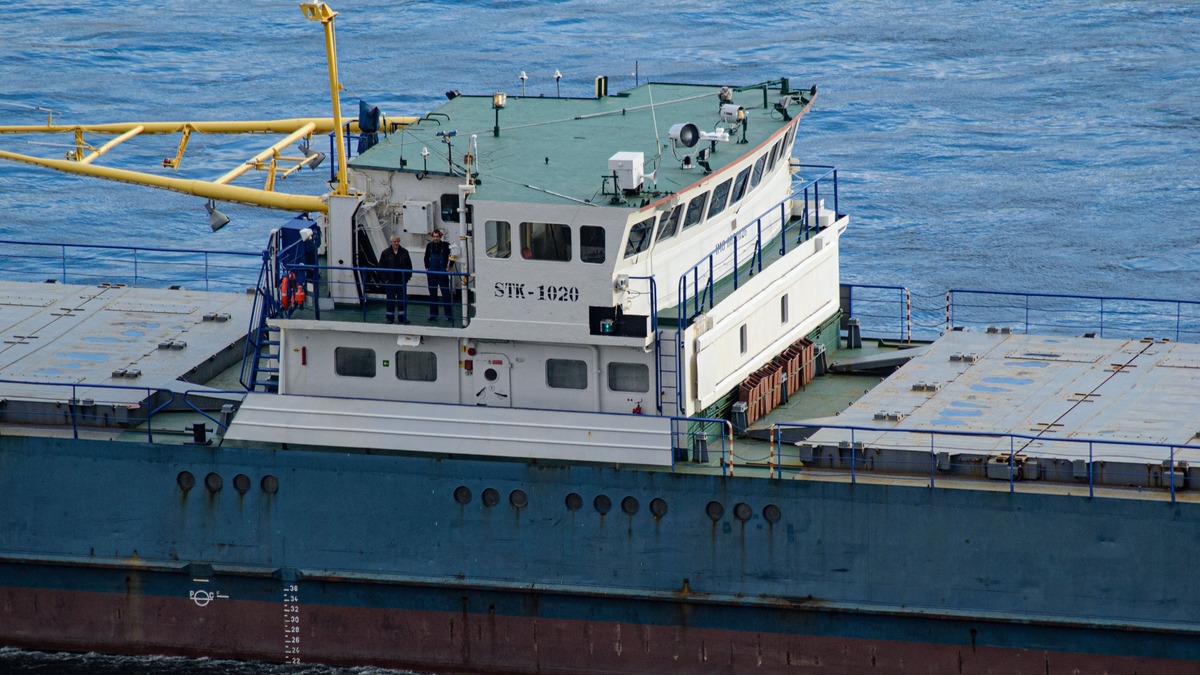
Life at sea puts a crew inside the same workplace for months, often far from family, with demanding schedules and little privacy. A 2019 Frontiers in Psychology study asked 575 merchant seafarers on 51 tanker vessels about stress, resilience, support and job satisfaction, then used structural equation modeling to see which factors carried the strongest statistical weight.
The answer was split between two different outcomes. The model explained 23.8 percent of the variation in perceived stress and resilience was the strongest predictor there. The same model explained 70.6 percent of the variation in job satisfaction and instrumental work support, meaning practical help with tasks and problems, carried the strongest effect on that side.
The paper came from researchers at Maynooth University, Trinity College Dublin and Shell health teams and its publication record is mirrored in PubMed. The numbers do not describe all seafarers everywhere, but they do offer a rare fleet-wide look at what seems to protect workers psychologically when home, coworkers, management and the job itself are all packed into one moving workplace.
Why the study looked across a fleet instead of one ship
The researchers worked with a large shipping company that operated liquefied natural gas carriers, product oil tankers and crude oil tankers on a global basis. Questionnaires were distributed onboard between January and July 2014 and follow-up questionnaires went out between November 2014 and March 2015. That design gave the team one broad baseline and a smaller second wave instead of a snapshot from one route or one captain.
The full baseline return was 575 questionnaires from 51 of 53 vessels. After incomplete responses, office-based staff and extreme outliers were removed, the structural model used 512 baseline cases. The follow-up wave drew 329 questionnaires from 41 vessels, later reduced to 276 usable cases for confirmatory factor analysis. Those filters matter because the headline sample sounds larger than the final analytic sample.
Shipping is a strong setting for this kind of work because the occupation combines isolation, long contracts, safety demands and mixed national crews. The paper notes that more than 80 percent of world trade volume moves by sea. When the people who carry that trade work under persistent stress, the issue extends beyond individual discomfort and into retention, fatigue and the reliability of daily operations.
Resilience had the strongest link with lower stress
The stress side of the model was modest compared with the job-satisfaction side, yet one factor still stood out clearly. The authors report that resilience had the strongest predictive effect on perceived stress, with a standardized path of -0.39. In plain terms, seafarers who scored higher on a resilience measure also tended to report lower stress, even after the model included occupational and demographic factors.
That does not mean resilience solved everything onboard. The model left more than three quarters of stress variation unexplained, which suggests that many other pressures were still operating beyond the variables included here. Workload, sleep disruption, contract length, management style, port demands and family concerns can all press on a crew member at the same time, so one personal trait cannot carry the full burden alone.
The result still has operational value because resilience is at least partly trainable and supportable. Maritime employers and welfare groups often focus on the surroundings as they should, but the statistical pattern here suggests that a worker’s capacity to recover from setbacks also deserves attention. The IMO’s current fatigue and welfare work is framed around system protections and this study helps explain why individual coping resources remain relevant inside that broader picture.
Practical support explained most of the job-satisfaction gap
The stronger and more striking result came from job satisfaction. Instrumental support, the study’s term for tangible help, useful information and assistance with difficult tasks, had a standardized path of 0.72 to job satisfaction. That is a large effect in the model and it helps explain why the job-satisfaction outcome reached 70.6 percent explained variance, far above the stress result.
Practical support is a good fit for shipboard life because much of the job depends on whether another person is available, willing and competent at the right moment. A crew member who receives clear guidance, help with a difficult maintenance task, or backup during a demanding operation experiences the ship differently from someone who has to solve the same problem in isolation. The study therefore points toward onboard relationships as a daily working condition rather than a soft extra.
The international rulebook already treats welfare and health protection as core obligations. Under the Maritime Labour Convention, 2006, member states must ensure that seafarers receive occupational health protection and live and work on ships that promote safety and health. The research adds a more specific lesson inside that framework: practical support from the work environment appears closely tied to whether people feel satisfied with the job they are doing.
Job role and background still changed the pattern
The model was not only about resilience and support. Crew and catering staff reported higher job satisfaction than officers and engineers and some ethnic categories also differed from the South Asian reference group used in the analysis. The authors did not present these findings as a simple hierarchy of happy and unhappy workers. Instead, they treated them as signs that shipboard roles, social arrangements and background conditions can influence how people experience the same vessel.
One discussion point in the paper is especially revealing. The authors suggest that ratings may sometimes gain stronger peer cohesion than officers because work routines, meal patterns and shared social areas can make ordinary interaction easier. That interpretation is cautious rather than certain, yet it fits the central result on instrumental support. Support is easier to deliver when people actually meet, talk and help one another during routine work.
The stress side also showed smaller but real contributions from demographic variables and support. Instrumental support predicted lower stress with a weaker path of -0.16, while ethnicity variables also entered the model. Those effects were not as large as the resilience path, but they reinforce the wider point that shipboard well-being is produced by a mix of personal resources and onboard social organization rather than by one single lever.
What shipping companies can use and what the study cannot prove
The paper does not claim that it discovered a universal formula for mental health at sea. The authors note several limits, including the lack of a known response rate, possible sampling bias and model-fit statistics that were acceptable on some measures but weaker on others. They also emphasize that the model explained job satisfaction much better than perceived stress, so the study is stronger at identifying conditions linked to positive work experience than at fully mapping distress.
Even with those limits, the practical reading is fairly direct. A company that wants a more satisfied crew should pay attention to whether seafarers can get useful help, clear guidance and fair support while carrying out difficult tasks. A company that wants lower stress cannot stop there, because resilience remained the strongest predictor on that side. The IMO’s seafarer support resources and crisis contacts show how seriously official bodies now treat welfare, fatigue and mental strain.
For readers outside shipping, the study offers a broader lesson too. People doing safety-critical work in isolated settings may judge their jobs less by slogans than by whether someone can actually help when the work becomes difficult. Among merchant seafarers in this fleet, resilience best tracked lower stress, while instrumental support best tracked job satisfaction. Those are two different levers and the distinction helps explain why a crew can stay functional only when personal coping and practical backup are both present.