Life at sea can keep people surrounded by crewmates while still leaving them cut off from the relationships that usually steady daily life. In this study, that feeling was linked to lower work engagement and the pattern appeared in both a large survey and a smaller experiment that briefly pushed participants to relive lonely moments from shipboard work.
In a Behavioral Sciences study, researchers examined 1231 active Chinese seafarers through questionnaires. They then tested 177 more mariners in a controlled recall task that measured inhibitory control, working memory, cognitive flexibility and willingness to take on more sea work.
Taken together, the two studies suggest that loneliness and engagement move in the same harmful direction and that executive skills may help explain part of the link. They do not all answer the same question, though. The survey maps associations across a broad working population, while the experiment shows what happened after a short loneliness induction in a lab setting during land-based training.
Why loneliness is a maritime work problem
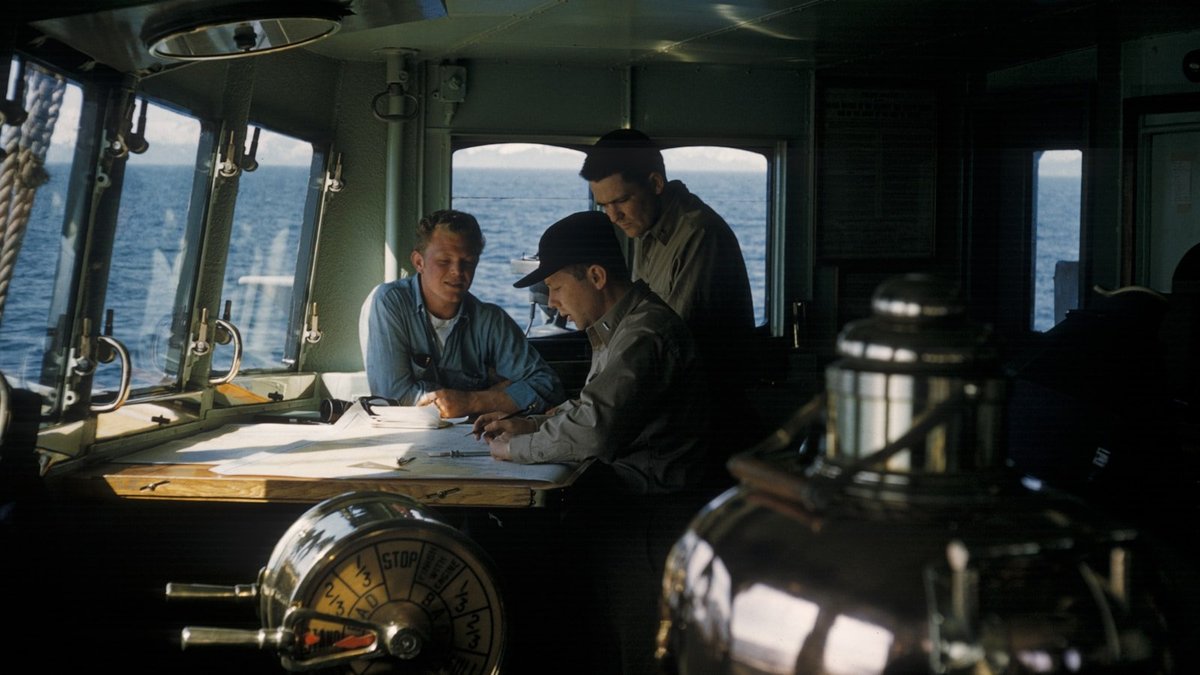
Seafaring compresses social life into a narrow space, a fixed crew and long stretches away from family. A systematic review of maritime mental health has already described depression, anxiety and stress among maritime personnel. That broader record helps explain why loneliness deserves attention as more than a private feeling.
The paper defines loneliness as a subjective state rather than simple physical isolation. A classic review of loneliness makes the same distinction, describing it as distress that grows when social needs are not being met. That framing matters on ships because a sailor can be busy, visible and still feel a painful gap in belonging.
The authors also place the problem inside a work-performance framework. Under job demands-resources theory, people lose engagement when demands keep draining the resources they need to stay energetic and focused. For seafarers, loneliness can sit on top of fatigue, rank pressure and long routine watches. That combination may leave less mental room for committed work.
What the 1,231-person survey could show
Study 1 started with a broad look at shipboard life. The team drew 1356 seafarers from five crew service companies and three shipping enterprises, collected 1258 questionnaires and retained 1231 valid cases from people who had served aboard a ship within the previous year. Their survey window ran from March 10 to March 18, 2023.
The survey treated engagement as more than simple job satisfaction. In the authors’ framework, engaged crews bring energy, dedication and absorption to their work. Those qualities matter at sea because routine operations still demand alertness and emergencies can turn a quiet shift into a high-stakes one in seconds.
Researchers measured loneliness, executive functions and engagement. They then adjusted for age and marital status. The model also accounted for number of children, service route and rank. In the final mediation model, loneliness significantly predicted lower engagement and lower executive-function scores, while executive function significantly predicted higher engagement. The reported indirect effect was modest in size, with ab = -0.04 and a 95 percent confidence interval from -0.06 to -0.02.
That result is useful because it ties three work-relevant pieces together in a large occupational sample. It still remains correlational evidence. The authors explicitly say the cross-sectional design cannot establish strong causal direction, which means the survey supports a pathway hypothesis better than it proves that loneliness on its own is driving later disengagement on board.
What the recall experiment added
Study 2 moved from questionnaires to performance tasks. Two hundred mariners in land-based training volunteered and the researchers randomly assigned them to a loneliness condition or a comparison condition. After excluding 23 participants whose executive-function accuracy fell below 70 percent, the final experimental sample was 177 seafarers.
The manipulation was simple but specific. Men in the loneliness group spent 10 minutes recalling and describing the most recent time they felt lonely while working on a ship. The comparison group wrote about a recent lavish meal instead. After that writing task, participants rated their current loneliness and then completed a recall paradigm battery: a Stroop task for inhibition, a 2-back task for working memory and a number-conversion task for flexibility.
The manipulation worked strongly. The loneliness group reported much higher loneliness than the comparison group, with mean scores of 4.74 versus 1.97 on a 7-point scale. The experiment also found lower work-engagement willingness and weaker task performance in the loneliness condition, which gives the paper something more concrete than self-report alone, even though it still reflects a short induced state rather than months of natural shipboard isolation.
Each task also captured a different part of control. The Stroop task asked participants to suppress a misleading response. The 2-back task tested whether they could hold and update information across short sequences. The number-conversion task measured the cost of switching between rules, which is one reason the flexibility result stands out in the paper’s operational interpretation.
Why cognitive flexibility stood out most
The experimental mediation results did not weigh each executive skill equally. Inhibitory control, working memory and cognitive flexibility all carried significant indirect effects between the loneliness condition and work engagement, yet the largest share came from flexibility. The paper reports an indirect effect of -0.37 for cognitive flexibility, compared with -0.15 for working memory and -0.13 for inhibitory control.
On a ship, that difference is easy to picture. Inhibitory control helps a person block distraction during routine duties. Working memory helps hold instructions in mind while carrying out steps in order. Cognitive flexibility helps a sailor shift plans, reinterpret a problem, or adapt when routine breaks down. That skill may carry extra value when weather changes fast, equipment status shifts and crew interactions become more complicated.
The study’s wider context also points in that direction. A resting-state fMRI study of seafarers reported career-related differences in networks tied to executive control, balance and sensory processing. The new article does not test brain scans and it does not prove that lonely crews lose flexibility first in real voyages. Still, it supports the idea that shipboard work leans heavily on adaptable control systems.
What the findings can and cannot claim
The strongest reading is careful rather than sweeping. The survey suggests that lonelier seafarers also tend to report lower engagement and poorer executive functioning. The experiment suggests that a short loneliness induction can be followed by weaker performance on several executive tasks and lower willingness to choose a longer future sea outing. Those two results point in the same direction, which strengthens the overall story without erasing the differences between the designs.
Several limits stay important. The survey used non-probability sampling, so it may not represent every seafaring population. The experiment involved only men between 35 and 45 who were married and had children. Its work-engagement measure was also indirect, asking participants how long they would choose for a future sea outing if they were placed in a narrated scenario on deck at sunset.
The paper itself also separates what each design contributes. Study 1 reflects how seafarers evaluate their daily psychological functioning in ordinary life contexts. Study 2 reflects short-term performance after a manipulation in a highly structured setting. Reading both pieces together is more informative than reading either one alone, but it still leaves open how strongly the same effects persist during long voyages with real crews and real operational demands.
Even with those caveats, the paper adds a practical signal for maritime employers and researchers. If loneliness keeps drawing attention away from task goals, support aimed at connection, communication and cognitive resilience may protect engagement better than waiting for safety or morale problems to become visible. Future longitudinal work will need to test whether the same pathways hold across real voyages, younger crews, women seafarers and longer periods at sea.