Space crews have to do more than remember procedures when a day runs long. They also have to read each other well, because a tired teammate’s face can signal strain, confusion, or a brewing mistake before any checklist does. A small NASA-linked isolation study suggests that one short night of restricted sleep can blur that social reading skill even when broader cognitive performance stays fairly steady.
The finding came from 32 astronaut-like volunteers who lived in NASA’s HERA, a sealed habitat built to mimic the confinement, workload and separation expected on future exploration missions. In the 2020 study, researchers tracked repeated performance on a computerized battery during eight missions, then added acute sleep-loss challenges to see which abilities bent first under strain.
The broad result was more reassuring than alarming. Across one-week and two-week missions, the crews generally became faster on repeated tasks and reported better mood in several areas as time in mission passed. The sharpest trouble appeared during the sleep-loss tests. In the paper abstract, the authors wrote that participants under partial sleep restriction were “significantly less accurate on a facial emotion identification task”, which points to a specific social-cognitive weak spot rather than a collapse across every measure.
Why emotion reading matters in a simulated spacecraft
Facial emotion recognition sounds like a narrow lab task, yet it sits close to daily crew life. People use faces to judge whether a crewmate is frustrated, withdrawn, or on the edge of overload. In a small, sealed habitat where four people share work, meals and stress, slower or less accurate social reading can raise friction at exactly the moment a team needs clear judgment.
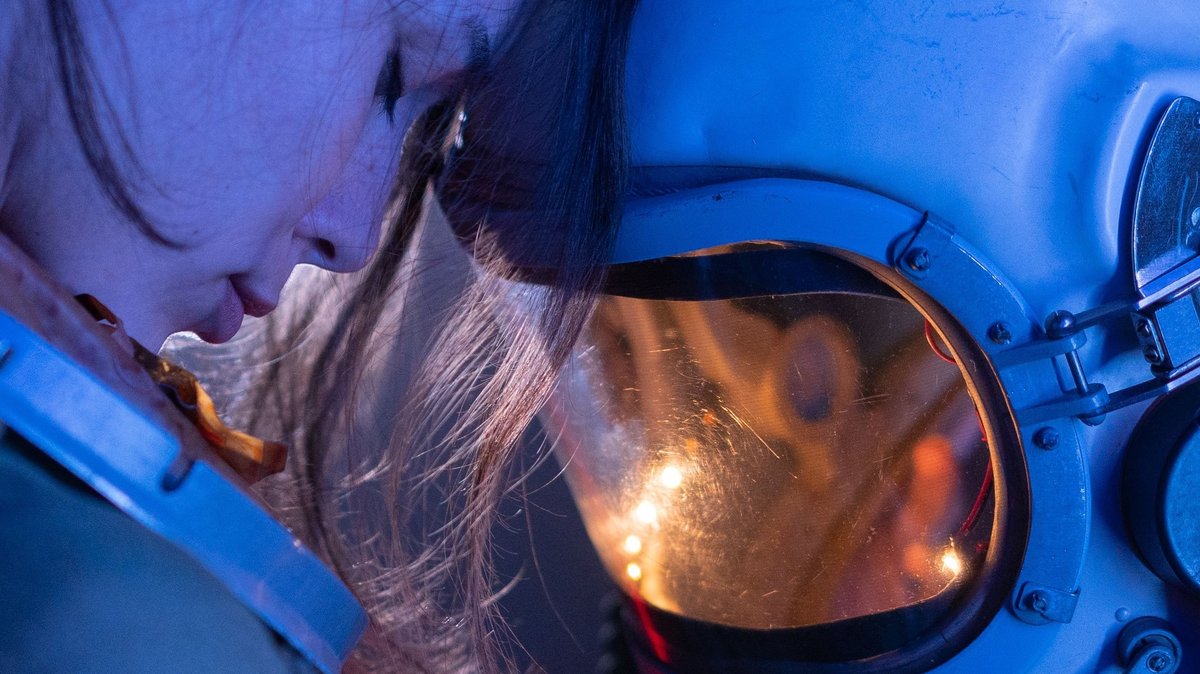
HERA, short for Human Exploration Research Analog, exists to probe those kinds of problems before astronauts face them far from Earth. A NASA TechPort project page describes the program as a ground-based analog used to study behavior, performance and health risks in exploration-like conditions. NASA’s 2015 Human Research Program annual report also says HERA missions exposed crews to spaceflight-like stressors including sleep deprivation, work overload, underload and communication delays.
The paper itself focused on a larger question: what happens when confinement, relative isolation and sleep loss act together. The researchers used a test battery called Cognition, which was designed for astronaut-relevant performance testing and covers several mental domains rather than a single reaction-time score. That broader approach matters because fatigue rarely harms every skill in the same way.
How the HERA study tested sleep loss and performance
The sample included 32 astronaut-like subjects distributed across eight missions with four people per mission. Campaign 1 consisted of four one-week missions and campaign 2 consisted of four two-week missions. According to the abstract, the team gave the same computerized tasks repeatedly across each mission, which helped them watch for both decline and practice effects.
Repeated testing produced one of the study’s central complications. Participants became significantly faster on the tasks across time in mission without losing accuracy, a pattern the authors interpreted as a learning effect. In plain language, people may have improved partly because they kept practicing the same tests. That makes it harder to isolate any subtle harm caused by confinement alone.
Sleep loss was easier to detect because the researchers inserted distinct challenges. During campaign 1, participants went through a night of partial sleep restriction. During campaign 2, they faced a night of total sleep deprivation. The study then compared performance and self-reported mood during those conditions against better-rested periods, which gave the clearest view of what sleep loss changed immediately.
The two sleep protocols did not produce identical deficits. During partial sleep restriction, the standout change was poorer accuracy on the facial emotion task. During total sleep deprivation, the larger hits landed on psychomotor vigilance, cognitive throughput and motor praxis, with slower responses and worse accuracy on some measures. That split is useful because it suggests different degrees of sleep loss may expose different weak points instead of producing one uniform pattern.
What changed after one bad night and what held up
The article’s headline-worthy result comes from the social side of performance. A crew member who misses emotional cues may misread tension, fail to spot distress, or respond too bluntly during a strained conversation. Inside a habitat meant to echo deep-space living, that kind of slip can influence cooperation long before anyone makes a technical error.
At the same time, the study did not show that confinement by itself wrecked cognition over one or two weeks. The authors wrote that isolation in this environment did not induce a significant negative impact in the domains they examined, although the practice effect may have hidden smaller changes. That caution is important. A stable average score does not prove the environment is harmless; it means the study did not cleanly separate any small mission effect from the boost that comes with repetition.
Mood measures moved in both directions depending on timing. Across time in mission, participants reported improvement in several affective domains on the study’s alertness and affect survey. During the sleep-loss challenge, the same surveys showed worsening mood in several domains. The pattern fits ordinary experience: people can adapt to a routine habitat, yet a single hard night can still pull down attention, patience and emotional balance.
A later ISS astronaut cognition paper helps place that result in context. That 2024 report followed astronauts during six-month low Earth orbit missions and also used the Cognition battery, showing how NASA researchers continue to track which mental skills remain robust and which become vulnerable under mission stress. HERA does not duplicate spaceflight, though it gives investigators a controlled way to probe problems that would be harder to isolate on orbit.
What the result means for future missions
The most practical lesson is straightforward. If a short spell of restricted sleep can dent emotion recognition before it dents many other repeated task scores, mission planners may need to treat social-cognitive performance as a safety issue rather than a soft skill. Crew schedules, fatigue countermeasures and monitoring tools usually center on attention lapses and reaction speed. The HERA result suggests that reading people accurately deserves space in that conversation.
Researchers also underline why measurement design matters. The abstract says the battery was built to survey a range of cognitive domains so it could detect the differential effects of stressors common to spaceflight. That wording points to a larger operational challenge: one simple score can miss the specific function that begins to fail first. In this case, a narrow but important interpersonal task appears to have revealed strain earlier than many broader averages did.
Several limits keep the findings from traveling too far. The study involved a modest sample, a simulated habitat rather than real spaceflight and mission lengths of up to two weeks rather than months. The authors also say the practice effect may have masked some effects of confinement. Those constraints support a careful reading: the paper shows a plausible risk signal, especially for social perception under lost sleep and it does not establish a full map of long-duration behavioral hazards.
Even with those limits, the result is easy to understand and hard to ignore. Crews on future missions to the Moon or Mars will work in close quarters, with delayed communication and little room to escape a rough day. When sleep slips, a face that should look worried or strained may become harder to read and that small error in human judgment can spread through a team faster than a slow button press.
NASA’s analog work continues because exploration plans depend on more than rockets and life-support hardware. They depend on whether tired people can still notice what another tired person is feeling, then respond well enough to keep the mission steady. HERA suggests that question belongs near the center of any serious discussion about fatigue in space operations.