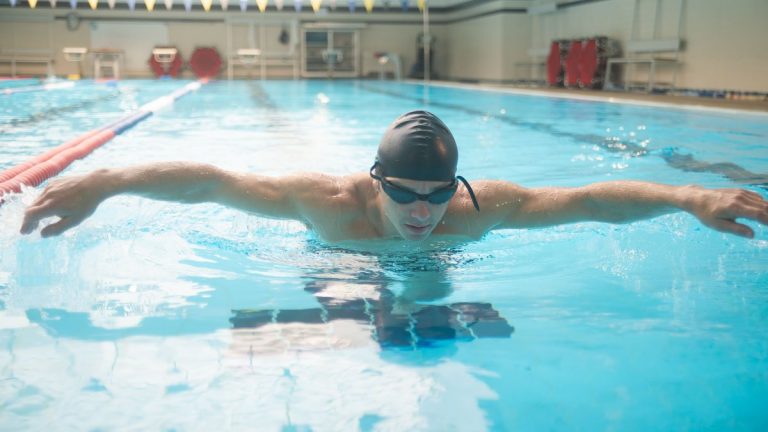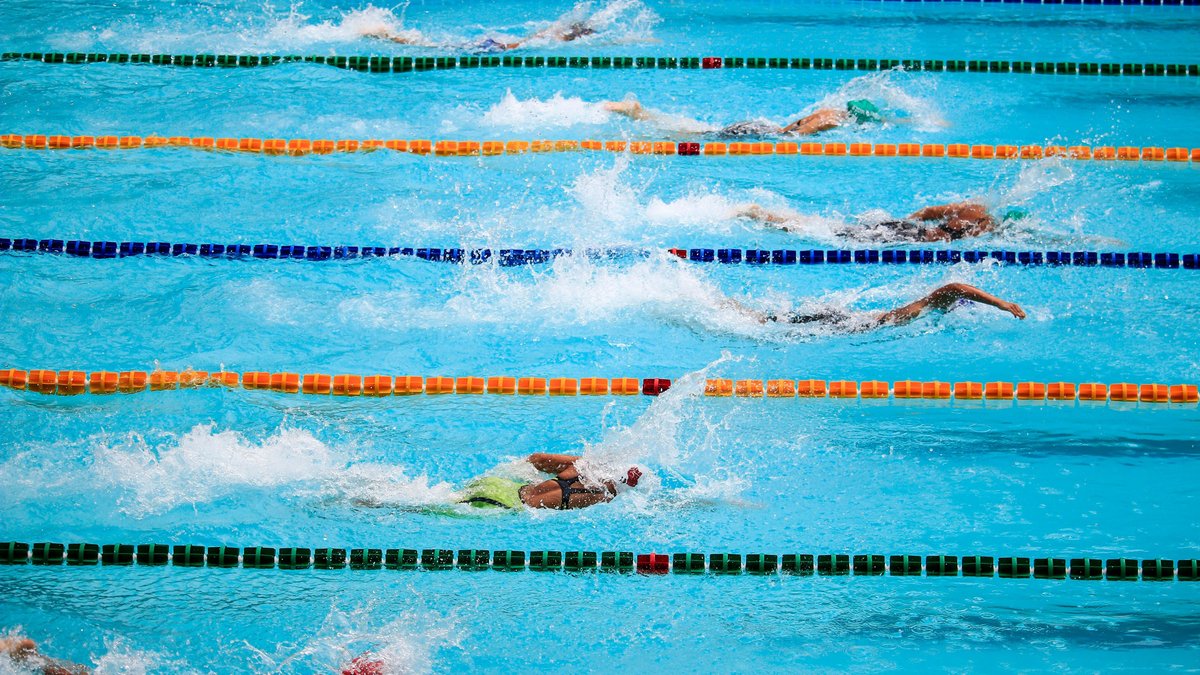
The obvious question is whether mental drills make swimmers faster. A small Scientific Reports study points to a subtler answer first. Over 10 weeks, the clearest shift appeared in the minds of the swimmers who practiced a short nightly routine of visualization and breathing, while the case for extra speed in the pool stayed much less certain.
The trial followed adolescent swimmers between ages 13 and 18 at one club in Denizli, Turkiye. Only 19 athletes took part, so the paper sits firmly in pilot-study territory. Even with that limit, the pattern was coherent enough to matter: the intervention group improved on mental toughness and on the study’s device-based measure of heart-mind coherence, while both groups got faster over time in ways that may simply reflect normal training.
What the swimmers actually did each night
The experimental group kept its standard swimming schedule and added a 15-minute routine before bed. Each session paired structured imagery with breathing: the swimmers pictured themselves completing a 200-meter freestyle, with attention to pacing, technique and a successful finish, while following a four-second inhale through the nose and a four-second exhale through the mouth. Before the formal intervention began, the group spent six days learning the routine so the practice would be performed the same way at home.
The control group stayed with regular pool training alone. According to the paper, both groups trained five days a week for about two hours per session with the same coaching staff. The researchers also tried to keep the extra routine from fading into good intentions. Swimmers in the intervention arm received reminders through a WhatsApp group and logged compliance in diaries that the team reviewed each week.
Outcomes were measured before and after the 10-week period. Pool performance came from a timed 200-meter freestyle. The psychological result came from the Sports Mental Toughness Questionnaire, a brief survey that scores confidence, constancy and control. The physiological result came from the Inner Balance HeartMath device, which produces a proprietary coherence score rather than the standard raw heart-rate-variability measures many physiology papers report.
Where the clearest changes appeared
The strongest statistical change landed on the mental side. The intervention group’s mental-toughness score rose from 43.00 at baseline to 54.22 after the program, while the control group moved the other way, from 48.00 to 44.80. The group-by-time interaction reached p = 0.003, with eta squared of 0.414, which the authors described as a moderate effect size. For a reader outside sports psychology, that means the shift was large enough to stand out inside this tiny sample, even though the sample is still too small to support sweeping claims.
The coherence result moved in the same direction. Average coherence in the intervention group climbed from 1.14 to 2.26, while the control group edged from 1.07 to 1.28. That interaction reached p = 0.008, with eta squared of 0.349. The device is designed around a branded score, so the result should be read as evidence that the nightly routine changed the study’s chosen biofeedback measure, not as a complete map of the swimmers’ nervous systems.
Even so, the breathing component gives the result a plausible pathway. A 2023 coherent breathing trial in Scientific Reports linked paced breathing with better mental-health and wellbeing outcomes in adults, which helps explain why a simple inhale-exhale rhythm could support steadier self-regulation in athletes. The present paper cannot prove that breathing alone drove the gain, because imagery and breathing were delivered as one package, yet the combined routine did seem to change how the swimmers scored on both psychological and physiological measures.
Why the speed result is much harder to pin down
The pool clock did move, but the paper gives good reasons to stay cautious. The control group improved from 232.50 seconds to 227.00 seconds in the 200-meter freestyle. The intervention group improved from 217.32 seconds to 210.54 seconds. Both groups therefore swam faster at the end of the training block and the main effect of time was strong, with p below 0.001. That kind of result fits what many coaches would expect after ten more weeks of regular work in the water.
The key problem is attribution. The group-by-time interaction for swimming performance was not significant, with p = 0.529 and the paper’s own abstract says the gains may reflect practice effects rather than intervention-specific benefits. The intervention swimmers were already faster at baseline, which makes the post-test gap harder to interpret as a clean effect of the mental routine. A bigger sample would have given the randomization a better chance to balance initial ability.
Measurement details also matter here. The swim times were taken in a 25-meter pool with manual stopwatches and averaged across two timers. That is a reasonable field method, but it is still a blunt tool when the question is whether a small extra intervention shaved meaningful time from already trained swimmers. The safest reading is that the nightly practice did not yet produce a clear, intervention-specific speed advantage, even though performance improved over the season.
Why the mental result still matters to swimmers
Competitive swimming is repetitive, technical and unforgiving about attention. A swimmer has to hold pace, technique, breathing rhythm and race confidence together while fatigue climbs. In that setting, a rise in confidence, constancy and control may have practical value even before it turns into a statistically clean time drop. A teenager who rehearses a race every night may arrive at training or competition with a steadier script already in mind.
The imagery part of the intervention also fits older sport-psychology work. A classic imagery training study in figure skating found that structured rehearsal can improve imagery ability and some aspects of performance. Swimmers are not skaters and a 200-meter freestyle is not a judged routine, yet both sports ask athletes to repeat precise movements under pressure. Mental rehearsal offers a way to practice the sequence when the body is out of the water.
Breathing may contribute something different. Slow, regular breaths can reduce the feeling of being crowded by nerves, effort, or expectation. The paper did not isolate that ingredient, so there is no way to say whether imagery did most of the work, whether breathing did, or whether the value came from doing both together every night. The routine’s real strength may be that it gave young athletes a brief, repeatable form of self-regulation that was simple enough to keep using.
Where the evidence stops
The limits are not small footnotes here; they shape the meaning of the result. Nineteen swimmers from one club are too few to settle a coaching question for broad use. The intervention combined two tools at once, so the study cannot separate imagery from breathing. The coherence measure came from a proprietary device rather than standard ECG-based variability metrics. The sex-specific analyses also stayed exploratory, with no significant interaction, which means the study does not yet support different claims for boys and girls.
The trial was registered at ClinicalTrials.gov, which is a useful sign of research discipline, but registration does not erase the practical constraints of a small field experiment. What the paper does provide is a careful first signal. A short nightly routine may help young swimmers feel steadier and score higher on mental toughness while ordinary training continues to improve fitness. The leap from that finding to a promise of faster races will need larger, better-balanced studies that can test whether the psychological gain eventually becomes a reliable performance gain.