Crater Lake can hide a white disk more than 100 feet below the surface, while several other American lakes keep it visible through tens of feet of water. Those observations place them among the clearest lakes in the United States, although clarity changes with the season and cannot be reduced to a permanent national scoreboard.
The ten lakes below have unusually transparent water documented by federal agencies, state monitoring programs, universities or long-running community science projects. They span volcanic calderas, glacial basins, enormous inland seas and reservoirs. Readers comparing them with the largest North American lakes will find that size alone does not determine how far light travels underwater.
Numbers provide the clearest evidence when methods are comparable, but a measured Secchi depth describes conditions during a particular observation. Water color, algae and suspended particles can all change what an observer sees. The result is an evidence-based selection of ten exceptionally clear lakes rather than a claim that every lake in the country has been tested on the same day.
How the lakes were selected
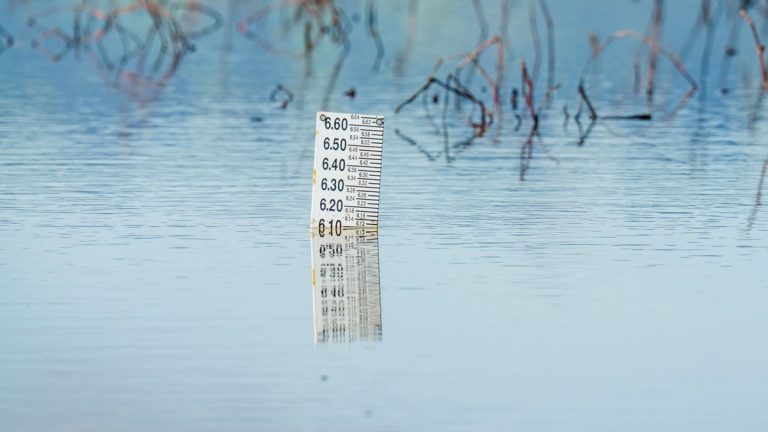
A Secchi disk is a weighted disk lowered into shaded water until it disappears from view. The U.S. Environmental Protection Agency explains that dissolved color and suspended material absorb or scatter light, so a deeper disappearance point generally means greater transparency. Most lakes fall between 2 and 10 meters, while exceptional oligotrophic lakes can exceed 40 meters under favorable conditions.
Comparisons remain imperfect because sampling time and observer technique may differ, as can disk size. Wind can stir sediment after rain. Seasonal algae can reduce visibility, while dark dissolved compounds can color otherwise clean water. The numbering below organizes the list and loosely reflects the strength of the published evidence. It should not be read as an absolute one-through-ten clarity ranking. The distinction between a lake and a pond is also separate from transparency. State-level comparisons of the clearest lakes in New York, clearest lakes in Tennessee and clearest lakes in Maine use the same evidence-first approach.
1. Crater Lake, Oregon
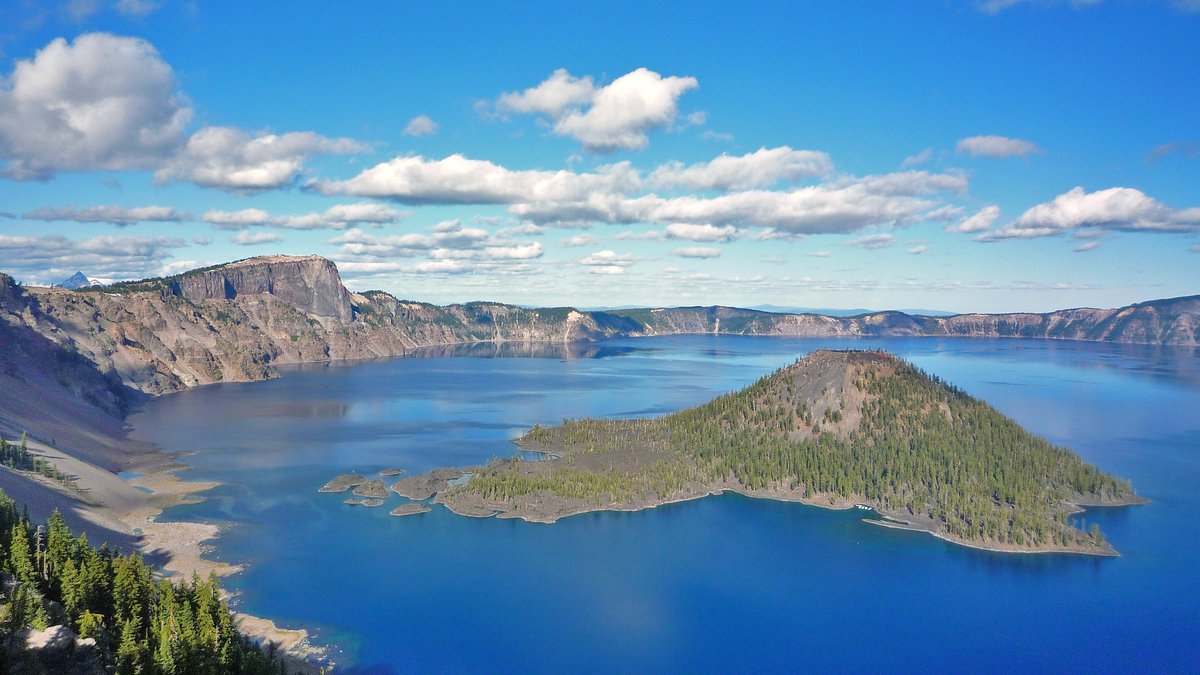
National Park Service monitoring gives Crater Lake an average Secchi depth of 102 feet, or 31 meters and a record reading of 143 feet. The agency describes it as one of the clearest lakes in the world. Its caldera receives water directly from rain and snow because no rivers flow into it.
That closed setting limits the sediment normally carried by tributaries. Great depth and low nutrient inputs also restrict near-surface algae, although annual clarity still varies. Park scientists standardize measurements by working during calm conditions between 10 a.m. and 2 p.m., then averaging observations made while the disk descends and rises. Few American lakes have a longer, more carefully controlled clarity record.
2. Lake Tahoe, California and Nevada
Lake Tahoe remains exceptionally transparent despite a long decline from its mid-20th-century condition. The UC Davis clarity report recorded an annual average Secchi depth of 62.3 feet, or 19 meters, in 2024. Researchers made 27 readings at the long-term index station and another 12 near the middle of the lake.
Lake Tahoe clarity also shows why a single number needs context. The 2024 winter average reached 68.9 feet, while the summer average was 53.4 feet. Fine sediment, organic debris and phytoplankton can scatter light at different times. UC Davis reports that the annual trend has been broadly stable since the late 1990s, but recent summer clarity remains a concern.
3. Lake Crescent, Washington
Olympic National Park’s Lake Crescent is a cold glacial basin with very little nitrogen available to phytoplankton. An NPS lake guide says visitors can sometimes see about 60 feet beneath its blue-green surface. A park monitoring protocol reports an average annual Secchi depth of 17.7 meters, close to 58 feet.
The U.S. Geological Survey describes the lake as oligotrophic and near-pristine, with low concentrations of the nutrients that support algal growth. Its clarity is ecologically valuable and vulnerable. Even modest nutrient additions from developed shoreline areas can promote attached algae, which is why monitoring extends beyond the open-water view.
4. Lake Superior, Michigan, Minnesota and Wisconsin
The largest of the Great Lakes holds remarkably clear water across its offshore basin. A federal assessment of the lower food web found average Lake Superior Secchi depths of about 15 meters in spring and 12 meters in summer over the monitored time series. Those readings translate to roughly 49 and 39 feet.
Clarity is not uniform around the lake. River mouths and the western arm near Duluth receive more colored water and suspended sediment than the open basin. The EPA therefore measures Secchi depth alongside temperature, light and other physical conditions at Great Lakes stations. Lake Superior earns its place here for its vast clear offshore waters, not for identical visibility along every beach.
5. Flathead Lake, Montana
Flathead Lake’s broad, deep basin is famous for high water quality. A Montana nutrient management assessment reports that summer and fall Secchi readings usually exceed 12 meters, or about 39 feet. The document links this transparency to naturally low annual inputs of biologically available nitrogen and phosphorus.
Low nutrient supply limits the amount of suspended algae that can intercept light. Flathead is still a living ecosystem rather than a tank of pure water and conditions vary by location and season. Its repeated deep readings nevertheless provide stronger evidence than a tourism description of “crystal clear” water. Argo’s guide to the clearest lakes in Michigan uses the same emphasis on documented measurements.
6. Great East Lake, Maine and New Hampshire
Great East Lake straddles the state line and has been monitored since 1974. A watershed plan hosted by the Maine Department of Environmental Protection gives it an average Secchi transparency of 35 feet, or 10.6 meters. The report places the lake near the boundary between Maine’s “outstanding” and “good” classifications.
Long-term monitoring combines visibility with phosphorus and chlorophyll measurements. A 2021 highlight report recorded an average of 10.4 meters, while the 2023 average was 8 meters. The change illustrates how weather and runoff can move a lake within a wide natural range without erasing its long record of exceptional transparency.
7. Newfound Lake, New Hampshire
Newfound Lake provides another unusually long northeastern record. Its monitoring program, conducted with university partners, reports a ten-year median clarity of 27.2 feet. The 2025 monitoring summary measured a median of 27.7 feet, exceeding New Hampshire’s high-quality benchmark of 13.1 feet.
Storms reveal how quickly an exceptionally clear lake can change. Tropical Storm Irene carried enough sediment and runoff into Newfound to reduce transparency by 80 percent, reaching just 6.9 feet during the disturbance. Recovery took years. The lake’s return toward its longer-term range supports its inclusion, while also warning against treating any summer measurement as a permanent identity.
8. Lake George, New York
New York’s Lake George is consistently classified as oligotrophic, meaning its open water has low algal production. The state’s 2022 lake scorecard found high clarity together with low chlorophyll and phosphorus. Compared with other New York lakes, Lake George usually records deeper Secchi visibility and lower dissolved color.
The available state summary is more useful for relative standing than for a single headline depth, so this entry avoids attaching an unsupported national rank. Monitoring sites also differ around the long, narrow lake. Lake George qualifies through repeated agency observations across years rather than one unusually clear afternoon. Argo’s guides to the clearest lakes in New York and clearest lakes in Minnesota likewise distinguish sustained records from isolated readings.
9. Lake Jocassee, South Carolina
Lake Jocassee is a deep mountain reservoir fed by cold streams descending from the Blue Ridge Escarpment. The South Carolina Department of Natural Resources describes it as one of the clearest, deepest and coldest water bodies in the Carolinas. Its waters contain very low concentrations of nutrients and many dissolved minerals.
Public land surrounds much of the reservoir, limiting some forms of shoreline development. Jocassee lacks a nationally comparable long-term Secchi figure in the state material used here, so its position rests on the agency’s regional assessment and supporting chemistry. The evidence establishes unusually clear southeastern water without pretending that a descriptive statement is equivalent to Crater Lake’s standardized record.
10. Lake Ouachita, Arkansas
Lake Ouachita covers about 40,000 acres beside the Ouachita National Forest. The U.S. Army Corps of Engineers calls its water crystal clear and says the reservoir has consistently ranked among the nation’s cleanest lakes. More than 200 islands and a largely forested shoreline reduce the dense urban edge found around many large reservoirs.
“Cleanest” and “clearest” describe related qualities, but they are not interchangeable scientific measurements. The Corps page does not provide a Secchi series that can be aligned directly with the values above. Lake Ouachita closes this curated list because a federal managing agency documents its notable clarity, while the absence of a comparable number keeps the claim appropriately limited.