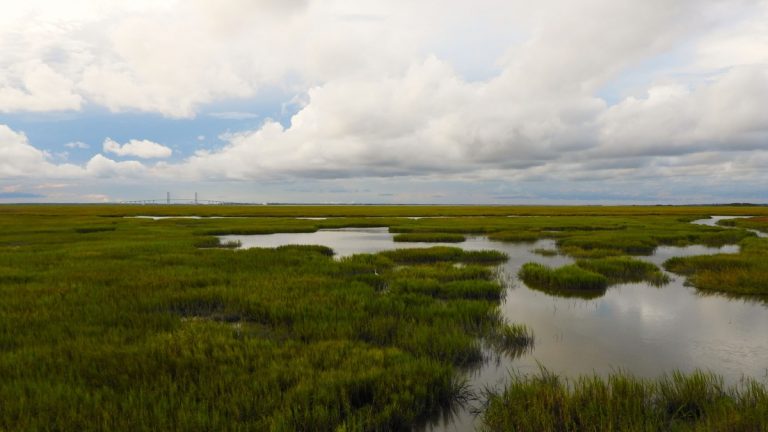
The ocean provides living resources such as fish, shellfish and seaweed; dissolved materials including salt, magnesium and bromine; sand and gravel; offshore oil and natural gas; potential seabed minerals; and renewable energy from wind, waves, tides and currents. Ocean ecosystems also provide services such as carbon storage and coastal protection, although those benefits are not commodities in the same sense.
Availability does not make every resource practical or responsible to extract. A deposit may be known but technologically unreachable, uneconomic, legally unavailable, or ecologically costly to disturb. Sustainable use depends on replenishment rates, environmental limits, governance and the communities that rely on the same waters.
Living resources from fisheries
Wild fisheries harvest finfish, crustaceans, mollusks and other animals from marine ecosystems. They supply food and livelihoods around the world. Because populations reproduce rather than existing as fixed deposits, fisheries can be renewable when catch, habitat condition, bycatch and environmental change are managed together.
Renewable does not mean unlimited. Catching fish faster than populations replace themselves reduces future abundance, while fishing gear can affect seafloor habitat or unintentionally catch other species. The FAO review of marine fishery resources draws on stock assessments and official catch data to evaluate the condition of exploited populations worldwide.
Management uses surveys, catch records, biological sampling, ecosystem indicators and population models. Uncertainty is unavoidable, especially for poorly monitored fisheries. Precaution, enforcement, local knowledge and adaptive rules help keep harvest within biological limits.
Marine aquaculture and seaweed
Marine aquaculture raises organisms in coastal or ocean water. Products include oysters, mussels, shrimp, marine finfish and seaweed. Filter-feeding shellfish require no formulated feed, while fed species create different demands for feed inputs, water quality, disease control and waste management.
Seaweed is used as food and as a source of hydrocolloids such as alginate, agar and carrageenan. The compounds thicken or stabilize foods, pharmaceuticals, cosmetics and industrial products. Research also explores seaweed for fertilizers, animal feed ingredients, packaging and fuels, with proposed uses at very different levels of maturity and scale.
Aquaculture moves production into managed systems rather than removing all ecological constraints. Poor siting can damage habitats, concentrate waste, spread disease, or conflict with navigation and fishing. Good siting and regulation must match the cultured species and local water circulation.
Salt and dissolved minerals
Seawater contains dissolved ions, with sodium and chloride the most abundant. People have produced salt by evaporating seawater in shallow ponds for centuries. Solar evaporation works best where climate provides strong evaporation and limited rainfall; other plants use heat or vacuum processes.
Magnesium compounds and bromine can also be recovered from seawater or concentrated brines. Economic extraction targets substances present at useful concentrations and uses chemical separation, since ordinary seawater contains many ions mixed together. A resource may be widespread yet too dilute for cost-effective recovery.
Desalination produces freshwater and a concentrated brine stream rather than mining the ocean primarily for minerals. Argo’s account of how much water fills the oceans gives the scale, but local intake effects, energy use, brine disposal and cost determine whether a desalination project is suitable.
Sand, gravel and shell
Continental shelves contain sand, gravel and shell deposits. These materials can be used for beach nourishment, wetland restoration and construction. In the United States, the Bureau of Ocean Energy Management’s Marine Minerals Program manages federal offshore leases for sand, gravel and shell used in coastal projects.
Borrowing sediment from offshore changes the seabed. Surveys map thickness, grain size, archaeological sites and habitat before removal. Material must also be compatible with the receiving beach or wetland. Fine mud placed on a sandy shore behaves differently and can harm organisms or wash away.
Sand is geologically abundant but locally constrained. Deposits suitable for restoration may be limited, buried, or already support important habitats. Storm recovery and long-term sea-level rise can increase demand, making inventories and monitoring essential.
Oil and natural gas
Oil and gas form from organic matter buried and transformed within sedimentary basins over geologic time. Exploration uses seismic imaging and drilling to locate reservoirs beneath continental shelves and slopes. Offshore fields have supplied substantial energy, petrochemical feedstocks and government revenue.
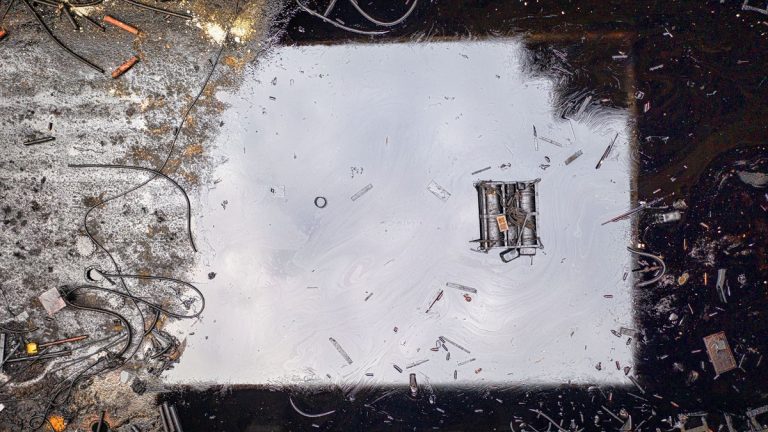
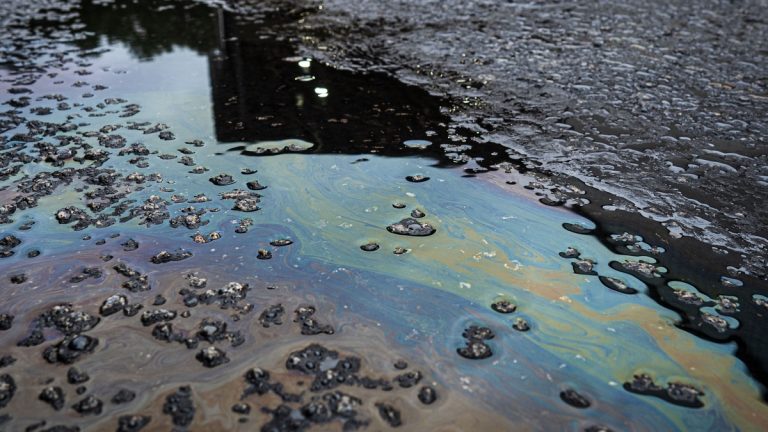
Oil and natural gas are nonrenewable on human time scales. Extraction carries risks from spills, routine discharges, underwater noise, infrastructure and greenhouse-gas emissions when fuels are used. Decommissioning wells and platforms creates further technical and financial responsibilities.
The ocean is the location of the deposit, not a shield from consequences. Spill behavior depends on oil type, weather, currents, depth and response time. Fossil-fuel decisions also connect to climate change, which alters temperature, sea level, oxygen and acidity throughout marine systems.
Offshore wind
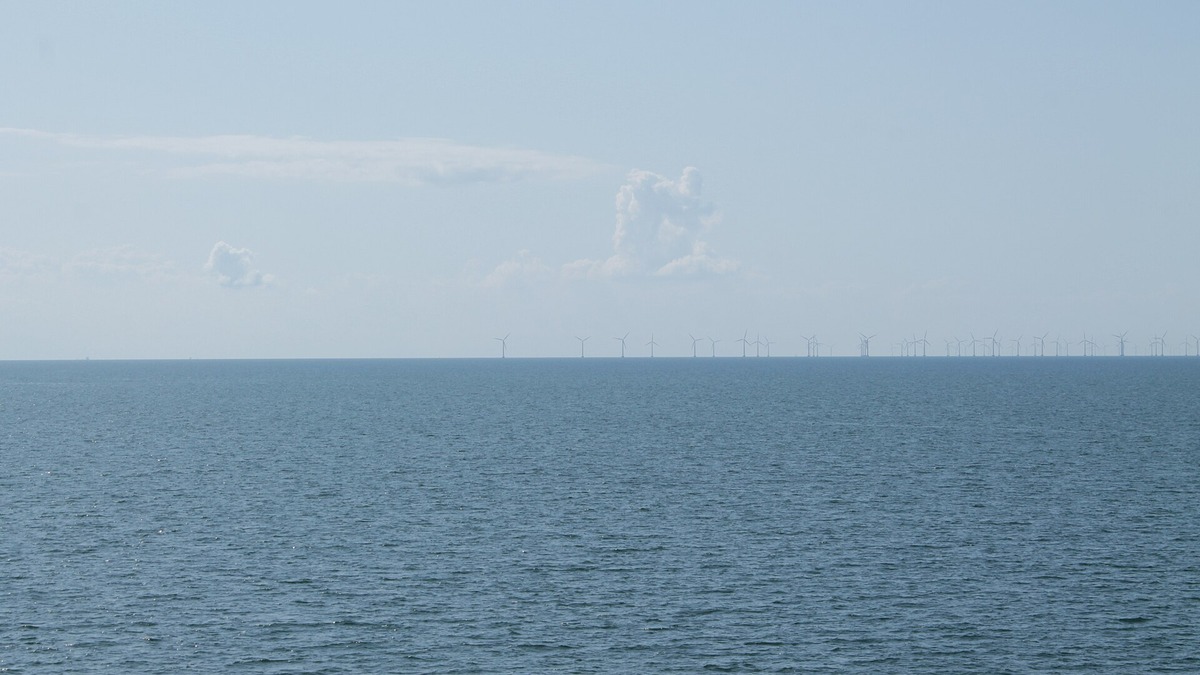
Offshore wind uses moving air over the ocean rather than a material removed from it. Strong, relatively consistent winds and proximity to coastal electricity demand make some shelf areas attractive. Turbines are fixed to the bottom in shallower water or mounted on floating platforms in deeper water.
The BOEM renewable-energy program identifies offshore wind along with potential energy from waves and currents. Site selection considers wind, depth, seabed conditions, transmission, vessel traffic, military use, fisheries, wildlife and cultural resources.
Renewable energy still has environmental effects. Construction noise, cables, vessel traffic, collision risk and changes to fishing access require study and mitigation. NOAA Fisheries research helps assess interactions with marine species, habitats and fishing communities.
Wave, tidal and current energy
Waves carry energy transferred from wind, while tides arise mainly from the gravitational pull of the Moon and Sun. Persistent ocean currents also contain kinetic energy. Devices can convert these motions into electricity using floats, oscillating water columns, barrages, or submerged turbines.
Resource predictability and technical challenges differ. Tides are highly predictable, but useful sites with strong flows are geographically limited. Waves are widespread yet expose equipment to corrosion and storm forces. Current turbines must operate underwater while allowing navigation and marine life to pass safely.
Most technologies remain less widely deployed than offshore wind. Claims about theoretical energy should be separated from technically recoverable power and from projects that are economic after transmission and maintenance costs.
Thermal and salinity-gradient energy
Ocean thermal energy conversion uses the temperature difference between warm surface water and cold deep water to run a heat engine. Tropical locations with a large, persistent temperature gradient are the main candidates. Systems must move enormous volumes of water, which makes pipes, pumping, efficiency and ecological effects central engineering issues.
Salinity-gradient technologies seek energy where fresh and salt water mix, using processes such as pressure-retarded osmosis or reverse electrodialysis. The resource is conceptually renewable because rivers continuously deliver freshwater, but membranes, fouling, pretreatment and cost have limited commercial use.
Both approaches illustrate why an ocean resource inventory should distinguish physical potential from mature production. A promising mechanism may require decades of testing before it supplies power reliably at useful scale.
Polymetallic nodules
Polymetallic nodules are rounded mineral concretions that grow on abyssal plains over extremely long periods. They can contain manganese, nickel, copper, cobalt and other metals. Nodules lie exposed at the sediment surface in some regions, including parts of the central Pacific.
Collection would disturb slow-growing nodules and the sediment habitat around them. Plumes may spread fine particles beyond the collector track, while noise and discharge affect other depths. Deep-sea species and ecosystem recovery rates remain incompletely known.
NOAA’s description of marine critical minerals places nodules among several deposit types and emphasizes mapping their environmental context. A mineral occurrence is not the same as a reserve, which must satisfy economic and technical criteria.
Cobalt-rich crusts and seafloor sulfides
Ferromanganese crusts form on exposed rock, especially seamounts, as metals precipitate from seawater. They may contain cobalt and rare earth elements. Removing them would require separating hard crust from underlying rock on rugged terrain that can also support corals and sponges.
Seafloor massive sulfides form where hot, mineral-rich hydrothermal fluids mix with cold seawater. Deposits can contain copper, zinc, lead, gold and silver. Active vents support ecosystems based on chemosynthesis, while inactive deposits may retain poorly studied biological communities.
BOEM’s marine deposit classification also includes nearshore heavy-mineral sands and phosphorites. Each forms through a different process, occurs at different depths and poses distinct extraction challenges.
Gas hydrates
Gas hydrates are ice-like solids in which water molecules form cages around gas, mainly methane. They occur in sediments where pressure is high and temperature is low, including continental margins and permafrost regions. The methane represents a potentially large energy resource.
Production is technically difficult because changing pressure or temperature destabilizes hydrate. Researchers study possible effects on sediment strength, seafloor stability and methane movement. Methane is a potent greenhouse gas, so leakage and full climate accounting are important.
Hydrates also interest scientists as part of the natural carbon cycle and as habitat for seep communities. Calling them fuel alone misses their geological and ecological roles.
Genetic and biochemical resources
Marine organisms produce molecules for defense, communication, competition and survival under extreme conditions. Researchers screen these natural products for pharmaceutical, industrial and research applications. Some medicines have already been developed from compounds first identified in marine organisms.
Bioprospecting raises questions about access, intellectual property, benefit sharing and conservation. Collecting a sample differs from commercially producing a compound; synthesis, microbial fermentation, or aquaculture may eventually replace repeated wild harvest.
Biodiversity is therefore a source of potential knowledge as well as material. Destroying habitat before species are described can erase biochemical possibilities that were never evaluated.
Ecosystem services are resources too
Coastal wetlands, seagrass beds, reefs, kelp forests and mangroves reduce wave energy, provide nursery habitat, support tourism and store carbon. Plankton and ocean circulation influence climate and oxygen cycles. Economists call these benefits ecosystem services, although many are public or cultural goods rather than extracted products.
Valuation can make overlooked benefits visible, but a dollar estimate does not capture every ecological relationship or cultural meaning. Protection decisions also use law, rights, risk and ethical judgment.
Plastic is a pollutant, not a natural resource merely because recovered material can sometimes be recycled. Argo’s overview of plastic in the ocean explains the scale and measurement challenges.
How ocean resources are governed
Coastal nations hold rights and responsibilities in maritime zones defined by domestic and international law. Areas beyond national jurisdiction have separate regimes. Fisheries, shipping, minerals, wildlife, pollution and energy may be handled by different agencies and agreements, so no single permit covers every impact.
Environmental review begins with baseline information: species, habitats, currents, sediment, chemistry and existing human uses. Argo’s pages on geological oceanography and marine sediments show why mapping a deposit also requires understanding the surrounding system.
Responsible use compares benefits with direct, cumulative and long-term effects. It asks who receives value, who carries risk, whether a resource renews and what alternatives exist. The ocean supplies food, materials, energy and irreplaceable ecological functions, but its size does not make any of them consequence-free.