The Great Pacific Garbage Patch is a broad, shifting region where currents concentrate marine debris between California and Hawaii. It is neither a solid island nor a continuous blanket of bottles. Much of its plastic consists of tiny pieces dispersed across the surface and through the upper water column.
A NOAA explanation says the exact size, contents and position are difficult to predict because winds and currents keep moving the debris. A vessel can cross some parts of the patch while seeing little trash at the surface.
The popular name refers to elevated concentration rather than a fixed boundary. Larger nets and consumer objects occur there, but a large share of pieces are microplastics smaller than five millimeters. Their scattered distribution makes simple cleanup much harder than collecting trash from land.
Rotating currents gather floating debris
The North Pacific Subtropical Gyre is a huge clockwise circulation. Winds push surface water across the basin, while Earth’s rotation deflects the flow. Broad currents form a slowly rotating system with convergence zones that can retain floating material.
Debris enters from many places rather than one dumping site. Rivers, storm drains and shorelines deliver land-based waste. Fishing and shipping lose gear or other items at sea. Currents can carry an object far from its source before it reaches an accumulation zone.
The NOAA Marine Debris Program describes garbage patches in each of the world’s five major subtropical gyres. The Great Pacific patch is the best known, while other convergence regions also hold debris.
Winds and seasonal ocean conditions shift the concentrations. Some objects remain near the surface and denser or fouled material can sink. Waves mix small pieces downward, so a surface survey captures only part of the distribution.
The patch looks more like scattered fragments
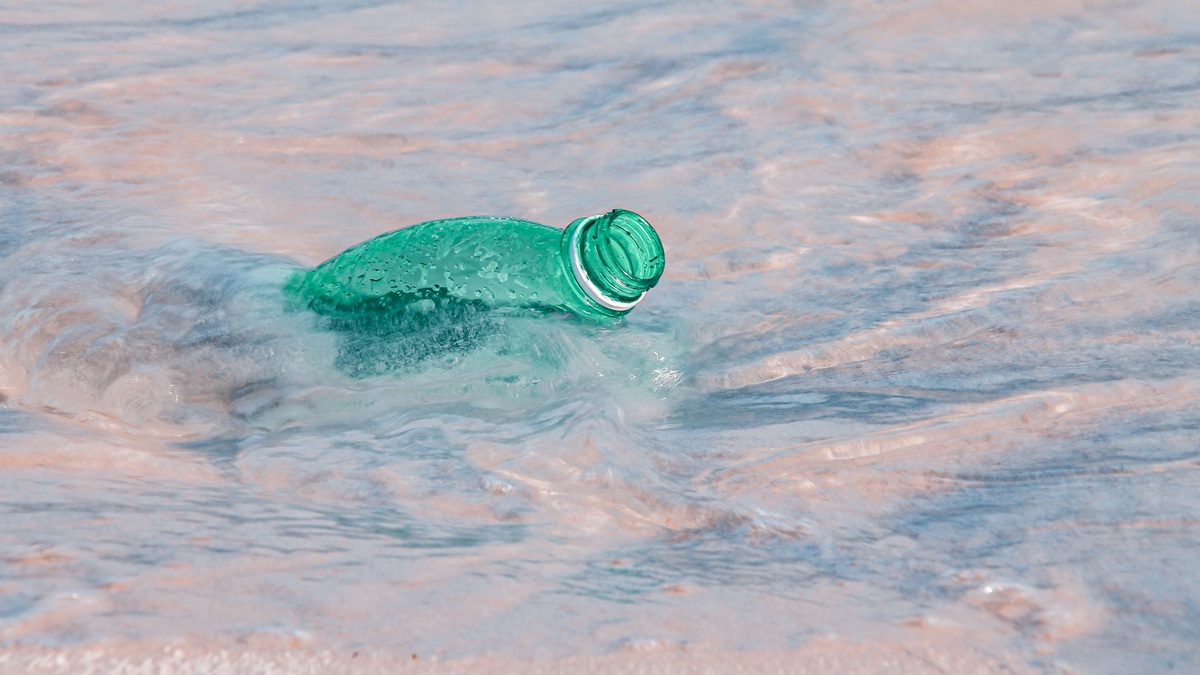
A photograph of an island of trash would misrepresent most of the region. Visible objects appear intermittently, separated by large areas of water. Small plastic fragments may resemble flecks in soup rather than a raft that supports weight.
Sunlight weakens exposed plastic through ultraviolet radiation. Waves and abrasion break brittle items into smaller pieces, but fragmentation does not make the polymer disappear. It increases the number of particles and moves them into size ranges that more animals can encounter.
Abandoned fishing nets form some of the largest and most dangerous objects. Their buoyancy changes as organisms grow on them or break away. A net can drift, sink and rise while continuing to entangle wildlife.
Measuring its size depends on the definition
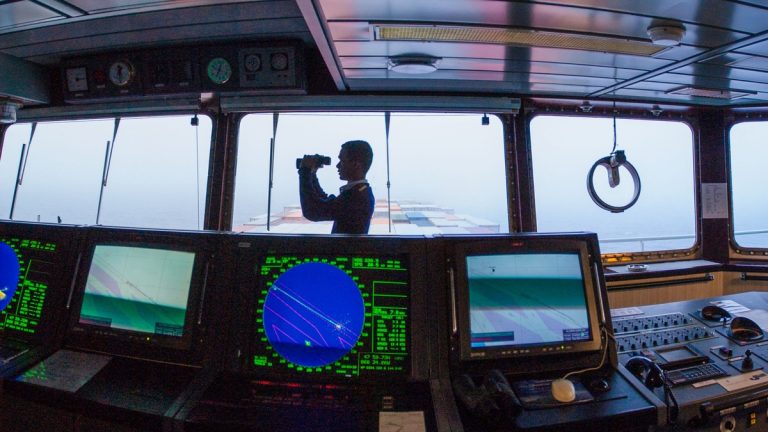
Scientists sample debris with surface nets, visual surveys and collection devices. Each method detects a different size range. A fine mesh catches smaller particles but filters less water and can clog, while ship observations favor large visible objects.
Researchers must decide what concentration marks the edge of a patch. Because the transition is gradual, there is no coastline to trace. The apparent area changes with the sampling threshold and the ocean conditions during the survey.
Mass and item count tell different stories. A few heavy fishing nets may dominate mass, while countless fragments dominate the number of pieces. Reporting one measure without the other can produce a distorted impression.
Satellite imagery cannot directly map most dispersed microplastic at present. Models use current observations, drifter tracks and sampling data to estimate likely concentration zones. Uncertainty in inputs carries into the resulting boundaries.
Marine life encounters the debris
Animals can swallow plastic pieces that resemble food or carry biological films. The effect depends on species, particle size, amount and exposure. Large debris can block digestion, while smaller pieces may pass through or remain in tissue for different periods.
Derelict fishing gear entangles turtles, marine mammals and fish. Entanglement can restrict swimming, interfere with feeding or cut into growing tissue. Lost gear may also continue catching animals after its owner has lost it.
Floating plastic carries organisms across long distances. Some coastal species can survive on durable debris and reach open-ocean accumulation zones. The ecological consequences vary and researchers are still testing how these communities affect native open-ocean life.
The UN Environment Programme treats plastic pollution as a problem across the material’s full life cycle. The patch represents one destination within a larger flow from production and use to waste leakage.
Cleanup cannot solve the source by itself
Removing large gear can prevent entanglement and recover substantial mass. Collecting dispersed fragments over an immense moving area requires vessels, energy and equipment. Fine nets can also capture plankton, so cleanup design has ecological tradeoffs.
Prevention acts before waste breaks into tiny pieces. Better waste collection, secure fishing gear and interception near rivers or ports can reduce new inputs. Product design and reuse policies can lower the amount of disposable material entering the waste stream.
No single project can permanently clear a convergence zone while debris continues to arrive. Monitoring can identify which objects dominate by location and guide measures toward their sources. Fishing gear requires different prevention than fragments from consumer packaging.
The Great Pacific Garbage Patch is real, but its physical form differs from the island portrayed in popular images. It is an oceanographic concentration of mobile debris, much of it small and difficult to see. Reducing it depends on both targeted removal and sustained control upstream.
Debris occupies more than the surface
Surface nets sample buoyant particles in a thin layer, yet wind can mix light plastic below the reach of the net. A strong breeze may therefore produce a lower surface count without removing material from the area.
Biofouling changes the path of an object as algae and animals grow on it. Added mass can make plastic sink. Grazing or decay may reduce the coating later, allowing the same object to rise again.
Dense material and fouled fragments reach the seabed, where sampling is sparse across the North Pacific. Others strand on remote islands and can return to sea during storms. The garbage patch is one stage in movement among the shore, water column and bottom.
Cleanup claims need measured outcomes
A collection project can report the mass removed, the kinds of objects recovered and the fuel used. Those details show whether it targeted heavy fishing gear or countless small pieces. They also allow comparison with debris entering during the same period.
Bycatch monitoring is important for devices operating in biologically active convergence zones. Plankton and surface-dwelling animals gather where currents meet too. A design that collects debris must limit harm to organisms sharing that water.
Recovered plastic is weathered, mixed and often contaminated, which can restrict recycling. Disposal remains necessary for some material. The environmental balance includes collection, transport and final processing rather than stopping at the ship’s deck.
Long-term success combines a smaller incoming flow with carefully chosen removal. Source reduction prevents new fragments, while retrieval focuses on gear or objects that pose immediate harm. Monitoring then tests whether concentrations or wildlife encounters decline.
Long-term records separate trends from motion
International coordination is unavoidable because debris crosses national waters and much of the patch lies on the high seas. A label may reveal where an item was sold without showing where it entered the ocean. Fishing gear can move among fleets, ports and currents before recovery.
Standardized surveys allow trends to be distinguished from weather-driven movement. Repeated sampling at different depths records both concentration and uncertainty. A one-day expedition cannot establish whether the entire patch is growing or shrinking. Researchers need comparable mesh sizes, tow speeds and reporting units, together with winds and currents observed during collection, before results from separate voyages can support a basin-scale trend.
Related reading: how much plastic is in the ocean and flotsam and jetsam.