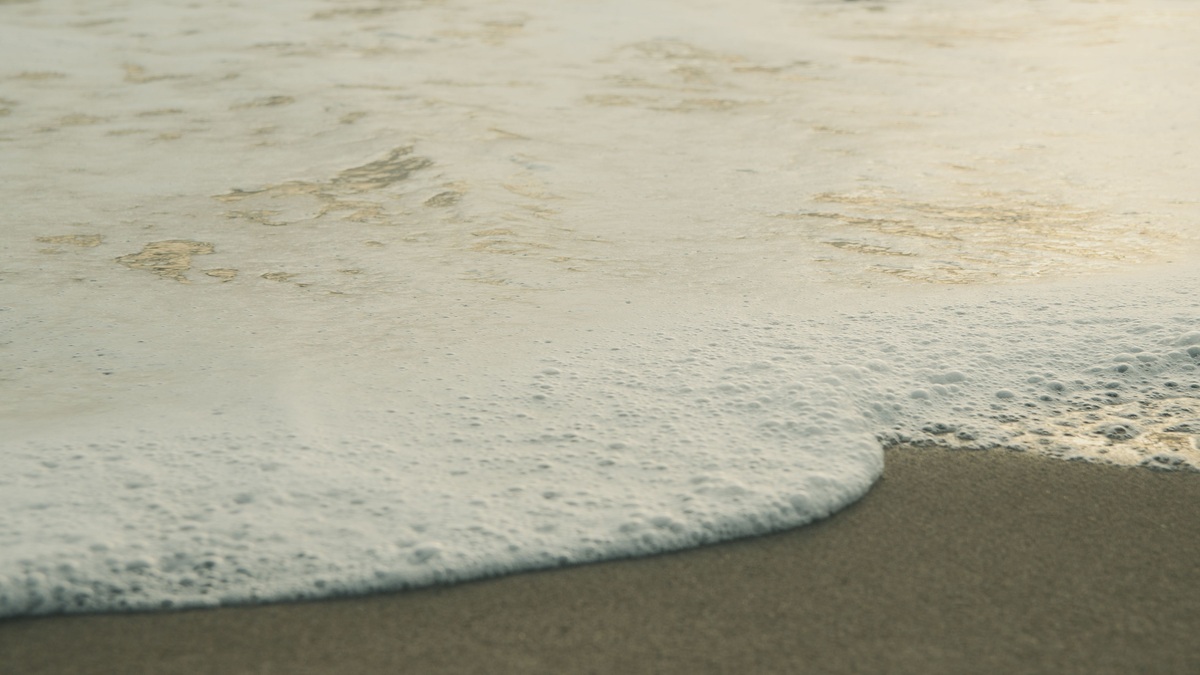
Sea foam appears when waves and wind whip dissolved organic material in seawater into persistent bubbles. A thin line of white froth on a beach is usually a natural product of the coastal ecosystem, although dense or discolored foam can sometimes accompany pollution or a harmful algal bloom.
NOAA’s sea foam explanation compares the process with shaking a glass of ocean water. Seawater contains proteins, fats and fragments from algae alongside salts and other particles. Agitation traps air, while surface-active compounds keep some bubbles from bursting immediately.
The source and appearance vary from coast to coast. A storm can gather foam into windblown banks and a decaying offshore bloom can supply enough organic matter to cover a beach. Color alone offers clues, but it cannot establish whether the foam is harmless.
Surfactants stabilize ocean bubbles
Pure water does not hold foam for long. Its bubbles rapidly merge or drain until their thin walls rupture. Natural organic molecules change the behavior of the air-water boundary and allow bubbles to last longer.
These compounds act as surfactants. One part of a molecule interacts readily with water, while another tends to avoid it. The molecules gather at a bubble’s surface and lower surface tension, making it easier for a stable film to form around trapped air.
Proteins and lipids released by plankton are common natural surfactants. Decaying seaweed and other organisms add more material. Human wastewater or detergents can contribute in polluted water, which is why the presence of foam cannot by itself reveal its origin.
Water drains down through a foam bank under gravity. As films become thinner, bubbles collapse. Fresh agitation can replace them as quickly as they burst, allowing a patch to persist in surf or against a seawall.
Waves provide the mixing energy
Breaking waves pull air below the surface and shatter it into bubbles of different sizes. Wind adds turbulence, while rocks and jetties concentrate breaking water. A coast with abundant organic material may therefore show little foam on a calm day and thick accumulations during a storm.
Currents gather floating foam along convergence lines. Adjacent surface flows push material toward the same narrow boundary, producing long white streaks. Onshore wind can then pile the foam onto a beach in heaps that resemble snow.
Temperature and salinity influence viscosity and bubble drainage. The chemistry of the organic material matters as well. Two beaches exposed to similar waves can produce very different foam because their plankton communities and coastal runoff differ.
Freshwater rivers also generate natural foam where rapids or dams mix air into water rich in dissolved organic matter. Marine foam is distinguished by its setting and salt content, not by a wholly separate physical mechanism.
Bubble bursting has effects beyond the visible froth. Tiny droplets enter the atmosphere as sea-spray aerosol, carrying salt and organic compounds. EPA-indexed laboratory research has shown that organic carbon in marine aerosol depends partly on the amount and kind of organic matter in the water.
Algal blooms can create thick foam
Phytoplankton grow rapidly when light, nutrients and water conditions favor them. As a large bloom ages, its cells break apart. The process releases organic compounds that waves can incorporate into unusually persistent foam.
Many blooms are ecologically productive and contain no dangerous toxin. NOAA emphasizes that most sea foam is harmless. A mass of foam can simply indicate abundant biological material being recycled near shore.
Some algal species create a different risk because harmful algal blooms may produce toxins. Other blooms deplete oxygen or physically damage wildlife. NOAA’s HAB monitoring overview notes that blooms can resemble foam, surface scum or mats and may change the color of the water.
Airborne toxins are an important exception
Along the Gulf Coast, blooms of the dinoflagellate Karenia brevis cause Florida red tide. Breaking waves and popping bubbles can carry brevetoxins into the air. People near the beach may experience coughing or eye irritation and those with asthma can be more sensitive.
The World Health Organization’s recreational water guidelines describe respiratory effects among beach visitors and workers exposed to aerosols during certain marine blooms. The risk applies to particular organisms under specific conditions, rather than every patch of ordinary foam.
Local warnings provide better evidence than appearance because health agencies identify species through water samples. Separate laboratory tests can then measure toxins. Beachgoers should follow posted advice and move away from the surf if an official bloom notice is active or breathing becomes uncomfortable.
Foam can concentrate cells or contaminants at the surface. Children and pets are more likely to touch or ingest material gathered along the shore, so avoiding dense, foul-smelling or unusually colored accumulations is a sensible precaution.
Symptoms after exposure deserve medical advice, particularly when breathing is affected. Emergency care is appropriate for severe shortness of breath. The broader lesson is to use monitoring information rather than assume that all white foam is clean or all brown foam is toxic.
Some bloom foam harms seabirds
A nontoxic alga can harm animals through physical effects. During bird mortality events on the U.S. West Coast, researchers linked a soap-like foam from decaying Akashiwo sanguinea blooms to the loss of feather waterproofing.
Seabird feathers normally trap an insulating layer of air and prevent cold seawater from reaching the skin. Surfactant-rich foam disrupts that structure. A soaked bird loses heat rapidly and becomes less able to fly. Continued exposure may lead to fatal hypothermia.
The event shows why “nontoxic” does not mean ecologically harmless. Dense biomass can also consume oxygen as microbes decompose it. Fish and bottom-dwelling animals may suffer when oxygen falls below the level they need.
NOAA’s bloom response program combines field samples with satellite observations and forecasts. Different impacts require different measurements because a toxin test alone would miss physical damage caused by surfactants.
Appearance offers clues, not a diagnosis
Fresh natural foam often begins white before darkening as it collects sand or organic debris. Brown foam may contain tannins from decaying plants. Green or red water can indicate abundant microorganisms. Many blooms remain invisible, while harmless processes also change water color.
Odor can be similarly ambiguous. Decomposing algae may smell strong without producing a toxin. Sewage and industrial discharge present separate hazards that require microbial or chemical testing.
Persistence is useful context. A small line that appears after rough surf and quickly collapses fits ordinary wave-driven foam. Large banks lasting through calm conditions deserve closer attention, especially when dead fish, sick wildlife or public advisories occur nearby.
Sea foam connects biology with weather
The coast continually mixes the living ocean with the atmosphere. Plankton convert sunlight and nutrients into organic matter. Microbes break that material down before currents transport it. Waves reveal part of the mixture as bubbles.
Foam can help researchers sample compounds concentrated at the surface, but it remains a complicated mixture. Its chemistry changes over hours as sunlight and microbes alter the material.
Most encounters need no response beyond ordinary beach hygiene. Visitors should avoid swallowing foam and keep pets away from suspicious accumulations. Local advisories provide guidance during known blooms.
The familiar froth is therefore neither waste nor a universal warning sign. It is a physical expression of organic chemistry under agitation. Foam concentration can change quickly when the tide reverses. A weakening wind or a fresh supply of biological material can alter it too. Sampling several points and comparing the foam with nearby water helps investigators distinguish a localized accumulation from a bloom extending across a wider coastal area. Monitoring provides the environmental context, while species identification shows whether the natural process carries an additional health or wildlife risk along a particular coast.
Related reading: how ocean waves form and which algal blooms are harmful.