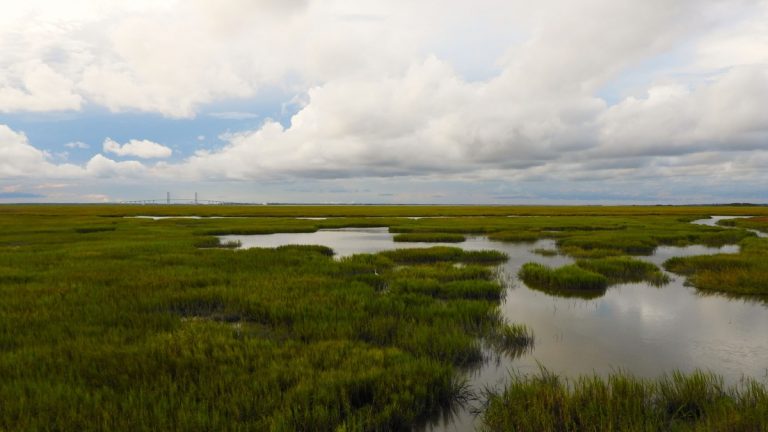
A natural oil seep is a place where crude oil and natural gas escape from underground deposits through fractures or porous sediment and enter the sea. The flow may begin far below the seabed, rise through layers of rock and appear as bubbles, droplets, tar, or a thin slick at the surface. Unlike a sudden accident, a seep usually releases hydrocarbons slowly from a stable geologic source.
Natural seeps occur in petroleum-rich regions around the world. NOAA describes them as the largest natural route by which oil enters the ocean and its oil seep overview says they account for nearly half of the oil released to the marine environment each year. Their broad contribution does not mean every coast has one. Seepage is concentrated where geology gives buried fluids a path upward and release rates can differ greatly among individual vents.
How buried oil reaches the seafloor
Oil and gas form from ancient organic matter that was buried, heated and transformed over geologic time. Buoyant hydrocarbons tend to migrate upward through permeable rock until an impermeable layer traps them. A fault, crack, or weak sediment pathway can break that seal. Pressure then pushes fluid toward the seabed, producing a natural petroleum leak much like groundwater emerging from a spring.
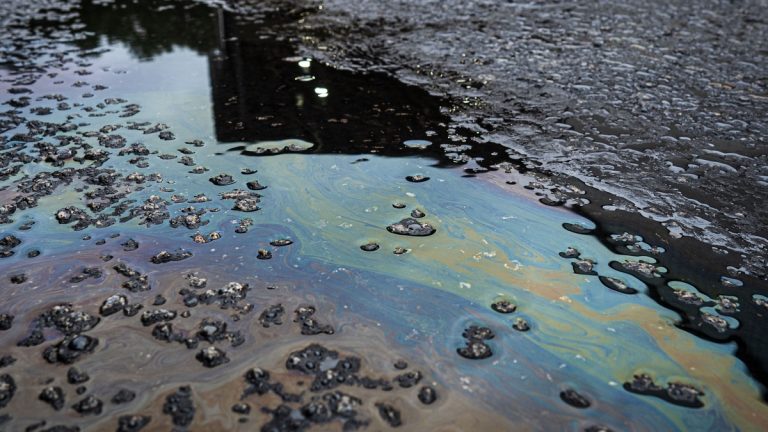
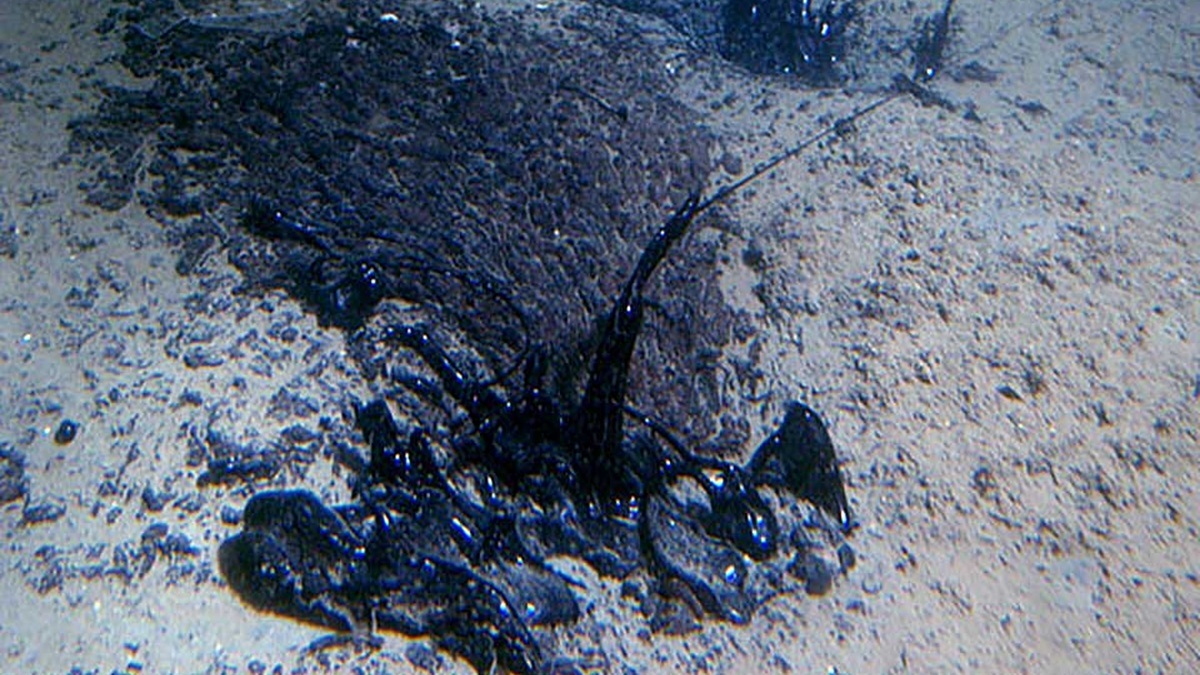
Some seeps release scattered droplets that weather quickly. Others feed persistent slicks or deposits of asphalt-like material on the bottom. Flow can change as pressure, sediment movement, or local geology changes. NOAA’s response specialists note that seep oil ranges from thick, sticky tar to dark fluid resembling used motor oil. Wind and currents determine its path after it reaches the surface.
Gas often travels with the liquid. Methane bubbles can dissolve in seawater or be consumed by microbes before reaching the air, while oil droplets may spread into a sheen. Scientists use sonar to detect bubble plumes and chemical sensors to sample water; satellite imagery maps recurring surface slicks. Repeated observations help connect a slick to the seafloor source below.
Seep activity can be broad rather than confined to one hole. Networks of faults may support clusters of vents and each vent can release a different mixture of gas and liquid. Sediment cores reveal staining, altered minerals and hydrocarbon chemistry below the surface. Those clues help geologists reconstruct migration pathways that a surface slick alone cannot show. Mapping fault orientation also helps explain why vents cluster in narrow bands. Repeat sonar surveys can reveal whether bubble output changes while the underlying vent locations remain stable.
Why a seep differs from an oil spill
A seep is geologic; a spill comes from a human activity such as drilling, transport, storage, or fuel use. Both can put similar petroleum compounds into seawater, so appearance alone may be misleading. Investigators compare chemical fingerprints and locations, then weigh weathering patterns against the timing of reports. A known slick that reappears over the same seabed vent points toward natural seepage.
Release rate changes the biological exposure. A seep generally adds oil gradually, allowing weathering and microbial breakdown to begin as new material arrives. A large spill can deliver an intense dose across a wide area within hours or days. Local organisms near a seep still encounter toxic compounds, coating and altered sediment. The slow pace does not make seep oil harmless; it changes where and how the effects are concentrated.
Oil fingerprinting can separate sources because crude oils contain different mixtures of hydrocarbons and trace compounds. Analysts look for chemical ratios that persist even after lighter ingredients evaporate. Responders combine laboratory results with current forecasts and aerial surveys. Correctly identifying seep oil versus spilled oil prevents crews from chasing a natural slick while an unrelated release remains unlocated.
Source identification becomes harder when a spill occurs near active seeps or when both oils came from the same underground formation. Investigators then compare several chemical markers and degrees of weathering instead of relying on one compound. Aerial records of recurring slick locations add independent evidence. The conclusion may remain probabilistic when samples have changed extensively at sea.
Life around oil and gas seeps
Many seep habitats support microbes that use hydrocarbons as an energy source. Some consume methane; others help break down components of oil. Their activity can support food webs that do not depend directly on sunlight. Chemical reactions near the seabed may also produce carbonate rock, giving animals a hard surface on otherwise soft sediment. The result can be a patchwork of bacterial mats and specialized communities.
Cold seeps include sites where methane, sulfide-rich fluids, oil, or mixtures escape without the high temperatures of hydrothermal vents. A NOAA Ocean Exploration cold seep summary describes their value as habitat and nursery grounds for some deep-sea species. Tubeworms and mussels at certain sites rely on symbiotic bacteria that convert seep chemicals into usable energy, a process called chemosynthesis.
Adaptation has limits. Petroleum compounds can harm fish, invertebrates and seabirds, especially close to active vents or where tar accumulates. Species that thrive on seep chemistry live alongside organisms that avoid or suffer from it. Scientists therefore measure both abundance and exposure. A lively microbial mat does not prove that oil benefits the surrounding ecosystem as a whole.
Communities also change over short distances. Animals living directly beside a vent may depend on methane-oxidizing microbes, while ordinary deep-sea species dominate a short distance away. Researchers compare active seep patches with nearby reference sediment to separate effects of chemistry from those of depth, temperature, or seafloor type. This design avoids treating every difference as a response to petroleum.
How scientists find and track seeps
At the sea surface, radar satellites can detect the way an oil film smooths small waves. Optical images may show dark streaks when lighting and weather cooperate. Aircraft provide closer views, while ships collect samples. Because calm water, algae and other materials can also create dark patches, remote sensing supplies a clue rather than a final identification.
Underwater mapping narrows the search. Multibeam sonar reveals seafloor structure and water-column sonar can show rising bubbles. Remotely operated vehicles then inspect vents, record animals and collect oil or sediment. Chemical analysis links samples from different depths. Together, satellite detection and direct sampling establish whether a slick repeatedly originates at the same location.
Predictable seeps also provide natural laboratories for spill science. Researchers can observe fresh oil spreading and evaporating, as well as dispersing and forming tar under real ocean conditions. Around Santa Barbara, California, NOAA has used seep areas to train aerial observers and test trajectory models. Such work improves estimates of where oil may travel after any release, while maintaining a clear distinction between natural background inputs and industrial accidents.
Long records make the comparison especially useful. NOAA reports that hundreds of seeps off Southern California contribute about five million gallons of oil in a typical year, with substantial variation. Some slicks travel far along the coast, while persistent ones can appear on nautical charts. Mapping the same sites again shows whether an apparent change reflects flow, wind, currents, or detection conditions across successive seasons and different states of the sea.
Scientists still need samples from the water and seabed to confirm what remote sensors suggest. A remotely operated vehicle can photograph vents and measure local conditions while collecting fluid without exposing a crew to deep water. Paired with sonar and chemical fingerprinting, those samples connect geology, release behavior and biological exposure across the full route from reservoir to surface.
Related reading: cold seeps and hydrothermal vents and black smokers and white smokers.