Water

RSS Feed

Water science news, explainers, and statistics covering freshwater, hydrology, lakes, rivers, groundwater, ice, and Earth’s connected water systems.

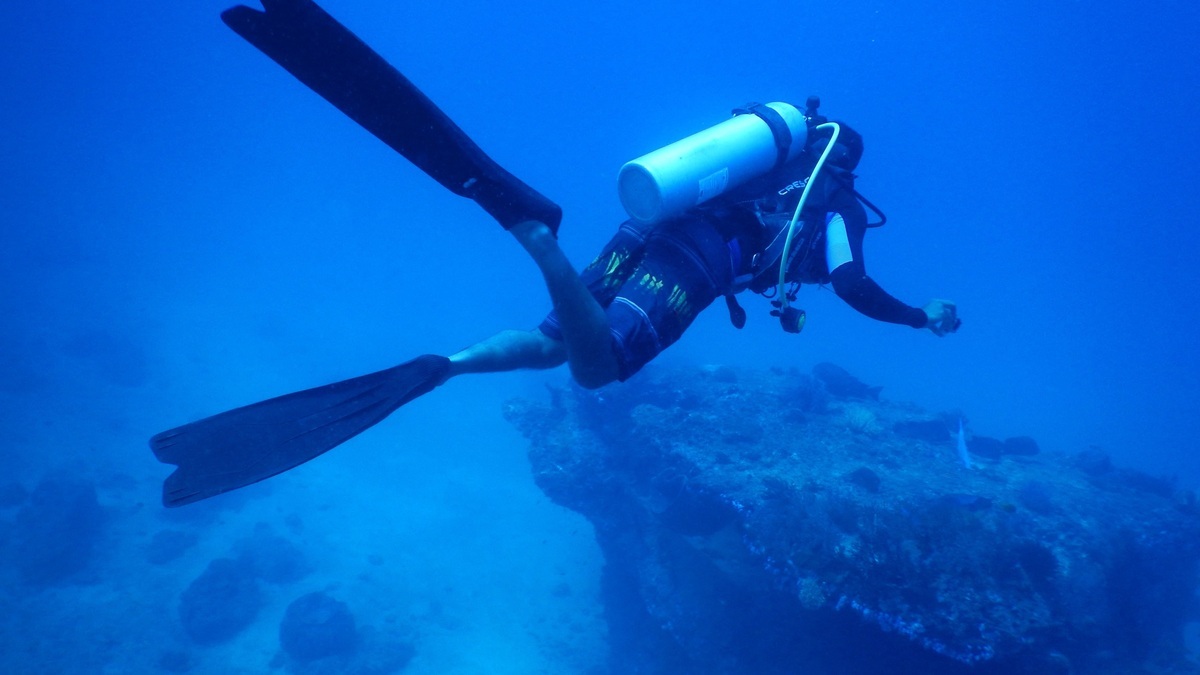
Diver_descending_into_deep_blue_water

How Much Pressure Is in the Deep Ocean?

Ocean pressure comes from the weight of the water above a given point. At the surface, a person already experiences one atmosphere of pressure from the air. Descending through seawater adds roughly one more atmosphere for every 10 meters, or about 33 feet. At 1,000 meters, the surrounding pressure is close to 101 atmospheres, including…
More

More in Water

Submersible_exploring_abyssal_water

What Is the Abyssopelagic Zone?

The abyssopelagic zone occupies the ocean water column from roughly 4,000 to 6,000 meters, or 13,100 to 19,700 feet. Sunlight never reaches it. Temperatures commonly remain near 2 to 3 degrees Celsius and pressure rises from about 400 to 600 times atmospheric pressure at sea level. It is the deepest broad layer above the ocean’s…

Fish_in_the_dark_midnight_ocean

What Is the Bathypelagic Zone?

The bathypelagic zone begins near 1,000 meters and extends to roughly 4,000 meters (13,100 feet). Woods Hole Oceanographic Institution calls it the midnight zone. Sunlight has disappeared by its upper boundary, leaving biological light as the only visible illumination. The midnight layer crosses deep basins and the slopes surrounding them, yet its water is divided…

Blue_light_fading_into_the_twilight_ocean

What Is the Mesopelagic Zone?

During World War II, sonar operators detected an echo that looked like a seabed suspended in deep water. The reflecting layer rose toward the surface at night and sank again by day. Nets and early submersible observations eventually identified dense concentrations of fish and other animals, revealing a migration on an immense scale. Its immense…