Water

RSS Feed

Water science news, explainers, and statistics covering freshwater, hydrology, lakes, rivers, groundwater, ice, and Earth’s connected water systems.

Earth_and_its_ocean_basins_from_space

What is an oceanic Rossby wave?

An oceanic Rossby wave is a vast, slow-moving change in sea level and the depth of ocean layers caused by Earth’s rotation. These planetary waves usually travel westward across ocean basins. Their surface signal may be only a few centimeters high, while the boundary between warm surface water and colder deep water can move by…

More

More in Water

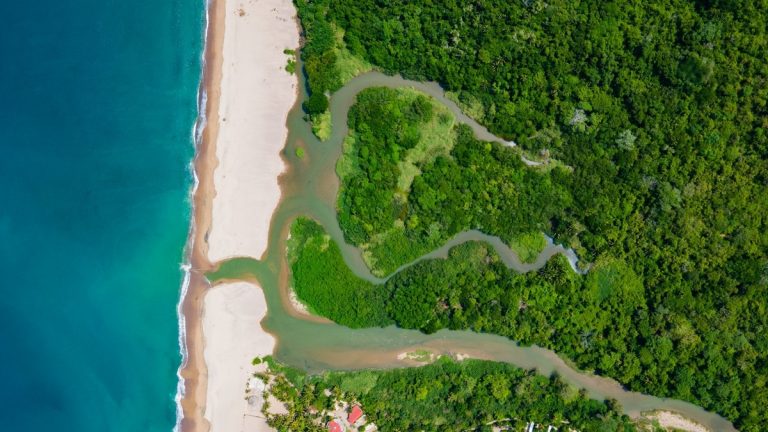
Wave_fronts_bending_along_coast

What is wave refraction?

Wave refraction is the bending of a wave as its speed changes across the crest. Near a coast, the part that enters shallow water first slows while the deeper part continues faster. The crest rotates, often becoming more nearly parallel to the shoreline as it approaches the breaking zone. Refraction also redistributes energy. Wave rays…

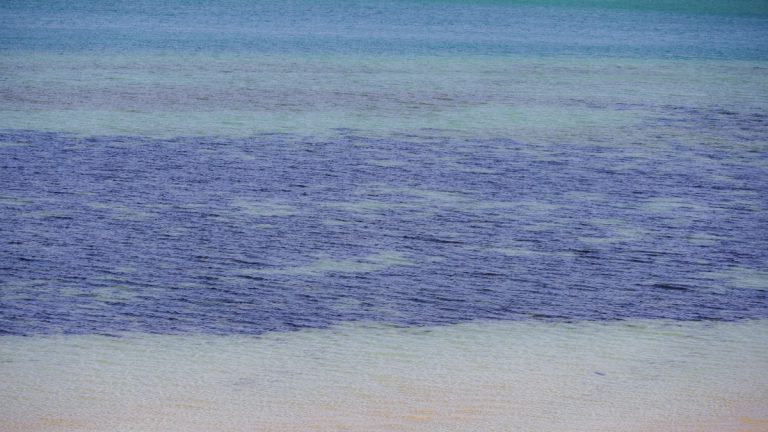
Wind_roughened_open_ocean

What is wave fetch?

Wave fetch is the uninterrupted distance across water over which wind blows in a broadly consistent direction. A longer fetch gives the wind more room to transfer energy into the surface, allowing waves to become taller and develop longer periods. Short fetch restricts growth even when the wind itself is strong. Fetch works together with…

Steep_ocean_wave_profile

What is wave steepness?

Wave steepness is the ratio of wave height to wavelength. It describes how tall a wave is relative to the horizontal distance between its crests. A high ratio produces sharp slopes and an unstable-looking sea, while a low ratio describes a gentler profile even when the absolute height is substantial. The National Weather Service defines…