“Lake grass” is an informal name for several very different things growing in or on fresh water. It may refer to native submerged plants, floating-leaved plants, emergent shoreline vegetation, filamentous algae or an invasive aquatic weed. Correct identification matters because native plants support lake habitat, while algae and invasive species require different management.
A plant bed that tangles a propeller can still be ecologically valuable. Removing it without knowing the species may damage fish nursery habitat, disturb sediment and create space for an invader. Start by observing where the growth is rooted, whether it has true leaves and stems and how it is attached.
True aquatic plants are not algae
Vascular aquatic plants have specialized tissues, recognizable stems or leaves and usually roots or other anchoring structures. They flower and produce seeds, though the flowers may be small or held at the surface. Pondweeds, water celery, coontail and water lilies belong to this broad group.
Algae lack the same roots, stems and leaves. Filamentous algae form threads or mats that may float after bubbles lift them from the bottom. Microscopic phytoplankton remain suspended and can color the water green. Chara looks plant-like but is a large alga, often with a crisp texture and musky odor.
The quickest distinction is structure. A rooted specimen with organized leaves is likely an aquatic plant. A slippery mass of branching threads without true roots is more likely algae. Identification still requires closer examination because fragments and fine-leaved native plants can be misleading.
Four growth forms shape a lake
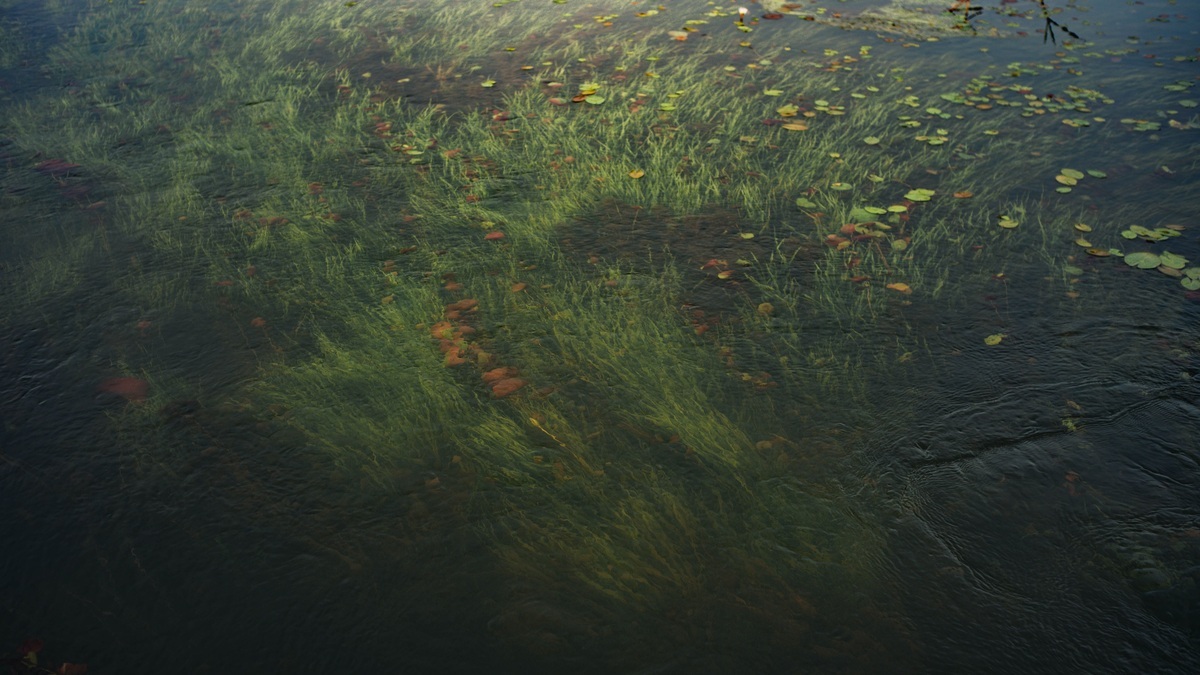
Submerged plants grow mostly beneath the surface. Their leaves may be ribbon-shaped, broad or finely divided. Water depth, clarity and bottom sediment determine how far from shore they can colonize because their tissues still need enough light for photosynthesis.
Floating-leaved plants anchor in the bottom while placing leaves at the surface. Water lilies are familiar examples. Their flexible stalks tolerate changing water levels and the leaf canopy shades shallow water.
Free-floating plants are not rooted in sediment. Duckweed and similar tiny plants drift with wind and current, sometimes accumulating in quiet coves. Emergent plants such as bulrushes and cattails root in saturated soil but extend stems and leaves into the air.
Growth form is more useful than the word grass. Each form interacts differently with waves, fish and recreation. A management method suited to floating duckweed may fail against a deeply rooted submerged plant.
Why native lake plants are valuable
Minnesota DNR describes aquatic plants as primary producers that support the rest of a lake food chain. Insects, snails and small crustaceans graze on plant surfaces or shelter among stems. Fish feed on those invertebrates and use plant beds for cover.
Roots and underground stems hold sediment in place. Aboveground leaves slow currents and waves near shore, reducing resuspension. Clearer water allows more plant growth, creating a feedback that can help maintain a vegetated shallow zone.
Spawning fish often select areas with vegetation and young fish escape predators among dense leaves. Ducks and other wildlife eat seeds, leaves or the invertebrates living there. The exact value varies by species and plant density; an impenetrable monoculture is not equivalent to a diverse native bed.
Native vegetation also occupies space that an invasive species might otherwise colonize. Removing broad areas can expose disturbed sediment and plant fragments. The resulting change may reduce habitat before any recreational benefit is clear.
When plant growth signals a problem
Aquatic plants are expected in the shallow littoral zone. Growth becomes a nuisance when it blocks a swimming area, interferes with navigation or forms dense surface mats. Ecological concern rises when one invasive species displaces a varied native community.
Excess nutrients can stimulate algae and some plant growth. Phosphorus from eroded soil, fertilizer, manure, septic leakage or wastewater can increase production. A plant-heavy shoreline does not identify the nutrient source and treating vegetation alone will not correct an ongoing watershed input.
More growth does not automatically mean a toxic bloom. Most aquatic plants are not cyanobacteria. Filamentous green algae are different again. Health agencies assess suspicious surface scums because some cyanobacterial blooms produce toxins, while others do not.
Common native plants and invasive look-alikes
Native pondweeds include many species with different leaf shapes. Wild celery has long ribbon-like leaves that grow from the bottom. Coontail has forked leaves arranged around a stem and lacks true roots, yet it is a vascular plant rather than algae.
Eurasian watermilfoil is a widespread invasive submerged plant whose feather-like leaves form dense canopies. It can spread through fragments moved by boats or equipment. Native northern watermilfoil can look similar, so leaf details and expert confirmation are important before control.
Curly-leaf pondweed is another invader in many northern lakes. It often grows early, reaches the surface and dies back in midsummer. The seasonal pattern can release nutrients and leave open water after native plants are still developing.
Minnesota’s watermilfoil program favors methods that minimize harm to native plants. State rules differ, but the biological principle travels well: a species-level diagnosis should come before a lake-wide treatment.
How to identify what is growing
Photograph the plant in water and against a plain background. Include the whole specimen, the point where leaves join the stem and any flower, seed head or root. Record water depth, bottom type and whether the growth is attached, floating or forming a loose mat.
Use an identification guide from the state natural-resource agency or university extension service. Compare several features rather than color alone. Water depth, age and wave exposure can change a plant’s shape and a single common name may refer to unrelated species.
Do not transport a sample between water bodies. Seal a small specimen only when an agency or specialist requests it. Clean watercraft, drain water and remove attached vegetation before leaving an access. Plant fragments can remain viable even when they look wilted.
Readers who call every growth seaweed can compare Argo’s explanation of whether seaweed grows in lakes. The article separates marine seaweeds from freshwater algae and plant-like growth.
Why indiscriminate removal can backfire
Cutting plants creates fragments and some species reproduce from small pieces. Mechanical disturbance also clouds water and exposes sediment. Removing too much cover at once can reduce shelter for young fish and feeding habitat for invertebrates.
Herbicides are regulated because products, concentrations and timing affect target and non-target plants differently. Biological controls are species specific and require agency oversight. Bottom barriers alter habitat beneath them and may need permits even on private shoreline.
Small access lanes can sometimes meet recreation needs while preserving most of a bed. Minnesota DNR’s aquatic-plant guide explains when management may be allowed and emphasizes that native plants usually need protection rather than elimination. Property ownership does not automatically grant permission to alter public water.
A practical response to unwanted lake grass
First, identify the organism and map its extent. Second, ask whether the problem is ecological, recreational or cosmetic. A few native stems around a dock call for a different response from an invasive canopy spreading across a bay.
Check state, provincial, Tribal or local permit rules before cutting, pulling or treating. Management windows may protect spawning fish or nesting birds. If an invasive species is suspected, report it through the responsible agency rather than moving fragments for informal confirmation.
Set a measurable goal. The objective might be a narrow swimming lane, reduced fragment spread or recovery of native diversity. Monitoring after treatment shows whether the goal was met and whether plants returned from roots or surviving fragments.
Plant beds also connect to broader lake ecology. Argo’s guide to aquatic food chains shows how producers feed invertebrates and fish. Managing “lake grass” well means preserving those functions while solving a clearly defined problem.