Lake Superior has fewer established aquatic invaders than the other Great Lakes, yet the species that have arrived have altered fish populations, food webs and nearshore habitat. An invasive species is a nonnative organism whose spread causes environmental, economic or human-health harm. A species can therefore be nonnative without meeting the stricter definition of invasive.
The Lake Superior prevention plan identifies shipping, canals, recreational boats, bait and deliberate releases as important pathways. Cold water and a relatively small human population have slowed some invasions, but they do not protect the lake completely. Harbors and connected rivers provide warmer, disturbed habitat where newcomers can establish before moving farther.
Sea lamprey changed the fish community
Sea lamprey (Petromyzon marinus) is a parasitic jawless fish native to the Atlantic Ocean. Canal changes allowed it to move past Niagara Falls and through the upper Great Lakes. It was recorded in Lake Superior in 1938. Adults attach to large fish with a suction-cup mouth, rasp through the skin and feed on blood and body fluids.
The invasion intensified losses among lake trout that were already under pressure from heavy fishing. Binational control now targets larval lamprey in tributaries with selective lampricides, barriers and trapping. The Great Lakes Fishery Commission describes sea lamprey control as a continuing program rather than a completed eradication. Lamprey can reproduce in tributaries, so the work has to be repeated.
Control success is measured through spawning-run estimates and the wounds seen on host fish. Managers aim to suppress lamprey enough for native and stocked fish populations to persist. Complete removal from every tributary would be far harder because larvae live buried in stream sediment for several years before migrating into the lake.
Ruffe and round goby compete near the bottom
Eurasian ruffe (Gymnocephalus cernua) was found in the St. Louis River estuary in the 1980s. This small relative of perches tolerates cold and turbid water, matures quickly and eats bottom-dwelling invertebrates. Dense populations can compete with native yellow perch and other fish that use similar prey.
Round goby (Neogobius melanostomus) also arrived through transoceanic shipping. It occupies rocky bottom habitat and eats mussels, insect larvae and fish eggs. Gobies can become prey for larger fish, but that does not erase their costs. They displace native sculpins, move contaminants through food webs and help transfer botulism toxin to fish-eating birds in parts of the Great Lakes.
Mussels have a limited but important foothold
Zebra mussels (Dreissena polymorpha) attach to hard surfaces in dense colonies. Lake Superior’s cold, nutrient-poor open water and limited calcium make much of the basin less suitable than Lakes Erie or Michigan. Established populations nevertheless occur in several warmer harbors and connected waters.
Each mussel filters suspended particles, redirecting energy from open water toward the bottom. Colonies can foul infrastructure and boats. Their free-swimming larvae, called veligers, are small enough to travel in residual water. Draining live wells and bilges is therefore as important as removing visible plants from a trailer.
Quagga mussels dominate many deeper areas of the lower Great Lakes, but Lake Superior has not developed the same basin-wide infestation. Reports about “Great Lakes mussels” should therefore be checked against lake-specific distribution records. A species established in Lake Michigan is not automatically widespread in Superior.
Spiny water flea rewires plankton feeding
Spiny water flea (Bythotrephes longimanus) reached Lake Superior by 1987. It is a predatory zooplankton with a long barbed tail. By consuming smaller zooplankton, it competes with young fish for food and changes which plankton dominate the lake.
Its resting eggs survive drying and cold better than adults. Fishing lines and downrigger cables can collect gelatinous clumps of the animals, while water in bait containers can move eggs between lakes. Minnesota’s spiny water flea guidance emphasizes draining water and disposing of unwanted bait in the trash.
Invasive plants concentrate along the shore
Eurasian watermilfoil (Myriophyllum spicatum) grows as a submerged plant and can spread when stem fragments root. Records place it in portions of Lake Superior’s shoreline and connected waters. Dense surface mats shade native plants and interfere with boating, although its distribution is not uniform around the lake.
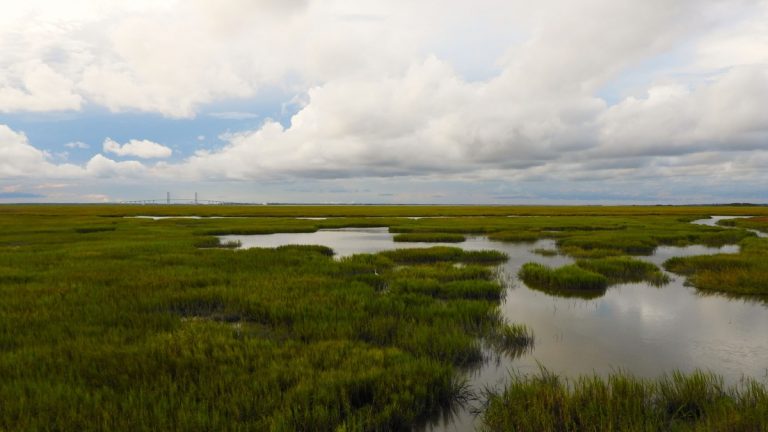
Purple loosestrife (Lythrum salicaria) and invasive Phragmites occupy wetlands and shorelines rather than deep open water. They can form thick stands that reduce plant diversity and alter habitat. Species identification is important because native cattails and a native lineage of common reed also occur in the region. Blanket removal can damage the community it is meant to protect.
Not every introduced species has the same effect
Lake Superior also contains established nonnative fish such as rainbow smelt and alewife. Their abundance and ecological effects vary through time. Calling every introduced organism equally destructive hides the practical difference between a species that remains uncommon and one that causes measurable harm.
The broader Great Lakes basin has more than 180 established aquatic nonnative species, according to the EPA’s Great Lakes overview and the agency classifies about 34 percent as invasive. Lake Superior’s list is shorter than the basin-wide total. Readers should not assume that every Great Lakes invader occurs throughout Lake Superior.
How new species reach Lake Superior
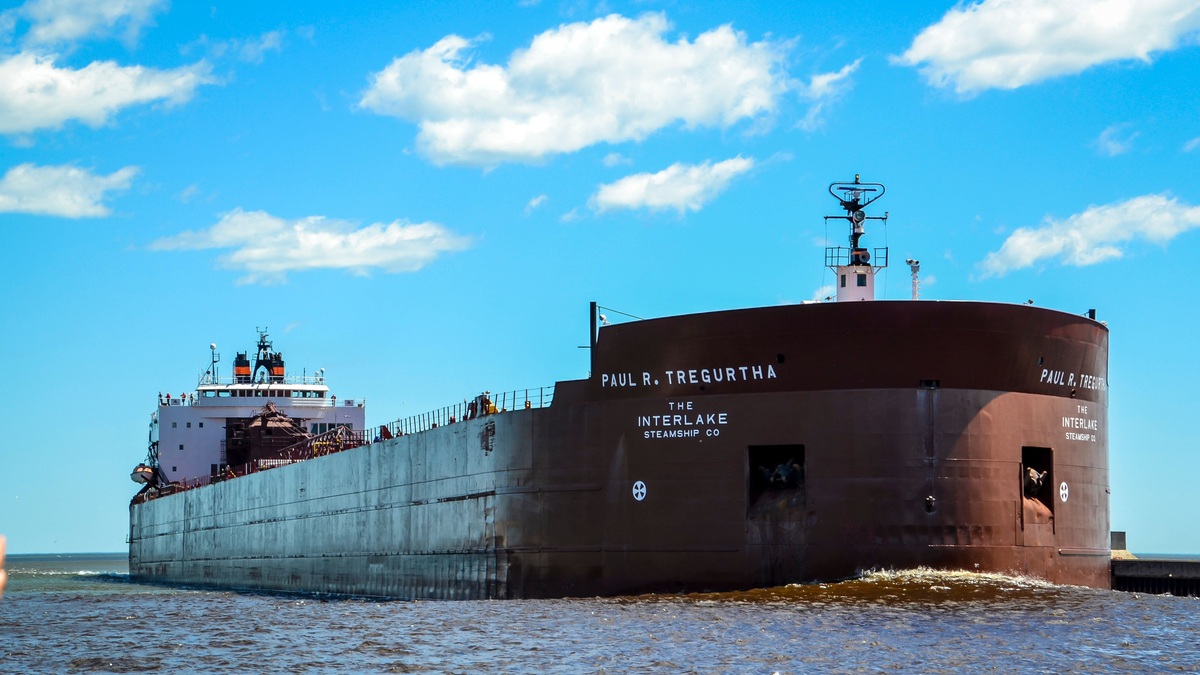
Commercial vessels historically carried organisms in ballast water and attached to hulls. Modern ballast-water rules reduce that risk, while connections through the St. Marys River still link Superior to invaded waters downstream. Organisms can also move in water carried by recreational equipment.
Overland movement often happens at a much smaller scale. A fragment on a trailer, a bait bucket emptied into the lake or a muddy anchor can connect watersheds that have no natural aquatic route between them. Aquarium releases and intentional stocking have created other introductions elsewhere, which is why prevention addresses behavior as well as shipping technology.
Climate conditions may change which species can survive. Warmer nearshore water and shorter ice seasons could improve habitat for some organisms now limited by Superior’s cold climate. Predictions remain species-specific because calcium, food supply and wave exposure can still prevent establishment even when temperature becomes suitable.
Monitoring focuses on likely entry points such as ports and river mouths. Sampling plankton, environmental DNA and bottom communities can detect different life stages. No method finds every rare organism, so agencies combine techniques and repeat surveys rather than treating one negative sample as proof of absence.
Prevention protects the lake’s remaining advantage
Boaters can reduce risk by cleaning visible material from boats and trailers, draining every compartment and allowing equipment to dry before entering another water body. Regulations differ among Minnesota, Wisconsin, Michigan and Ontario, so local rules still apply. The shared principle is to move equipment without water, mud or living organisms.
Early reports are most valuable when they include a clear photograph and an exact location. Agencies can confirm the identification before deciding whether containment is realistic. The depth of Lake Superior and its immense volume make lake-wide eradication difficult after a species spreads, while targeted action in a harbor or tributary may still work.
Prevention also protects inland lakes connected by human travel rather than flowing water. Superior can act as a source for organisms carried on equipment, while an invaded inland lake can send a new species toward the coast. The safest routine treats every trip between water bodies as a potential transfer.
Lake Superior’s ecology is also easier to understand alongside its native community. Argo’s look at life at the bottom of Lake Superior explains the cold, dark habitat that invaders enter. The wider pattern of Great Lakes habitat loss shows why invasive-species control works best when wetlands and spawning areas are protected at the same time.