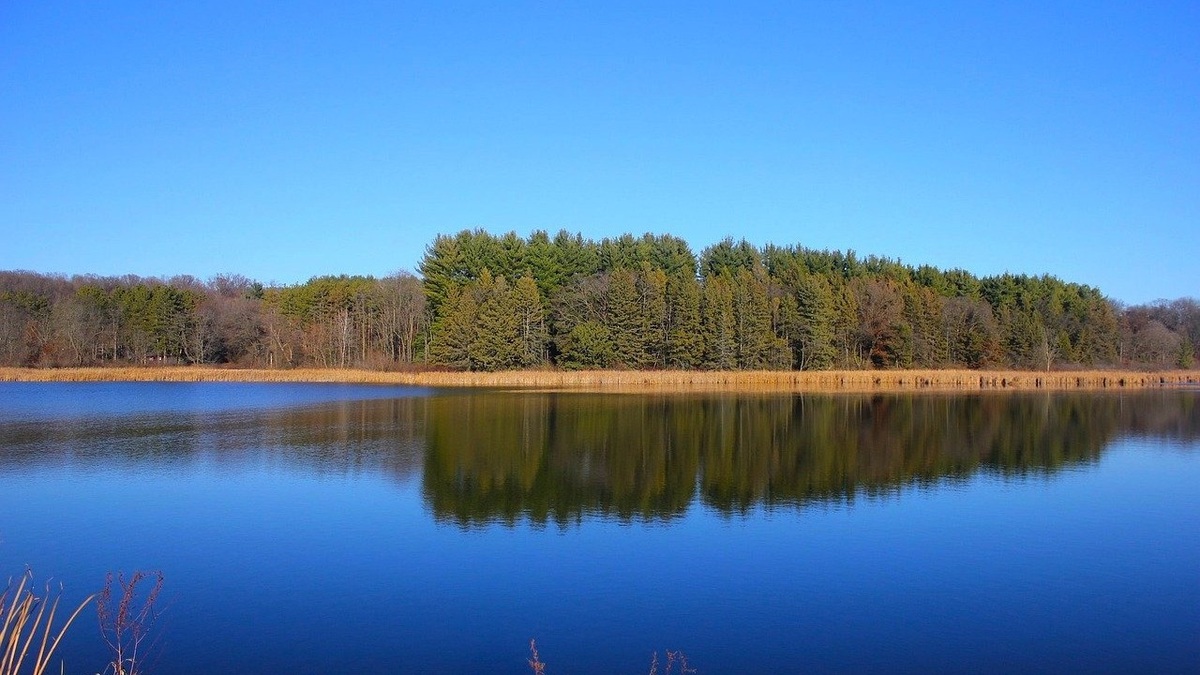
Wisconsin does not publish one official ranking of its “cleanest” lakes. State records do identify exceptionally clear, low-algae lakes, including Black Oak Lake in Vilas County and Lake Owen in Bayfield County. A defensible comparison uses recent multi-year summer Secchi transparency or chlorophyll-based trophic status and compares lakes of similar natural type.
Under that method, Black Oak Lake, Lake Owen, Maiden Lake and some lakes named Crystal are strong clarity examples in DNR records. They should not be labeled universally safest or healthiest. Transparency is one water-quality indicator, while bacteria, cyanobacteria, fish contaminants and local advisories require separate evidence.
Wisconsin’s natural lake diversity is unusually large. Northern seepage lakes, flowages and shallow southern drainage lakes begin with different geology and nutrient regimes. A fair comparison identifies low algae or high transparency without treating natural productivity as a defect.
How Wisconsin measures clear, low-algae lakes
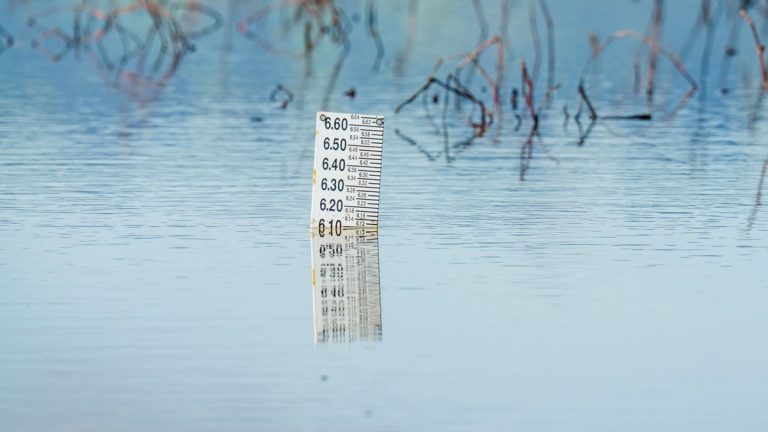
Wisconsin volunteers lower an eight-inch black-and-white Secchi disk until it disappears, then record the depth. Greater visibility usually indicates clearer water. The Citizen Lake Monitoring Network coordinates more than 1,000 volunteers and also supports measurements of chlorophyll, phosphorus, temperature and dissolved oxygen.
The DNR’s surface-water monitoring program reports that volunteers collect Secchi measurements on about 670 lakes in a typical year. Satellite analysis extends clarity estimates to thousands of lakes, while 62 long-term trend lakes receive annual monitoring. Coverage remains unequal because Wisconsin has roughly 15,000 lakes.
For a repeatable “cleanest” comparison, use the most recent five-year summer trophic status reported on each DNR lake page, require enough observations to reduce the effect of one unusual day and note whether the status comes from Secchi depth or chlorophyll. Oligotrophic lakes have relatively low algal productivity, although that label alone does not summarize the whole ecosystem.
The state’s report pages calculate trophic status from summer conditions because algae and clarity respond strongly during the growing season. Comparing a spring maximum from one lake with a July average from another is methodologically weak. A common season and averaging window make the shortlist reproducible.
Black Oak Lake has an exceptional clarity record
The DNR page for Black Oak Lake in Vilas County reports a recent five-year summer trophic-state value of 35 based on chlorophyll, placing it in the oligotrophic range and rating it excellent for its two-story lake class. Volunteer monitoring extends back to 2002.
Wisconsin’s remote-sensing clarity FAQ lists a maximum Secchi reading of 53.5 feet in June 2012 for Black Oak Lake. That is an individual observation, not an annual mean, yet it demonstrates the lake’s capacity for extraordinary transparency.
Black Oak is a seepage lake with naturally low productivity. Its clarity should be compared with similar northern lakes rather than with shallow, nutrient-rich systems that support different ecological communities. The recent multi-year chlorophyll classification is more stable evidence than the 2012 maximum alone.
Seepage lakes lack a continuously flowing surface outlet, so groundwater and precipitation play large roles in their water balance. That hydrology helps explain why lake class belongs beside the number. It does not prove that all seepage lakes are clear.
Lake Owen combines clear water with recent state data
The DNR Lake Owen record reports a five-year summer trophic-state value of 33 based on chlorophyll. DNR classifies that oligotrophic condition as excellent for a two-story lake.
Monitoring occurred at multiple stations from 1992 through recent years. Multiple sites matter in a long lake because bays can differ from its central deep basin. The data do not mean every shoreline location has identical visibility on every date.
Lake Owen is therefore one of the best-supported candidates for a list based on low algal productivity. Its multi-year state record provides more meaningful evidence than a travel photograph or an unsourced claim that the water is “crystal clear.”
Maiden Lake and Crystal Lake show why dates matter
The DNR clarity FAQ highlights Maiden Lake in Oconto County at 47.5 feet in May 2009 and Crystal Lake in Sheboygan County at 32.5 feet in March 2012. Both are striking readings, but spring conditions and single dates are not directly comparable with a five-year summer average.
Wisconsin has multiple waterbodies named Crystal Lake. County and WBIC are necessary whenever a value is cited. A clean-lake list that omits them can attach the right measurement to the wrong lake.
These examples belong in a broader group of documented clear lakes rather than a fixed rank. Monitoring years, station count and seasonal timing differ. A fair presentation gives the measurement and date instead of pretending the data form a uniform statewide contest.
Other Wisconsin lakes may equal or exceed those observations during years with no volunteer reading. Unequal monitoring creates selection bias: a well-studied lake is more likely to produce a recorded extreme than one visited rarely.
What satellite clarity adds
The DNR’s satellite monitoring program combines Landsat imagery with field Secchi measurements. It can estimate clarity on lakes at least five acres in area and has built a record spanning almost two decades.
At least two summer estimates within a three-year period are averaged for trophic assessment. This broadens coverage beyond volunteer stations, though shore adjacency, clouds and image conditions limit individual observations. Satellite results are modeled estimates calibrated with field measurements.
Satellite coverage improves consistency, but it does not eliminate natural differences among lake types. Tannin-stained lakes can look dark while supporting healthy biological communities. Shallow lakes may be naturally productive rather than polluted.
The DNR requires multiple usable summer estimates within a three-year period for trophic assessment. Clouds, shoreline reflections and small size can prevent a retrieval. A modeled blank should remain blank rather than being filled with a neighboring lake’s value.
Why clear does not mean safe
Secchi depth measures how light is absorbed and scattered by material in the water. It does not directly test pathogens, mercury in fish or every toxin. A clear lake can carry an invisible hazard and a cloudy appearance can result from harmless sediment.
Cyanobacteria can also change rapidly with weather and nutrients. Before swimming, visitors should check current local beach postings and DNR public-health information. Before eating fish, they should consult current consumption advice.
Argo’s article on Maine’s clearest lakes uses the same necessary distinction between visual clarity and overall condition. Its guide to Great Lakes habitat loss also shows why ecosystem health cannot be reduced to one optical measure.
A depth map adds another useful layer because shallow bottom can make a Secchi disk reach the bed before it disappears. Argo’s Lake Pontchartrain depth guide illustrates why transparency measurements need adequate water depth to represent optical extinction rather than bottom contact.
How to check a Wisconsin lake yourself
Use the Wisconsin lake water-quality search and verify county and WBIC. Review the station list, latest year, five-year trophic summary and the parameter used. Compare multi-year summer values among lakes in the same class.
Black Oak Lake and Lake Owen stand out because state pages show recent oligotrophic summaries supported by long monitoring histories. Maiden and Crystal provide documented examples of exceptionally deep one-day Secchi visibility. No single ordering is permanent and a responsible list should change when monitoring windows change.
DNR records identify Black Oak and Lake Owen among Wisconsin’s clearest documented lakes, while Maiden and Crystal have also produced remarkable readings. Those data do not establish any one lake as cleanest in every chemical, biological and public-health sense.
Black Oak and Lake Owen offer the strongest multi-year evidence in this shortlist. Maiden and Crystal illustrate exceptional single observations. Keeping those evidence types separate produces a more accurate answer than forcing all four into one numbered rank.