Ghost fishing happens when lost or abandoned fishing gear keeps catching animals without a fisher present. A drifting net can entangle wildlife, while a trap on the bottom may repeatedly attract and hold fish or crabs. Ropes and lines create additional hazards long after the original fishing trip ends.
NOAA defines derelict fishing gear as discarded, lost or abandoned gear in the marine environment. Nets, pots and traps can continue fishing, smother habitat or obstruct navigation. The damage depends on gear design and where it is lost.
The word ghost describes continued operation without an owner, not an invisible hazard. Large nets may be obvious at the surface, while traps remain hidden on the seafloor. Some gear stops catching quickly and some remains effective for years.
Different gear keeps fishing in different ways
Gillnets are walls of mesh designed to catch fish by their gills or bodies. If a net breaks free, floats and anchors can keep sections open. Fish, turtles, seabirds or marine mammals may encounter it as currents move it through the water.
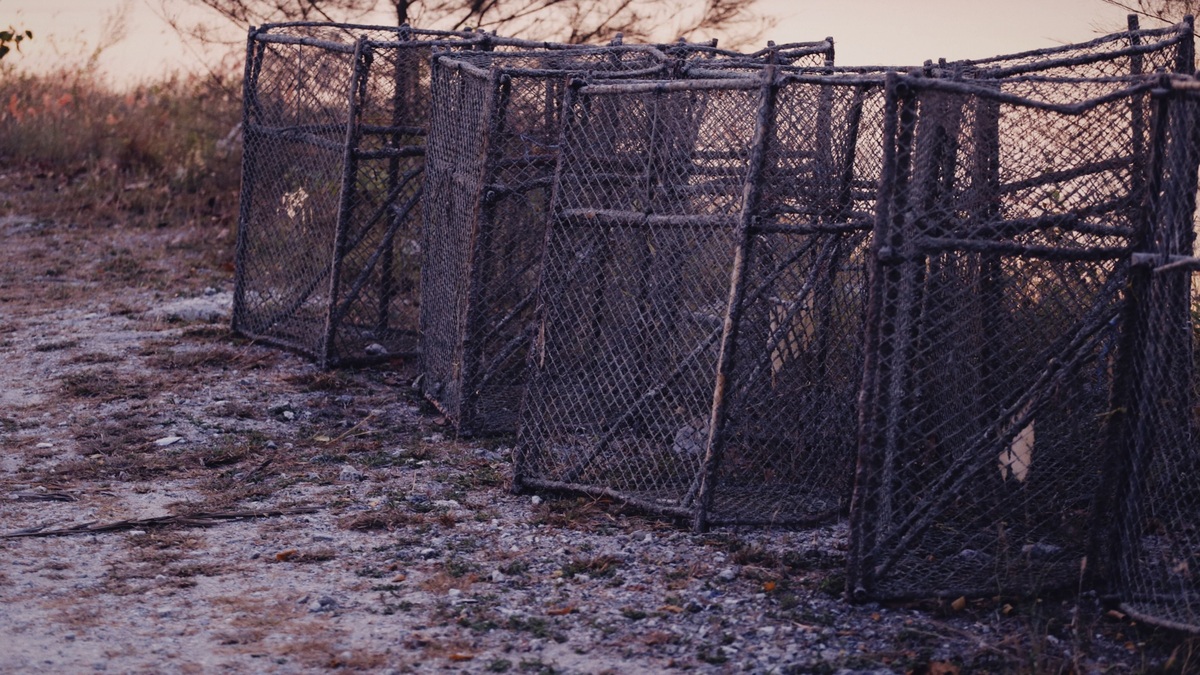
Traps and pots use bait or the scent of captured animals to draw new arrivals through an entrance. A trapped animal may die and become bait, creating a cycle of capture. Escape panels made from degradable material are intended to open after loss.
Longlines and recreational fishing line entangle animals or snag habitat. Rope connecting traps to surface buoys can wrap around whales. Trawls and other heavy gear may scrape or cover seafloor organisms when abandoned.
The UN Food and Agriculture Organization uses the term abandoned, lost or otherwise discarded fishing gear, abbreviated ALDFG. This category includes gear deliberately discarded at sea and equipment lost through weather, conflict or accidents.
Gear is lost through weather and operational failure
Storms and strong currents can move traps, break lines or push vessels away from deployed equipment. Currents may carry gear from its marked position. Contact with the seabed, another fishing set or a ship can sever connections.
Gear conflict occurs when one vessel’s equipment crosses another set. Crowded fishing grounds raise that risk. Poor marking makes recovery harder, especially when a line has shifted or the surface buoy disappears.
Intentional dumping can occur when disposal on land is expensive or inconvenient. Illegal fishing creates another pathway because operators may abandon gear to avoid detection. Conflict and sudden closures can leave equipment unrecovered.
Knowing the cause guides prevention. Stronger ropes may reduce accidental loss in one fishery but increase the time gear remains dangerous after loss. Better marking, reporting and port disposal address different points in the chain.
Wildlife and habitat bear the cost
Entanglement can cut skin, restrict movement or prevent an animal from reaching the surface. The result may be injury, starvation or drowning. Even an animal that escapes can carry line that continues tightening as it grows.
Ghost gear also catches target species that would otherwise remain available to the fishery. Lost catch has ecological and economic effects. Fishers may spend time replacing gear or avoiding areas where derelict equipment fouls propellers.
Nets resting on coral or seagrass can abrade living tissue and block light. Heavy traps crush fragile structures. Movement during storms repeats the damage across a broader patch of bottom.
Synthetic materials persist and fragment. A net that stops catching whole animals can become a source of plastic fibers or smaller pieces. Ghost fishing is therefore one phase in the longer life of marine debris.
Detection and recovery require local knowledge
Fishers often know where gear is likely to accumulate because currents and bottom shape guide it. Sonar can locate traps or net bundles on the seabed. A remotely operated vehicle confirms an object when depth or visibility makes diving unsafe.
Recovery teams must avoid causing more damage while hauling gear. A line under tension can endanger crew and a net wrapped around coral may need to be cut into sections. Permits may govern the handling of gear or animals found inside.
Retrieved equipment can be reused, recycled or disposed of. NOAA has supported free collection programs for old fishing gear. The Fishing for Energy partnership provided disposal sites and converted some unusable gear to energy.
Prevention is designed into fishing systems
Gear marking connects recovered equipment with a fishery and helps identify loss patterns. Electronic tracking can show where high-value sets drift. Reporting systems allow fast recovery before storms or currents move gear farther away.
Weak links and degradable escape panels reduce harm after equipment is lost. The design must still function during normal fishing and avoid creating another failure point. Testing under real conditions is therefore important.
Port reception and disposal programs remove an incentive to dump unusable nets or rope. Training can improve deployment and retrieval, while spatial planning reduces conflict among vessels. Buy-back or bounty programs may support recovery where old gear has accumulated.
Ghost fishing cannot be eliminated by cleanup alone because new losses continue. Prevention, rapid reporting and targeted recovery work together. The goal is to keep gear under control during its useful life and make it stop catching soon after contact is lost.
Measuring ghost catch requires repeated visits
A recovered trap shows what it held at one moment. Estimating lifetime catch requires repeated observations or experiments with known loss dates. Researchers track how entry rates change as bait disappears, openings break or organisms cover the gear.
Ghost-fishing efficiency varies among fisheries. A rigid pot may remain open on a stable bottom, while a light net collapses quickly in one habitat and stays stretched in another. One global average cannot represent every design.
Studies also distinguish animals killed by the gear from those that enter and escape. Scavengers can remove evidence between visits. Cameras and tagged traps improve observation, but visibility and battery life limit long deployments.
Economic estimates add the market value of lost target catch and replacement equipment. They may also consider retrieval costs or vessel damage. Wildlife losses without a market price still belong in the ecological assessment.
Recovery programs need safe disposal
Bringing gear ashore solves only part of the problem. A port needs space to receive wet rope, nets or damaged traps. Clear rules help crews know whether recovered gear should be returned, recycled or treated as waste.
Gear recycling is possible when material can be separated and cleaned. Mixed polymers, metal fittings and biological contamination reduce what a processor can accept. Disposal programs should report the final destination rather than count delivery to a bin as the end.
Recovery priorities can focus on known whale routes, coral habitat or navigation channels where one item presents high risk. Hotspot mapping combines fisher reports, sonar detections and earlier retrievals to place limited effort where it is most useful.
Ownership rules can complicate retrieval because gear is private property in some jurisdictions even after it is lost. Programs need authorization that lets trained crews remove dangerous equipment without encouraging theft from active sets. Distinct markings help separate derelict gear from working gear.
Fishers bring practical knowledge to the design of these rules. A reporting system is more likely to be used when it is fast and does not automatically punish an accidental loss. Trusted reporting can move recovery crews sooner and improve the data behind prevention. Reports should capture gear type, last known position, weather and time of loss. Those details help crews predict drift and allow managers to distinguish a recurring design problem from a rare storm event in one fishery or region over several seasons.
Related reading: how much plastic is in the ocean and flotsam and jetsam.