Water

RSS Feed

Water science news, explainers, and statistics covering freshwater, hydrology, lakes, rivers, groundwater, ice, and Earth’s connected water systems.

Cargo_ship_in_large_storm_waves

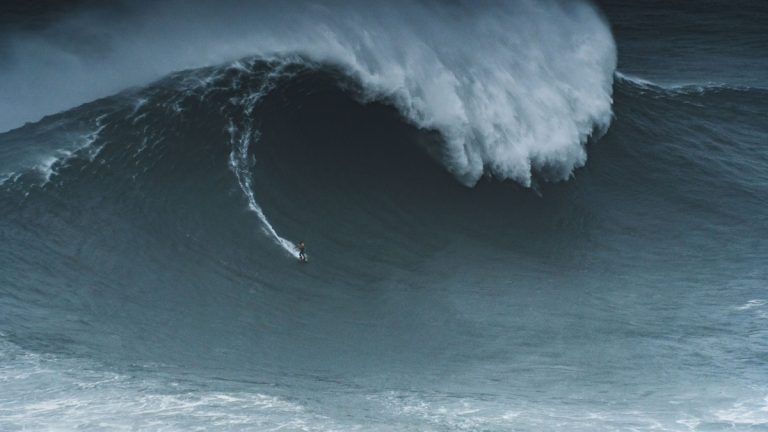
What is significant wave height?

Significant wave height is the average height of the highest one-third of waves measured during a sampling period. It is reported from trough to crest and commonly appears as “seas” in marine forecasts. The value summarizes the larger part of an irregular wave field, but it is not the maximum wave that can occur. The…

More

More in Water

Fluid_rising_from_the_deep_seafloor

Cold Seeps vs. Hydrothermal Vents: What Is the Difference?

Cold seeps release methane-rich or sulfide-rich fluids at temperatures close to surrounding seawater. Hydrothermal vents discharge water heated within ocean crust, often at hundreds of degrees Celsius. Both support food webs powered by chemical energy, yet their heat sources, chemistry, geological settings and lifespans differ. NOAA’s direct comparison of seeps and vents describes cold seeps…

A black manganese nodule recovered from the Pacific Ocean abyssal plain

What Are Manganese Nodules?

Manganese nodules are rounded mineral concretions that grow on or just below the deep seafloor. They form when iron and manganese oxides precipitate in extremely thin layers around a nucleus such as a rock fragment, shark tooth or older nodule piece. Many also concentrate nickel, copper and cobalt, which drives interest in deep-sea mining. Growth…

Deep_ocean_water_below_the_carbonate_boundary

What Is the Carbonate Compensation Depth?

The carbonate compensation depth, usually abbreviated CCD, is the ocean depth where the supply of calcium carbonate particles to the seafloor is balanced by their dissolution. Below the CCD, little carbonate accumulates in sediment because shells and skeletal fragments dissolve as fast as they arrive, or faster. The CCD is a chemical boundary rather than…