A new arXiv study from the South Pole Telescope collaboration reports a catalog of 7,190 confirmed galaxy clusters found in five years of observations from Antarctica. The survey used the SPT-3G camera to search for faint distortions in the cosmic microwave background, the ancient afterglow of the Big Bang.
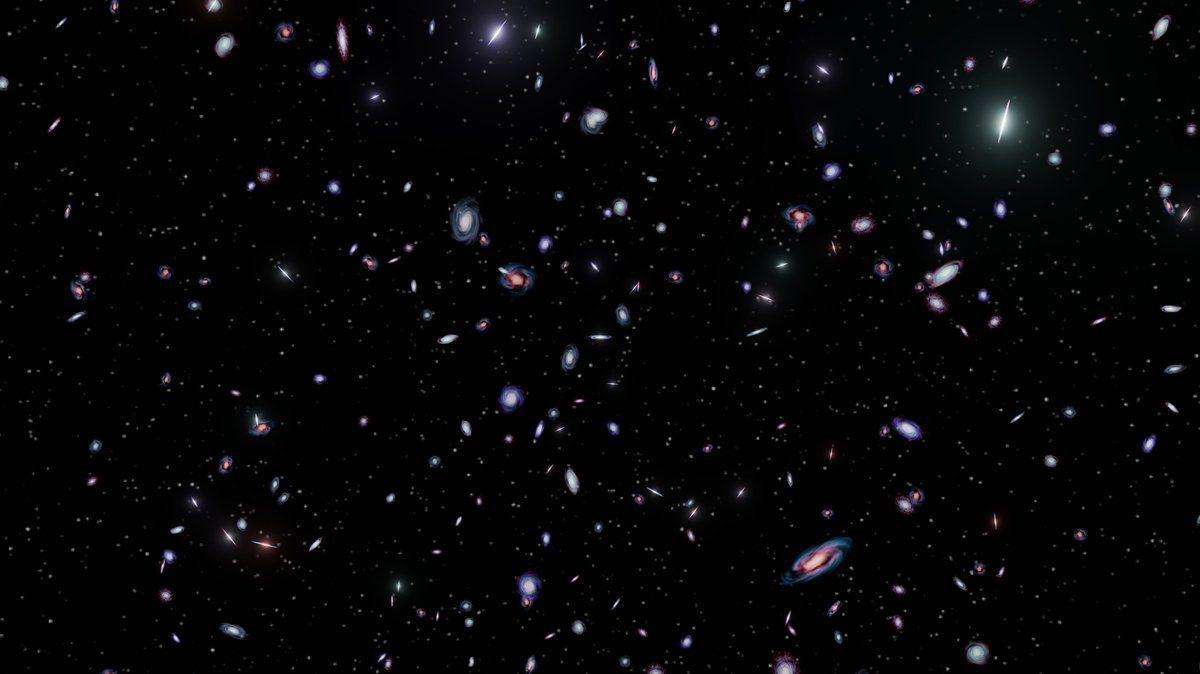
The catalog is one of the deepest microwave-based maps yet made of these enormous structures. Researchers first identified 8,892 cluster candidates across about 1,600 square degrees of sky. They then confirmed 7,190 systems using optical and infrared data. About 20% of the confirmed clusters were absent from previous catalogs.
Galaxy clusters are cosmic cities made of hundreds or thousands of galaxies. They also contain vast clouds of hot gas and large amounts of dark matter. Because these structures grow over billions of years, they help scientists test how the universe expanded and how matter gathered into the cosmic web.
A five-year Antarctic sky survey
The new catalog draws on five years of data from the SPT-3G camera, an upgraded instrument mounted on the 10-meter South Pole Telescope. The telescope operates at the National Science Foundation Amundsen-Scott South Pole Station, where the dry Antarctic atmosphere gives astronomers a steady view of faint microwave signals.
Across the survey region, the team examined roughly 4% of the sky. That may sound small at first glance, yet it is a huge patch for a deep cluster search. The result is a dense catalog with 4.5 confirmed clusters per square degree, according to the study abstract.
In the paper’s own words, “We report a new galaxy cluster catalog, selected using the thermal Sunyaev-Zel’dovich effect.” That concise statement points to the key idea behind the survey. The telescope found clusters through their effect on ancient microwave light, then follow-up observations helped confirm which candidates were real systems.
The SPT collaboration has made the catalog public, which gives other researchers a ready-made foundation for cosmology studies. The official South Pole Telescope site describes the release this way: “The SPT-3G Galaxy Cluster Catalog from 5-years of data from the SPT-3G Main Survey is now public!”
How Big Bang light reveals galaxy clusters
Light from the early universe fills space as the cosmic microwave background. It began its journey when the universe became transparent, about 380,000 years after the Big Bang. Since then, it has streamed through space and passed through the largest structures that formed later.
When that ancient light travels through a galaxy cluster, it encounters extremely energetic electrons in the cluster’s hot gas. The interaction changes the microwave signal in a subtle way. Astronomers call this the Sunyaev-Zel’dovich effect.
This effect lets researchers find clusters by looking for their imprint on microwave light. A galaxy cluster can appear as a faint shadow or distortion against the background glow. The signature is especially useful because it remains visible across great distances.
That distance-friendly signal matters for cosmology. Optical surveys see the starlight from galaxies, which can become difficult to detect at extreme distances. Microwave surveys can trace the hot gas in massive clusters even when the galaxies themselves are faint. Together, those methods give a fuller view of the same structures.
Thousands of new hot gas detections
The catalog includes 4,824 clusters whose hot gas component had its first detection through this survey. That number gives the release special scientific weight. It means the data set expands the known population of cluster gas systems by thousands.
Hot gas is a major part of a galaxy cluster’s visible matter. It can reach temperatures of millions of degrees, so it glows in X-rays and alters microwave background light. By studying it, astronomers can estimate cluster properties and compare how different systems evolved.
The new detections also help connect microwave astronomy with optical and infrared surveys. The SPT-3G signal identifies the cluster through gas. Optical and infrared observations confirm galaxies associated with that same structure. Each technique supplies a different piece of the physical picture.
Some confirmed clusters were already known from earlier surveys. Others had escaped detection until now. The study reports that about one in five confirmed clusters does not appear in previous catalogs, adding a large fresh sample for future work.
A deeper map of cosmic history
About 1,800 of the confirmed clusters sit at redshifts greater than 1. In practical terms, their light has traveled for more than 7.8 billion years before reaching Earth. Those objects show the universe at a much younger stage.
That reach into the distant universe helps scientists study how giant structures assembled over time. Nearby clusters reveal the mature cosmic web. Farther clusters capture earlier chapters, when galaxies and gas were still gathering into today’s enormous gravitational systems.
The study also reports that the SPT-3G sample is deeper than previous Sunyaev-Zel’dovich cluster samples from the South Pole Telescope and the Atacama Cosmology Telescope. It has higher per-cluster detection signal-to-noise and a greater density of confirmed clusters in the surveyed region.
This depth gives researchers a cleaner way to compare clusters across time. A large and relatively uniform catalog can reduce some of the scatter that comes from stitching together many smaller surveys. It also helps astronomers search for rare massive clusters from earlier cosmic eras.
Why dark energy researchers care
Galaxy clusters act as cosmic mile markers for the growth of structure. Their abundance depends on how matter clumped together and how the universe expanded. That makes them valuable for testing models that include dark energy.
Dark energy is the name scientists use for the driver of the universe’s accelerating expansion. Its effects compete with gravity on cosmic scales. Gravity pulls matter together into clusters, while expansion changes the rate at which that growth unfolds.
Cluster catalogs help researchers compare theory with observation. If a model predicts too many or too few massive clusters at a given time, that mismatch can point to missing physics or measurement problems. A deeper catalog increases the range of cosmic history available for those tests.
The SPT-3G catalog also supports studies of cluster physics. Dust-related emission, hot gas behavior, galaxy populations and mass estimates can all shape how scientists interpret the signals. Better measurements of these pieces can sharpen the cosmological use of the catalog.
Future work will need careful mass calibration. Cluster counts become most powerful when scientists know how massive the clusters are. That remains one of the central tasks for turning a catalog into precise measurements of cosmic growth.
What Rubin and Euclid could add
The SPT-3G catalog is arriving as major optical and infrared surveys are preparing to transform the same field. The Vera C. Rubin Observatory in Chile is expected to scan the sky repeatedly through its Legacy Survey of Space and Time. Those observations can help identify galaxies associated with SPT cluster candidates.
ESA’s Euclid mission is also designed to map the geometry and growth of the universe. Its optical and near-infrared data can complement microwave detections by improving redshift estimates and helping confirm distant cluster systems.
Combining these surveys could turn the catalog into a sharper cosmic tool. Microwave data locate clusters through hot gas. Optical and infrared data trace the galaxies. Weak gravitational lensing can help estimate mass by measuring how clusters bend the light of more distant objects.
The South Pole Telescope data give researchers a deep starting point. Rubin and Euclid can add detail, distance information and larger context. Together, these observatories could help show how the universe built its largest gravitational structures across much of cosmic time.
For now, the release gives astronomers a major new resource. From a telescope at Earth’s southernmost observing site, researchers have uncovered thousands of galaxy clusters written faintly into the oldest light in the universe.