- Updated
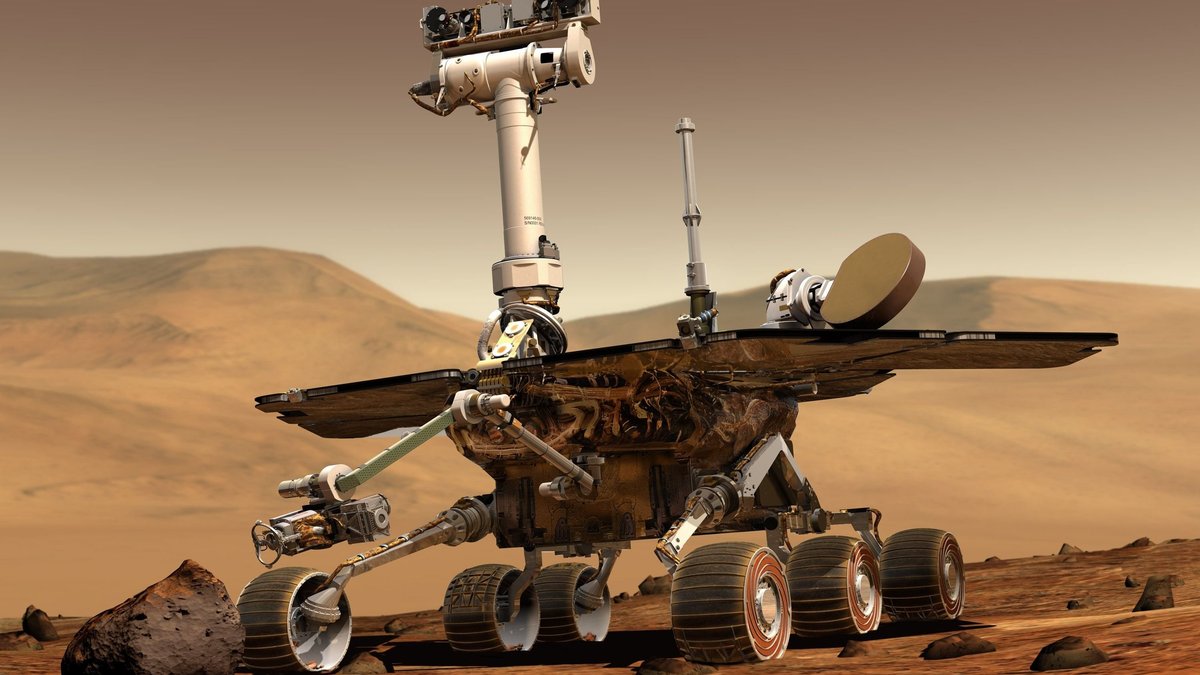
Verified July 29, 2026: seven spacecraft could be confirmed as operating at Mars from current NASA, European Space Agency and United Arab Emirates government sources. They comprise two surface rovers and five orbiters. NASA’s Perseverance and Curiosity rovers remain active on the ground. NASA’s Mars Reconnaissance Orbiter and 2001 Mars Odyssey, ESA’s Mars Express and ExoMars Trace Gas Orbiter, and the UAE’s Hope probe remain active in orbit.
This count describes functioning missions at Mars, not every spacecraft ever sent there. Retired rovers, silent landers and historical orbiters are excluded. It also does not count spacecraft that merely flew past Mars on the way elsewhere. Status is based on what operators publicly confirm; a mission is omitted when a sufficiently current primary-source status cannot be established.
Current Mars mission registry
| Mission | Operator | Type and location | Main current role | Status evidence |
|---|---|---|---|---|
| Perseverance | NASA | Rover; Jezero region | Studies ancient habitability, searches for signs of past microbial life, and collects sealed samples for possible future return. | NASA lists Perseverance as an active mission; page updated July 16, 2026. |
| Curiosity | NASA | Rover; Gale Crater | Reads the layered rock record and investigates whether ancient Mars offered habitable conditions. | NASA lists Curiosity as an active mission; page updated July 16, 2026. |
| Mars Reconnaissance Orbiter (MRO) | NASA | Orbiter | High-resolution imaging, atmospheric and subsurface science, landing-site reconnaissance and rover data relay. | NASA lists MRO as an active mission. |
| 2001 Mars Odyssey | NASA | Orbiter | Thermal and compositional mapping, atmospheric observations and communications relay. | NASA lists Odyssey as active and ongoing. |
| Mars Express | European Space Agency | Orbiter | Studies geology, mineralogy, atmosphere, climate, subsurface structure and the moons Phobos and Deimos. | ESA reports Mars Express in operation around Mars. |
| ExoMars Trace Gas Orbiter (TGO) | European Space Agency | Orbiter | Measures trace gases, maps hydrogen and surface features, studies radiation, and relays surface data. | ESA describes TGO and Mars Express as its two Mars orbiters, March 5, 2026. |
| Hope probe | Mohammed Bin Rashid Space Centre / UAE Space Agency | Orbiter | Builds a planet-wide view of Martian weather and the connections between the lower and upper atmosphere. | The UAE Space Agency says the mission was extended through 2028, April 16, 2026. |
The two working rovers
Perseverance
Perseverance landed in Jezero Crater in February 2021 to investigate a landscape shaped by ancient water. The rover studies rocks with cameras, spectrometers, radar and a drill, and it seals selected cores in sample tubes. Those tubes are a scientific cache, not evidence that a return mission is already guaranteed: NASA describes Earth return as a possible future step, and plans can change. By June 2026, Perseverance had driven a marathon distance on Mars and was operating west of Jezero in an area the team calls Arbot, according to a NASA image and status release.
Curiosity
Curiosity landed in Gale Crater in August 2012. Its central question is whether Mars ever had environmental conditions suitable for microbial life. Early results established that ancient Gale contained habitable environments, and the rover now examines younger layers exposed on Mount Sharp to reconstruct how those conditions changed. Curiosity analyzes samples inside the rover rather than packaging cores for later return. Its longevity does not make it static: driving routes, drill campaigns and instrument use change with terrain, power and engineering constraints.
The five working orbiters
MRO and Odyssey are both science missions and infrastructure. MRO’s high-resolution observations support geological research and surface-mission planning, while its relay system carries large volumes of rover data toward Earth. Odyssey, which reached Mars in 2001, is the longest continually active mission in orbit around another planet. NASA says it continues to study clouds, fog, frost and surface rocks while supporting the communications network.
ESA’s Mars Express entered orbit in 2003 and remains a broad planetary observatory. Its instruments image the surface, identify minerals, sound the subsurface with radar, and examine the atmosphere and plasma environment. TGO arrived in 2016 and began its main science phase after aerobraking. It searches for trace atmospheric gases, maps near-surface hydrogen, images selected sites and carries an Electra relay package. In March 2026, ESA published new research using observations from both orbiters, providing recent operational evidence beyond their evergreen mission pages.
The Hope probe entered Mars orbit in 2021. Its elongated orbit samples the atmosphere across different locations and times of day, helping connect lower-atmosphere weather with the escape of hydrogen and oxygen higher above the planet. The UAE Space Agency reported in April 2026 that strong spacecraft performance supported extending the mission through 2028. That end date is a planned operating horizon, not a warranty of uninterrupted service.
A major change in 2026: MAVEN ended
NASA’s MAVEN orbiter is not in the active registry. Contact was lost on December 6, 2025. After months of recovery work, NASA determined that the spacecraft could not be recovered and declared the mission complete on June 3, 2026. NASA’s Mars Relay Network overview records the end of the mission and notes that other orbiters took over its relay workload. MAVEN remains scientifically important because its measurements transformed understanding of how the Martian atmosphere escaped to space, but historical importance is different from current operations.
Methodology
A mission is marked active when its operator or responsible agency provides a current active designation, recent operational report, or explicit mission extension covering the verification date. ARGO.net checks mission hubs, operator newsrooms and agency program pages. Recent dated evidence is preferred; an undated page is used only when it is maintained as an official live mission registry. Secondary news reports and crowd-edited mission lists are not used to establish status.
The count treats each independently operated spacecraft as one mission entry. A rover and its cruise stage are not separate active missions after landing. An orbiter that also relays data remains one entry. Future spacecraft under construction are excluded until they are launched, reach Mars and enter operations. Hardware that is dormant but could theoretically awaken is not called active without a current operator statement.
Coverage limits and cautions
Public status is not real-time telemetry. Teams may temporarily suspend science for safe modes, solar conjunction, eclipses, software work or spacecraft-health investigations. “Active” does not mean every instrument is healthy, and “mission extended through 2028” does not mean operations are assured until the final day.
China’s Tianwen-1 orbiter is not included in the verified total because ARGO.net did not locate a sufficiently recent CNSA operational statement for July 2026. CNSA’s latest readily verifiable English material confirms the orbiter’s earlier mapping campaign and describes the Zhurong rover as dormant, but that is not enough to infer present orbiter status. Omission should not be read as confirmation that Tianwen-1 has failed. This registry will add it if a current operator source becomes available.
Update log
- July 29, 2026: Tracker launched with seven operator-confirmed active spacecraft: Perseverance, Curiosity, MRO, Odyssey, Mars Express, TGO and Hope. MAVEN recorded as completed June 3, 2026. Tianwen-1 withheld pending current primary-source confirmation.