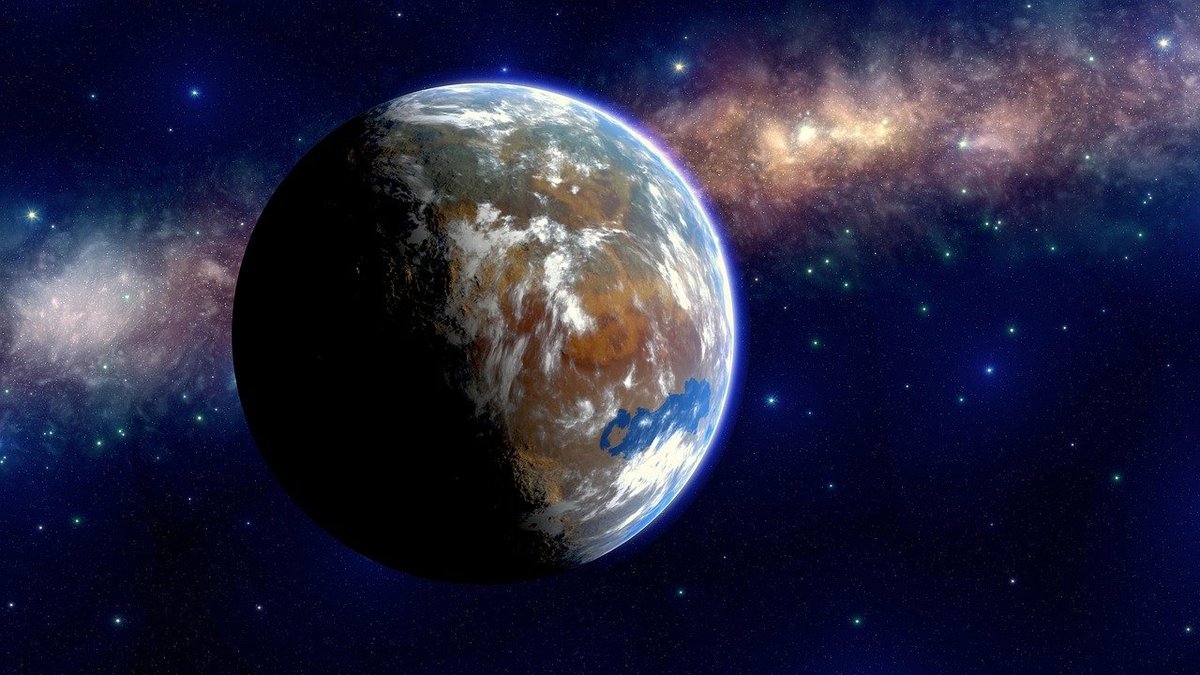
A study led by researchers at NASA Ames used Kepler’s final planet census to estimate how often rocky worlds occupy temperate orbits around Sun-like stars. The analysis, published in The Astronomical Journal, suggested that the Milky Way could contain at least 300 million potentially habitable planets.
The result marks a profound change in astronomy. A generation ago, scientists had confirmed no planets around other Sun-like stars. Today, thousands of exoplanets are known and statistical studies indicate that planets are a routine outcome of star formation.
That abundance sharpens a question that has followed the search for extraterrestrial life for decades. If rocky worlds with moderate temperatures are widespread, why have astronomers detected no convincing signal from another technological civilization? Kepler transformed the planetary side of that mystery. TESS, Webb and future observatories are beginning to explore what those planets are actually like.
How Kepler counted distant planets
The Kepler Space Telescope began observations in 2009 and spent years watching a narrow patch of sky. Its camera repeatedly measured the brightness of more than 100,000 stars, searching for small and regular dips in their light.
Those dips can occur when a planet crosses the face of its star from our perspective. During such a crossing, the planet blocks a tiny portion of the star’s light. This transit method allows astronomers to estimate the planet’s size from the depth of the dimming. The interval between crossings reveals its orbital period.
The geometry creates an important limitation. A planetary system must be aligned closely enough for its worlds to pass between their star and Kepler. Many planets orbit at angles that never produce a visible transit from Earth. Long-period planets also cross less often, giving the spacecraft fewer opportunities to detect them.
Researchers accounted for these missing worlds through statistical corrections. They measured how frequently Kepler could have detected planets of different sizes and orbital periods. They then used that sensitivity to estimate the underlying planetary population. By the time Kepler ran out of fuel in 2018, its small window on the sky had become a census of the wider galaxy.
Small worlds fill the galaxy
Kepler’s discoveries showed that small planets are common. Many stars appear to host at least one planet and planetary systems often place several worlds into compact orbits.
Among Kepler’s most striking findings was the abundance of planets between Earth and Neptune in size. Astronomers commonly describe these worlds as super-Earths or sub-Neptunes. Our solar system contains no planet in that size range, although the category appears frequently around other stars.
Size provides an initial clue about composition. Smaller planets are more likely to have rocky interiors, while larger worlds can retain deep envelopes of hydrogen and helium. The dividing line remains complicated because two planets with the same radius can have different masses, atmospheres and internal structures.
Kepler therefore established the broad demographics of planetary systems. It revealed which planet sizes and orbital periods occur most often. Follow-up observations from other telescopes can then measure masses, probe atmospheres and investigate individual worlds in greater detail.
What TESS adds to the census
NASA launched the Transiting Exoplanet Survey Satellite, known as TESS, in 2018. Kepler concentrated on one distant field for long periods. TESS surveys large sections of the sky and focuses heavily on bright stars that are relatively close to Earth.
This strategy makes TESS a powerful target finder. A planet passing in front of a bright nearby star is easier to study with other observatories. Ground-based telescopes can measure how the planet’s gravity pulls on its star, which helps astronomers calculate the planet’s mass and average density.
TESS is especially effective at finding planets with short orbital periods because most regions receive limited observing time during a standard survey pass. Longer observations near the spacecraft’s viewing poles and repeat coverage can reveal planets with wider orbits.
Together, Kepler and TESS serve complementary roles. Kepler provided a deep statistical sample that revealed how planetary populations are distributed. TESS identifies accessible systems where astronomers can test those population-level findings against the physical properties of real planets.
Estimating potentially habitable worlds
The number astronomers seek is called an occurrence rate. In this case, it describes the fraction of Sun-like stars expected to host a roughly Earth-sized planet in a region where surface temperatures could permit liquid water under suitable atmospheric conditions.
An influential 2013 analysis led by Erik Petigura estimated that about 22 percent of Sun-like stars could have an Earth-sized planet receiving a potentially suitable amount of starlight. The uncertainty was about eight percentage points in either direction.
A later team led by Steve Bryson at NASA’s Ames Research Center combined Kepler’s final data set with improved measurements of stars from ESA’s Gaia mission. Better stellar information matters because a planet’s estimated size and temperature depend heavily on the size, brightness and temperature of its host star.
The researchers considered planets based on both orbital position and the amount of energy they receive. Their central estimate indicated that roughly half of stars with temperatures similar to the Sun could host a rocky planet capable of supporting surface liquid water under favorable atmospheric conditions.
The wide range behind 300 million
The study’s central estimate came with a broad range. Under conservative assumptions, about 7 percent of Sun-like stars could host a potentially habitable rocky planet. More optimistic assumptions raised the fraction as high as 75 percent.
Those wide boundaries reflect the challenge of finding small planets on year-long orbits. Earth-sized planets block little starlight. A planet traveling through a wider orbit also transits less often during a mission, which leaves fewer repeated events for scientists to identify.
Researchers must also decide where the habitable zone begins and ends. Climate models produce different boundaries depending on atmospheric composition, cloud behavior, surface conditions and the properties of the host star. Each assumption changes the number of Kepler planets that qualify.
Even the conservative end of the calculation led NASA to the estimate of at least 300 million potentially habitable worlds in the Milky Way. This figure describes a statistical population rather than a catalog of confirmed Earth twins. It provides a scale for future searches and shows that promising orbital environments could be widespread.
What the habitable zone reveals
The habitable zone is the range of orbital distances where a rocky planet could maintain liquid water at its surface if it has an appropriate atmosphere. The region shifts according to the star’s luminosity and temperature.
A cooler star places its temperate zone closer in. A hotter or brighter star pushes the zone farther out. The character of the star also matters because ultraviolet radiation, stellar flares and charged particles can alter or erode a planet’s atmosphere over long periods.
Orbital position supplies one part of the habitability picture. The planet’s mass affects whether it can retain an atmosphere. Its atmosphere controls how efficiently heat moves around the globe. Clouds, oceans, ice, geology, magnetic activity and the history of the star can all influence surface conditions.
Venus and Mars illustrate the breadth of possible outcomes in our own solar system. Both are rocky planets, yet their atmospheric and climatic histories produced environments very different from Earth. An exoplanet in a temperate orbit therefore becomes a high-priority candidate for deeper observation.
Why the galaxy remains quiet
The abundance of potentially suitable planets feeds the puzzle commonly called the Fermi paradox. Physicist Enrico Fermi famously raised the issue in 1950 by asking where other civilizations might be. The question grew more pressing as astronomy revealed the age and scale of the Milky Way.
A habitable-zone planet could face many uncertain steps. Life must originate, survive environmental changes and develop complexity. Technological intelligence may require additional rare transitions. A civilization also needs to remain detectable at the same time humanity is listening.
Timing creates a major obstacle. The Milky Way has existed for billions of years, while humanity has produced strong artificial radio emissions for only a small slice of that history. Two civilizations could arise around the same star at different times and remain completely unaware of each other.
Distance adds another barrier. Radio signals weaken as they spread through space and a tightly directed transmission may miss Earth. Advanced societies could use communication methods that current instruments overlook. Their detectable phase might also end as technology changes.
How little SETI has searched
Modern SETI projects use radio telescopes and optical instruments to look for signs of technology. These signs, called technosignatures, could include narrow radio transmissions, brief laser pulses, unusual atmospheric chemicals, or other energy use that appears difficult to explain through natural processes.
The search space is enormous. Astronomers can examine many positions in the sky, but each position contains countless stars. Every target can be checked across a vast range of frequencies and at different times. Signal strength, polarization, repetition and duration add further dimensions.
A transmission could arrive while a telescope is pointed elsewhere. It might occupy a frequency affected by terrestrial interference. A short signal could appear once and disappear before another observatory confirms it. These challenges make repeated observations essential.
Decades of searches have sampled only a small portion of the available combinations. The silence recorded so far therefore places limits on particular kinds of signals within particular observing windows. It also guides researchers toward broader surveys, improved interference rejection and more sensitive instruments.
Webb probes rocky atmospheres
The James Webb Space Telescope can study some small exoplanets as they transit nearby stars. During a transit, a fraction of the star’s light filters through the planet’s atmosphere. Molecules absorb specific wavelengths, leaving patterns that sensitive instruments may detect.
Rocky planets present an especially difficult challenge. Their atmospheres are thin compared with the enormous envelopes surrounding gas giants. Their signals can also be obscured by activity on the host star, including starspots and variations in the stellar surface.
Webb has begun placing constraints on the atmospheres of nearby rocky worlds. In favorable systems, it may determine whether a planet possesses a substantial atmosphere and identify broad clues about its composition. Detecting a persuasive biological signal on an Earth-sized planet remains close to the observatory’s practical limits.
Atmospheric interpretation also requires care. Oxygen, methane, carbon dioxide and other gases can be produced through several processes. Scientists must study combinations of molecules alongside the planet’s temperature, star, geology and atmospheric chemistry before evaluating a possible biological origin.
The Habitable Worlds Observatory
NASA’s planned Habitable Worlds Observatory is intended to take the next major step by directly imaging potentially Earth-like planets around nearby stars. The concept would suppress the overwhelming glare of each star so that the much fainter light reflected by an orbiting planet can be measured.
Direct imaging could reveal a planet as a distinct point of light. By separating that light into a spectrum, researchers could search for atmospheric gases and study surface or cloud properties. Repeated observations might also show how the planet changes as it rotates and travels around its star.
The observatory’s central scientific goal is to examine roughly a couple of dozen potentially Earth-like worlds. That sample could help astronomers estimate how often temperate rocky planets retain atmospheres and whether any show chemical patterns associated with living processes.
Kepler supplied the statistical foundation for that effort. TESS is identifying nearby planetary systems and Webb is testing methods for reading small exoplanet atmospheres. A future direct-imaging observatory could connect those advances by examining Earth-sized planets as individual worlds, moving the search from population estimates toward evidence about their environments.