A 2026 study in Geoarchaeology has revived one of space exploration’s most extreme survival stories. The study argues that several probes sent to Venus during the Cold War, including Soviet Venera spacecraft, may still be recognizable on the planet’s surface after decades of crushing pressure and furnace-like heat.
That finding gives new weight to the strange afterlife of Venera 7, the Soviet lander that reached Venus on December 15, 1970. For 23 minutes after landing, it transmitted data from a world where the surface temperature was roughly 475 degrees Celsius and the atmospheric pressure was around 90 times that at Earth’s sea level.
Those few minutes made Venera 7 the first human-made object to send information from the surface of another planet. The mission also produced one of the great near-misses in planetary science. Engineers first thought the lander had gone silent at touchdown. Weeks later, a closer look at the recorded signal showed that it had kept transmitting from the ground.
Venera 7’s 23 minutes on Venus
On the night side of Venus, a compact pressure vessel fell through a carbon dioxide atmosphere thick enough to crush weaker machines long before they reached the ground. It struck the surface hard, bounced, tipped over and settled in a place no spacecraft had ever spoken from before.
The lander survived for about 23 minutes after contact with the surface. Its signal was weak and the data were limited. Even so, those minutes gave scientists direct evidence from a planetary surface beyond Earth.
For decades before Venera 7, Venus had been a planet of guesses. Its clouds hid the surface from optical telescopes. Some earlier ideas pictured a warm ocean world or a humid tropical planet. The Soviet measurements helped replace speculation with a harsher picture.
The mission’s importance comes from its simplicity. A small machine reached the ground, lived briefly and sent back enough information to confirm that Venus was a pressure-cooker world with extreme heat at the surface.
A titanium sphere built for a furnace
Venera 7 was designed after earlier Soviet Venus probes showed how unforgiving the planet was. Venera 4, Venera 5 and Venera 6 returned valuable atmospheric readings during descent. Their pressure vessels failed before landing.
Engineers at the Lavochkin design bureau strengthened Venera 7 for the conditions they now expected. The lander used a thick titanium pressure shell, shock-absorbing structure and a radio system meant to send data during descent and after touchdown.
Before arrival, the lander was chilled to help its instruments last longer. That trick bought time. Once the spacecraft entered the Venusian atmosphere, heat began flowing inward through the protective shell.
Every part of the design served a brutal purpose. The lander had to survive entry heating, a parachute descent, violent deceleration and an environment where the air itself pressed against the hull like deep ocean water.
The landing that nearly erased the mission
The descent began with high-speed entry into Venus’s dense atmosphere. Aerodynamic drag slowed the probe rapidly. After that, a parachute was supposed to control the final part of the fall.
The parachute system suffered damage in the hot atmosphere. The descent became faster than planned. Venera 7 hit the surface at roughly 16.5 meters per second, a speed comparable to a vehicle collision on Earth.
The impact damaged the mission’s clean ending. The pressure gauge failed and the lander came to rest at an awkward angle. Its antenna no longer pointed the way engineers had intended.
From Earth, that geometry mattered enormously. A low-gain antenna depends on direction. With the spacecraft lying on its side, much of the transmission went away from Earth instead of toward Soviet receiving stations.
A signal hidden in the tape
At first, the mission appeared to have ended at impact. Controllers saw the signal fall sharply. The remaining trace looked like noise and the surface phase seemed lost.
Later analysis changed the story. Radio astronomer Oleg Rzhiga examined the recorded tapes and found a faint, modulated signal continuing after touchdown. The spacecraft had been talking from the surface all along.
The signal had arrived at only a small fraction of its expected strength. Once engineers reprocessed the recording with higher gain, usable temperature information emerged. That careful replay turned an apparent partial success into a historic first.
The episode also shows how fragile discovery can be. A spacecraft can do everything required and the evidence can still hide inside a weak signal. In Venera 7’s case, the proof survived because someone listened again.
What the first surface data revealed
The numbers were stark. Venera 7 measured a surface temperature near 475 degrees Celsius. The pressure reading was derived after the pressure instrument failed, using the descent and temperature information. The result pointed to about 90 atmospheres at the surface.
Those conditions reshaped the public and scientific view of Venus. The planet became a real example of an atmosphere dominated by carbon dioxide, with surface conditions far beyond the limits of ordinary spacecraft hardware.
The lander sent no photographs. It carried no modern chemical lab. Its short message contained a few essential facts from a place where electronics quickly fail and metals endure a punishing chemical environment.
Still, the result had force. Direct surface data confirmed that Venus was one of the most hostile planetary environments accessible to robotic exploration.
How Venera 7 changed Venus science
Venera 7 gave engineers a working baseline for future landers. Later Soviet missions used the hard lessons from that first surface transmission. They carried stronger systems, improved thermal protection and more capable instruments.
The program eventually produced some of the most remarkable images in planetary history. Venera 9 and Venera 10 returned the first pictures from the surface of another planet in 1975. Venera 13 and Venera 14 later sent color views from the Venusian surface in 1982.
Those later achievements trace back to the proof that a lander could touch Venus and communicate. The first surface signal showed that survival was possible for minutes. Better engineering stretched that window.
The mission also fed into climate science. Venus became a natural laboratory for studying a thick carbon dioxide atmosphere and extreme greenhouse heating. That comparison still matters because Venus and Earth began as rocky planets of similar size.
The 2026 study on Venus space heritage
The new Geoarchaeology paper looks at Venus through a different lens. It treats landers, probes and impact sites as planetary geoarchaeology, the study of human-made materials in planetary environments.
In the study abstract, the authors write, “Venus preserves the remains of landers and probes from 15 space missions concentrated between 1965 and 1985.” The paper frames those artifacts as early material traces of direct human contact with another planet.
The research team assessed known landing and impact contexts using public mission records, geological information and environmental data. The paper’s data statement says no new data were generated. Its conclusions come from reexamining available information about the spacecraft and Venusian surface conditions.
The study focuses on preservation potential. It considers heat, pressure, atmospheric chemistry, terrain type and geological activity. Some materials may have degraded heavily. Stronger materials, including titanium, ceramics and aluminum, may have persisted in altered form.
Why the lander may still be there
Venus looks destructive at first glance. Its lower atmosphere is hot, dense and chemically active. Carbon dioxide exists there under conditions that make it behave in unusual ways and reactive gases can attack exposed materials.
Even so, preservation depends on more than harshness. A place can be extreme and still change slowly. The Geoarchaeology study points to slow geological processes and long-term climate stability as factors that may help some spacecraft remains endure.
Venus lacks rain at the surface. It lacks rivers, oceans, plants and animals. Wind can operate in the dense atmosphere, but many lowland plains appear relatively quiet compared with Earth’s most active erosional environments.
That combination creates a strange possibility. A crushed or corroded lander could remain recognizable for decades or longer. In Venera 7’s case, the titanium pressure vessel may be among the parts most likely to retain its basic identity.
The study does leave room for uncertainty. Some spacecraft materials, such as polymers and delicate insulation, would be especially vulnerable. Volcanic activity, seismic shaking, or mass movement could bury or damage individual sites.
The legacy of Soviet Venus exploration
The Soviet Venera program remains unique in planetary exploration. The Soviet Union landed multiple functioning spacecraft on Venus and returned data from the surface. Those missions remain the only successful operations from the Venusian ground.
Venera 7 sits at the beginning of that surface record. Its landing was rough, its data stream was faint and its survival time was short. Its achievement was decisive because it proved that direct measurements from Venus were within reach.
The 2026 study adds a new layer to that legacy. The landers may be scientific artifacts as well as historical ones. Future missions could study them as witnesses to Venusian weathering, spacecraft design and the earliest human contact with another planet’s surface.
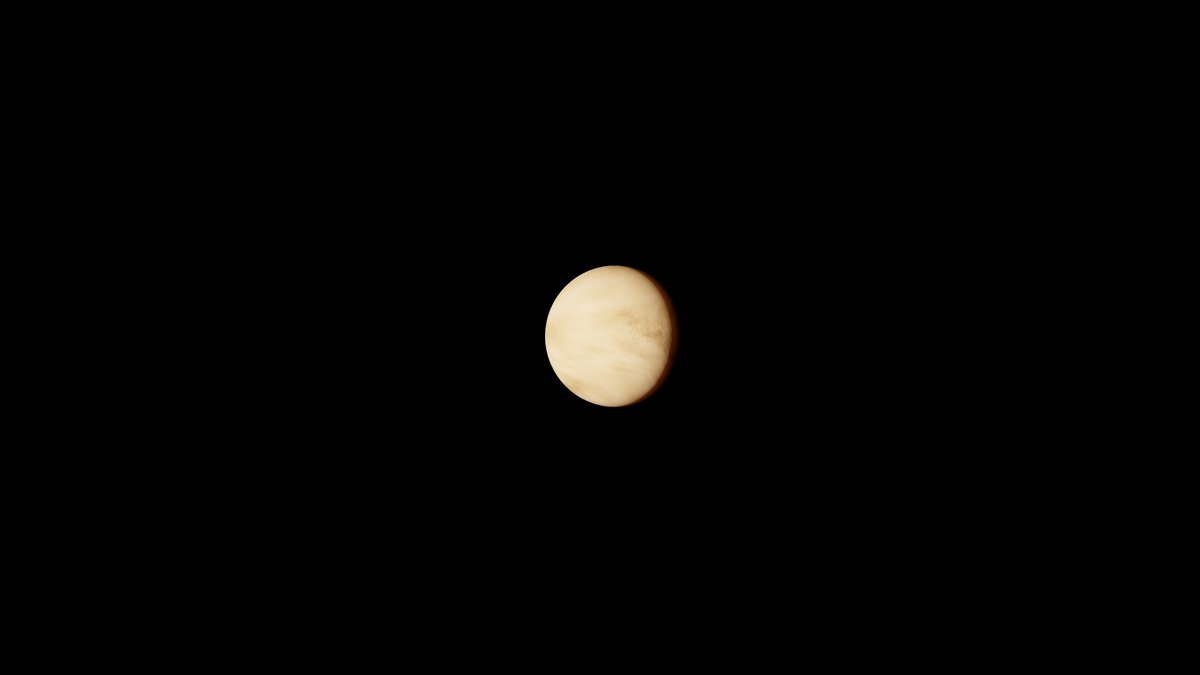
That prospect makes Venera 7 feel unusually present. Somewhere on Venus, a small sphere of engineered metal may still rest on its side beneath a yellow-white sky. Its radio has been silent for more than half a century. Its first signal from another world still carries the power of a discovery almost missed.