NASA Johnson Space Center is advancing in-situ resource utilization, the spaceflight strategy of collecting materials from the Moon, Mars, asteroids and other worlds, then turning them into essentials such as water, oxygen and rocket propellant. The idea gives an unexpectedly ordinary substance a central role in the future space economy: water.
The reason is simple and powerful. Water can support astronauts directly and it can also be split into hydrogen and oxygen. Those two elements can become high-energy rocket propellant. If future missions can extract water from lunar ice or water-rich asteroids, spacecraft may one day refuel away from Earth.
That would change the economics of deep-space travel. A mission bound for the Moon, Mars, or an asteroid could carry less fuel from Earth and take on propellant along the route. The vision is still early, expensive and technically difficult. Yet the scientific logic behind it is strong enough that NASA and private companies are treating off-world resources as a serious engineering frontier.
Water leads the space-mining story
The most valuable mined resource in space may look surprisingly familiar. Water in space can become drinking water, breathable oxygen, radiation shielding and rocket fuel. That makes it useful in many more ways than a rare metal sitting inside an asteroid.
Space mining is often imagined as a hunt for precious metals. Asteroids can contain nickel, iron, cobalt and platinum-group metals. Some estimates of asteroid value can sound astronomical. For actual space operations, usefulness matters more than sticker price.
Water has a special advantage because it can be consumed where it is found. A kilogram of water mined on the Moon can stay in the space transportation system. It doesn’t need to travel down to Earth to become valuable.
That local use is the heart of in-situ resource utilization, often shortened to ISRU. The approach asks future explorers to use nearby material whenever possible. In ordinary terms, it means packing fewer supplies from home and learning to live off the land beyond Earth.
The platinum market problem
Platinum sounds like the perfect space-mining prize because it is rare, dense and valuable on Earth. A metal-rich asteroid could, in theory, contain enormous quantities of it. The business problem appears when that metal has to be delivered to terrestrial buyers.
Returning large amounts of asteroid metal would require complex missions, safe reentry systems, processing infrastructure and a customer base willing to pay enough to cover the cost. If supply became very large, the market price could fall. The same abundance that makes the asteroid exciting could weaken the economics.
Water follows a different business logic. Its value grows when it stays above Earth’s atmosphere. Launching material from Earth remains one of the most expensive steps in spaceflight. Anything already on the Moon or inside an asteroid has avoided that climb.
This is why lunar water ice attracts so much attention. It can serve nearby missions without being shipped through Earth’s gravity well. The resource is valuable because of its location and its chemistry.
How sunlight can turn water into fuel
Water is made of hydrogen and oxygen. With electricity, it can be split through electrolysis. The process separates water molecules into hydrogen gas and oxygen gas, which can then be stored and used for several mission needs.
In space, sunlight is a ready energy source across many locations. Solar arrays can provide electricity for water electrolysis, although the equipment must survive vacuum, dust, extreme temperatures and long operating times. The products also need to be captured, cooled and stored safely.
Oxygen is valuable on its own. Astronauts need it for breathing. Many rocket engines need it as an oxidizer. Hydrogen can serve as a fuel and together liquid hydrogen and liquid oxygen form a powerful propellant combination.
The engineering chain is demanding. Ice must be located, extracted, cleaned, split, liquefied and stored. Each step adds hardware and power requirements. Still, the chemistry is well understood, which makes water a practical target for early space resource systems.
Gravity gives off-world propellant its edge
Earth’s gravity dominates the economics of spaceflight. Every spacecraft leaving the surface must spend huge amounts of energy to reach orbit. Much of a rocket’s launch mass is propellant needed to lift the vehicle and its payload upward.
That creates a compounding problem. Fuel is needed to lift fuel. Missions that carry all their propellant from Earth must pay the launch cost for every kilogram. For long journeys, the burden can shape the entire mission design.
Off-world propellant offers a way to change that equation. If fuel can be made from lunar ice, it begins its working life already beyond Earth’s deepest gravity well. If water can be harvested from asteroids, it may supply missions traveling through cislunar space or deeper into the solar system.
This does mean that lunar mining automatically becomes cheaper. The mining system has its own costs. Robots, power systems, tanks, cryocoolers and landing vehicles all matter. The appeal comes from the possibility that once a system is operating, repeated use could lower the cost of travel beyond Earth orbit.
The fuel depot idea
A future fuel depot would act like a service station in space. It could receive water or propellant from a lunar processing site, store it in orbit or cislunar space and transfer it to spacecraft passing through. The customers would be missions headed outward.
The depot concept depends on more than mining. It needs reliable transportation from the mining site to storage. It needs cryogenic storage for very cold propellants. It also needs connectors, pumps, sensors and procedures for transferring fuel safely in microgravity.
NASA’s broader ISRU work fits into this vision because the first step is proving that local resources can become usable products. Oxygen extracted from local material could support life support systems. Water processing could support fuel cells, habitats and rockets.
In the long view, a fuel depot could help build a transportation network between Earth orbit, the Moon, Mars and asteroids. That network would need steady traffic. A depot with few customers would struggle. A growing space economy could make the same depot far more attractive.
Why the economics remain uncertain
The basic science behind splitting water is mature. The business case for mining water in space is still taking shape. A commercial system must beat the cost of launching the same commodity from Earth and that benchmark keeps changing as rockets improve.
Reusable launch vehicles have lowered some costs and increased expectations. If Earth-launched propellant becomes cheaper, a lunar or asteroid supplier has to become more efficient. That pressure affects every design choice, from mining method to storage temperature.
There is also a demand problem. A propellant plant needs customers. Today’s deep-space traffic is limited compared with the scale needed for a large fuel market. Artemis, commercial lunar landers, private stations, Mars planning and robotic science missions could help create demand over time.
Past asteroid-mining ventures show how hard the leap can be. Planetary Resources and Deep Space Industries drew major attention in the 2010s. Both became part of other companies before delivering mined material from space. Their stories remain a reminder that elegant space economics still require rugged hardware and paying customers.
The technical obstacles are equally concrete. A working space fuel depot must manage heat, boiloff, power, dust contamination, maintenance and autonomous operations. These are solvable engineering questions, but they need flight demonstrations before investors and mission planners can count on them.
The Moon is the near-term test site
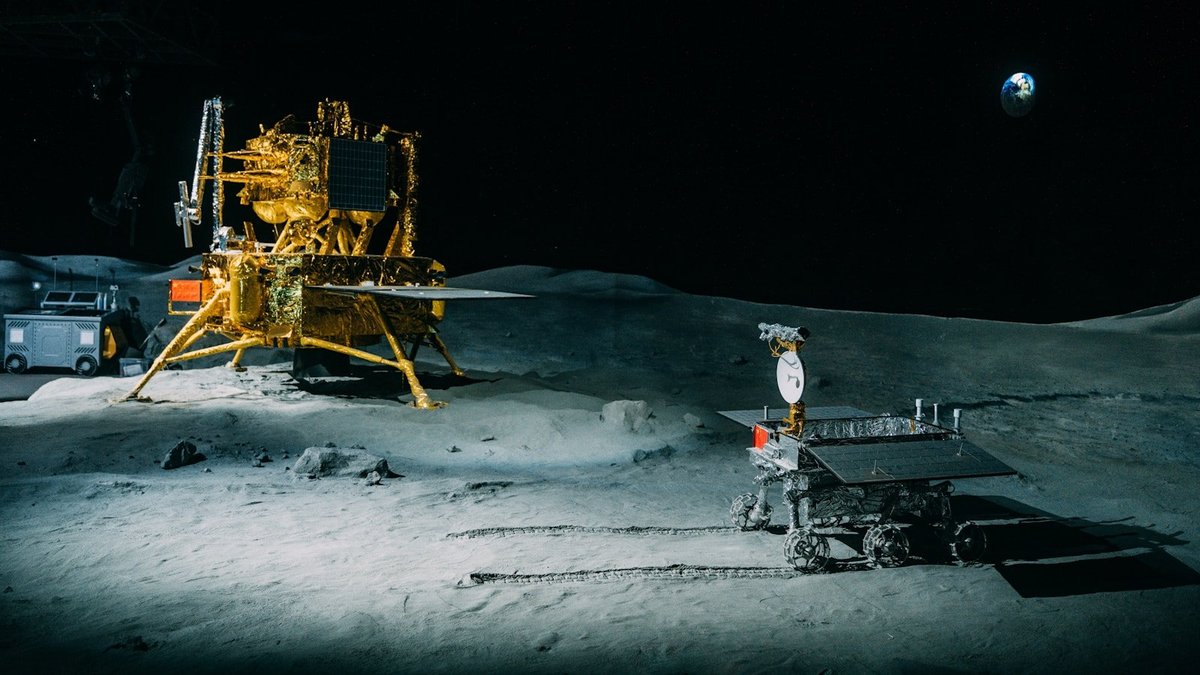
The Moon is the most practical proving ground because it is close to Earth and already central to NASA’s Artemis architecture. Permanently shadowed regions near the lunar poles are especially important. These cold traps can preserve water ice over long periods.
For engineers, that ice represents both an opportunity and a difficult workplace. Polar craters can be extremely cold and dark. Machinery may need to operate in shadow while drawing power from nearby sunlit ridges or from stored energy. Communications and navigation can also be challenging near the poles.
NASA Artemis missions and commercial lunar lander programs are expected to help test the path from resource detection to resource use. Before anyone builds a full propellant plant, missions must answer basic questions. They need to map where water exists, how concentrated it is and how hard it is to extract.
The Moon also offers a manageable supply chain test. A small demonstration could heat icy soil, capture vapor, purify water and split it into oxygen and hydrogen. Even a modest experiment would teach engineers how lunar dust, low gravity and temperature swings affect real hardware.
What would prove the business case
The decisive test is narrow. A space resource company or agency-backed system must make usable propellant away from Earth and deliver it for less than the cost of launching equivalent propellant from the ground. That comparison will determine whether the market grows.
A proof could begin small. A robotic lander might extract water from icy regolith and produce oxygen. A later mission could store cryogenic liquid oxygen for a meaningful period. A still more advanced system could transfer fuel to another vehicle.
Each step would reduce uncertainty. Resource maps would improve mining plans. Processing demonstrations would reveal power needs. Storage tests would show how much propellant is lost to heat. Transfer demonstrations would prove whether spacecraft can refuel safely and repeatedly.
Water’s value in space comes from the roles it can play at once. It supports crews. It shields habitats. It feeds fuel cells. Most importantly, it can become hydrogen and oxygen fuel for spacecraft traveling farther from Earth.
If those systems mature, the first major space-mining business may sell to missions already in space. The prize would be a working supply chain that helps spacecraft keep going. In that future, the most important mined material beyond Earth may be the same substance that fills oceans at home.