NASA’s Europa Clipper mission is heading toward one of the most revealing puzzles in the outer Solar System. Jupiter’s icy moon Europa has so few large impact craters that scientists think its surface has been repeatedly renewed from below, according to the mission’s Europa Clipper page. That clean ice may be the visible sign of a hidden ocean, a restless shell and tidal forces strong enough to keep a small world geologically alive.
Europa looks pale, cracked and strangely smooth in spacecraft images. For planetary scientists, that smoothness is a clue. Across most airless worlds, craters accumulate like a long-term record of collisions. Europa’s surface carries a much shorter record, which suggests that the ice seen today has been erased, shifted, or replaced many times.
The idea is simple, but the implications are huge. A moon that can refresh its surface may have heat inside. Heat can help sustain liquid water beneath ice. On Europa, that possibility has turned a distant moon into one of the most compelling targets in astrobiology.
Europa’s missing craters
Europa’s surface tells its story through absences. In a Solar System full of leftover rock and ice, a surface exposed for billions of years should be crowded with impact scars. Europa has surprisingly few large ones.
NASA describes the key clue plainly, saying that “a lack of large impact craters suggested that the moon’s surface was relatively young.” That statement captures why crater counts matter. Every crater is a timestamp of exposure. Fewer craters usually mean less time spent sitting unchanged under bombardment.
Planetary scientists use crater counting across the Solar System because no field geologist can walk across most worlds with a hammer and sample bag. The method works by comparing how many craters of different sizes appear on a surface. Older landscapes tend to have more of them. Younger landscapes tend to have fewer.
On Europa, the near-clean appearance points to renewal. Ice may move, crack, settle, refreeze, or be replaced by material rising from below. However the details work, the surface has behaved like an active layer rather than a frozen archive.
A surface counted in millions of years
The scale of the age difference is striking. The Solar System is about 4.5 billion years old, yet Europa’s visible surface is often estimated to be only tens of millions of years old. Galileo spacecraft imagery helped build that estimate, with commonly cited ages in the range of roughly 30 million to 90 million years.
That number comes with uncertainty. Scientists have to estimate how often objects strike a moon at Jupiter’s distance from the Sun. They also have to judge how surface processes erase or distort old scars. Even with those uncertainties, the broad message holds together. Europa’s ice is young compared with the age of the Solar System.
Crater counting can feel indirect, but it is one of the strongest tools available from orbit. A fresh volcanic plain on a planet, a newly resurfaced icy moon and an ancient cratered highland all carry different crater populations. Europa falls strongly toward the youthful side of that comparison.
That youth raises a deeper question. A cold body the size of Europa should lose internal heat over time. If its surface has been refreshed again and again, some energy source must still be working inside the moon.
Jupiter’s tides power the ice
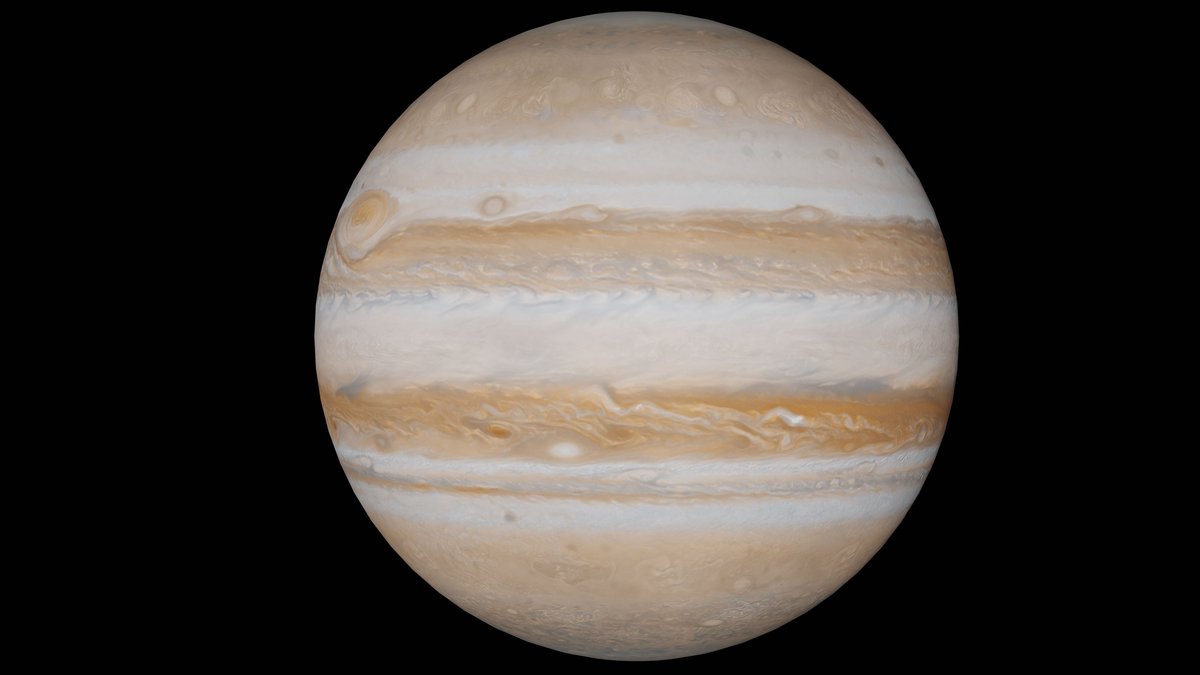
Jupiter supplies the engine. Europa travels around the giant planet on a slightly stretched orbit, shaped by gravitational interactions with neighboring moons such as Io and Ganymede. As Europa moves along that orbit, Jupiter’s gravity flexes the moon.
This repeated flexing produces tidal heating. The process is related to tides on Earth, though Europa experiences it inside a world of ice and rock. The moon is squeezed and relaxed over and over. That mechanical motion can generate heat within its interior.
For Europa, the result may be enough warmth to keep part of the interior from freezing solid. Sunlight is weak at Jupiter’s distance. Internal heat matters far more. Tides give Europa a long-lived way to stay active.
The same basic process helps explain why Io, another moon of Jupiter, is the most volcanically active body in the Solar System. Europa’s response is different because it is wrapped in ice. Instead of lava reshaping a surface, scientists see cracked ice, ridges, bands and jumbled terrain.
Jupiter’s gravity therefore links the moon’s orbit to its geology. A small change in orbital shape can translate into internal motion. Over long spans of time, that motion may help rewrite the surface.
The magnetic clue for an ocean
The strongest evidence for Europa’s buried ocean came from NASA’s Galileo spacecraft, which studied Jupiter and its moons in the 1990s and early 2000s. Galileo carried a magnetometer, an instrument that measured magnetic fields near Europa.
As Jupiter’s magnetic environment swept past Europa, the spacecraft detected a response that scientists interpreted as an induced magnetic field within the moon. That kind of signal fits a salty, electrically conducting layer beneath the ice. A global ocean of briny water would provide such a layer.
NASA summarizes the possibility by saying that “a global subsurface ocean might exist within the icy moon today.” The careful wording matters. Scientists infer the ocean from multiple lines of evidence, especially magnetism and surface geology. The ocean itself remains hidden beneath the ice.
A salty ocean also has astrobiological importance. Salt helps water conduct electricity, which makes the magnetic clue possible. It also suggests that Europa’s interior may have exchanged material between rock, water and ice. That exchange could shape the chemistry of the ocean.
Europa’s ocean is one reason the moon attracts so much attention. Liquid water is only one part of habitability, but it is a major one. Scientists also want to know whether chemical energy and essential ingredients could be present below the surface.
Cracks, ridges and chaos terrain
Europa’s surface has very few large craters, but it is far from featureless. Galileo images revealed long ridges, dark bands, broken plates and regions known as chaos terrain. These areas look like blocks of ice that were disrupted and refrozen in place.
The patterns suggest that the shell has been stressed from below and from the pull of Jupiter. Cracks may open as the ice flexes. Bands may form where the crust pulls apart and new material fills the gap. Ridges may build where fractures are squeezed, reopened and altered over time.
Chaos terrain is especially intriguing because it hints at localized disruption. Warm ice may rise slowly beneath the surface. Pockets of briny water could exist inside the shell. Melt or slush may have helped break apart sections of ice before they froze again.
Scientists are still debating the exact sequence of events. Some models emphasize slow movement in warm ice. Others focus on shallow water lenses, fracturing, or possible cryovolcanism. Each idea tries to explain how Europa’s surface can look so young and broken while remaining locked under intense cold.
Chaos terrain also matters for future exploration. If material from below has reached the surface, spacecraft may be able to study traces of Europa’s interior without drilling through the ice.
What Europa Clipper will test
NASA’s Europa Clipper was built to investigate whether Europa has conditions that could support life. The spacecraft launched in October 2024 and is planned to reach the Jupiter system around 2030. Once there, it will perform repeated close flybys of Europa rather than orbiting the moon directly.
Those flybys will allow the mission to build a detailed picture of Europa’s ice shell, surface composition, magnetic response and interior structure. The spacecraft carries instruments designed to work together. Cameras will map the surface. Spectrometers will study materials. Radar will probe beneath the ice.
One key instrument is ice-penetrating radar, which can search for structure within the shell. It may help scientists estimate ice thickness and look for buried layers or pockets. If the ice contains shallow reservoirs, radar could provide some of the best clues.
The mission will also use magnetometer measurements to refine the ocean case. Galileo’s data provided the breakthrough. Europa Clipper is designed to make more detailed measurements during many flybys, which should help scientists estimate the ocean’s depth, salinity and interaction with the ice.
Ice-penetrating radar and magnetic measurements will be especially powerful together. Radar can study the shell from the top down. Magnetometry can probe the conducting layer from the outside. Combined with images and composition data, the mission can test how the moon’s surface connects to its hidden interior.
Why this moon matters
Europa matters because it turns a surface mystery into a habitability question. The missing craters point to young ice. The young ice points to activity. The activity points to heat, water and chemistry beneath the surface.
For life as we know it, liquid water is essential. Europa may have a global ocean beneath an ice shell and that ocean may have existed for a very long time. A long-lived ocean gives chemistry time to unfold. It also gives scientists a clear reason to study the moon in detail.
The next step is careful measurement. Europa Clipper is designed to assess habitability, which means it will look for the ingredients and conditions that could make life possible. It will search for evidence of an ocean, study the ice shell and examine whether material moves between the surface and the interior.
NASA’s Europa Clipper mission will also help scientists understand icy worlds beyond Jupiter. Moons with hidden oceans are now known or suspected across the outer Solar System. Europa is one of the best laboratories for learning how those worlds work.
The nearly unscarred ice is the invitation. Europa’s surface has been cleaned, cracked and remade on a world that should have gone cold long ago. If the machinery beneath that ice is still running, Europa Clipper may reveal how a moon around Jupiter became one of the most promising ocean worlds in reach.