NASA Johnson Space Center has marked more than 25 years of continuous human life aboard the International Space Station. The unbroken period began when the Expedition 1 crew entered the orbiting laboratory on November 2, 2000. Every day since then, at least one person has been living beyond Earth’s atmosphere.
The milestone represents roughly 9,000 consecutive days of human activity in low Earth orbit. During that time, crews have maintained a complex spacecraft while conducting thousands of experiments. They have also learned how bodies, machines and international partnerships respond to years of continuous operations in space.
NASA and its partners have used the station as an orbital laboratory and a test site for longer journeys. Its history now stretches across several generations of spacecraft. The ISS has been visited by space shuttles, Soyuz capsules, commercial crew vehicles and multiple types of cargo ship.
Expedition 1 starts the unbroken chain
The chain began with three people. NASA astronaut William Shepherd and cosmonauts Yuri Gidzenko and Sergei Krikalev launched aboard Soyuz TM-31 on October 31, 2000. They docked with the station two days later and opened the hatch to their new home.
Expedition 1 arrived at a spacecraft that was still taking shape. The crew activated life-support equipment and communications systems. They unpacked supplies, installed hardware and prepared the station for modules that would arrive during later assembly flights.
Their four-month mission established the pattern that has sustained the station ever since. A departing crew transfers responsibility to astronauts and cosmonauts who are already aboard. Overlapping rotations preserve the human presence while giving each incoming group time to learn the station’s current condition.
Building a station around its first residents
Only three major elements were waiting when the first residents arrived. The Russian-built Zarya module provided early power and propulsion capabilities. The American Unity node connected station components, while the Russian Zvezda service module supplied essential living space and life-support equipment.
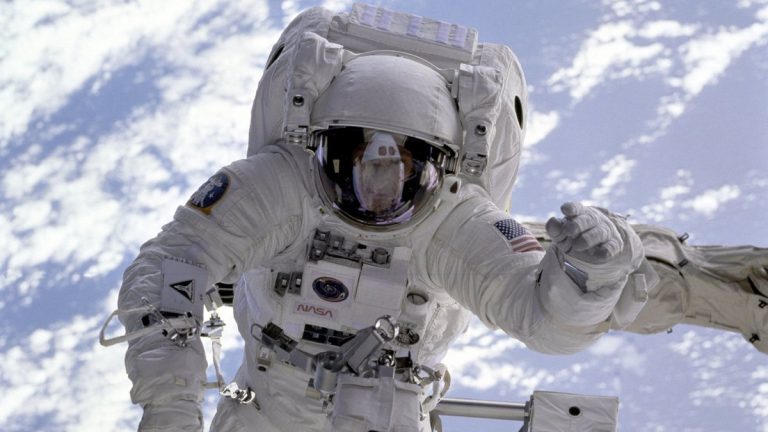
Construction continued around the crews for more than a decade. Space shuttle missions carried laboratories, connecting nodes, airlocks, truss sections, radiators and large solar arrays. Astronauts often assembled these components during demanding spacewalks while traveling around Earth at orbital speed.
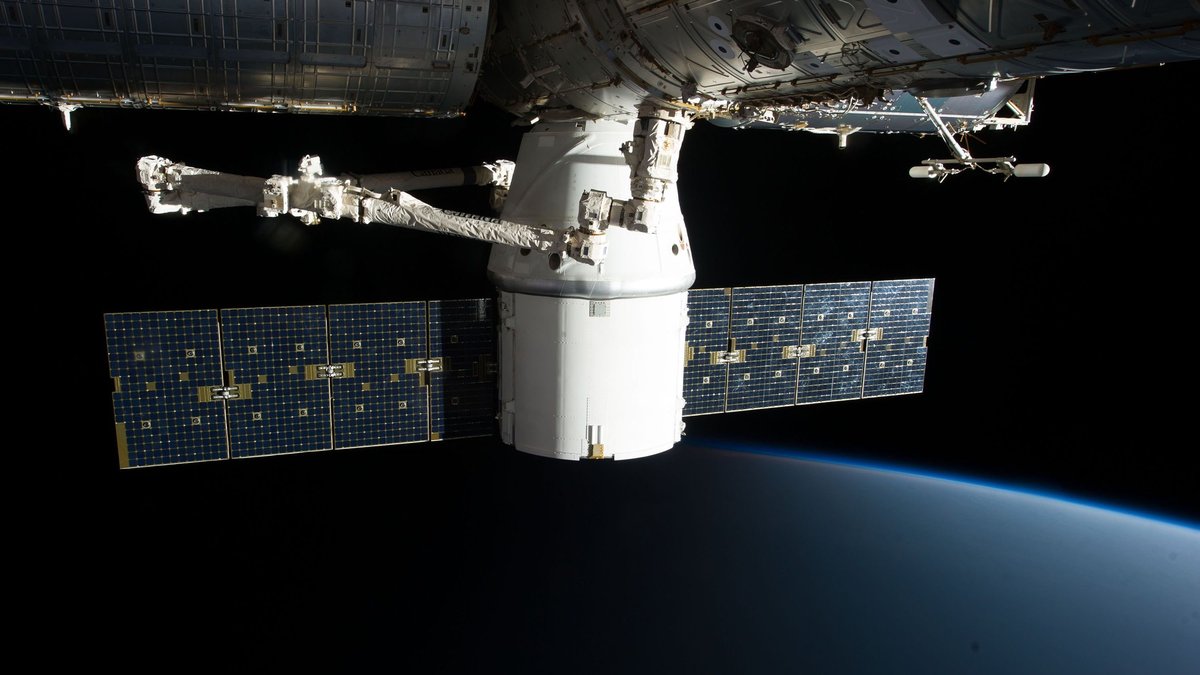
The completed complex grew into one of the largest objects ever assembled in space. Its pressurized volume is about 916 cubic meters. Laboratories and living areas are distributed across connected modules built by the United States, Russia, Europe, Japan and other international partners.
That architecture allows crews to move between sleeping quarters, laboratories, exercise equipment, storage areas and docking ports. The station also carries extensive machinery outside its inhabited sections. Solar arrays generate electricity while radiators release excess heat into space.
What continuous occupation requires
The ISS circles Earth at an altitude of roughly 400 kilometers and travels close to 28,000 kilometers per hour. It completes an orbit about every 90 minutes. Crew members can therefore experience around 16 sunrises and sunsets during a single Earth day.
Living continuously at that altitude requires constant maintenance. Traces of Earth’s upper atmosphere create drag and gradually lower the station’s orbit. Visiting spacecraft or station engines periodically perform orbital reboosts to restore altitude and position the complex for future operations.
Inside the station, life-support systems remove carbon dioxide and help generate breathable oxygen. Water recovery equipment processes moisture from cabin air and other sources. Cargo missions still deliver food, replacement components, scientific equipment, clothing and additional water.
Exercise is another essential part of orbital life. Microgravity reduces the mechanical loads normally placed on muscles and bones. Astronauts spend substantial time using a treadmill, stationary bicycle and resistance equipment to limit those changes during long missions.
Teams on Earth watch the station around the clock. Flight controllers monitor power, temperature, navigation, communications and life support. Mission planners also coordinate arriving vehicles and research schedules while tracking debris that could approach the station’s orbit.
25 years of science in orbit
More than 4,000 research investigations and technology demonstrations have been conducted through the station program. Researchers from about 110 countries have contributed to that work. The experiments cover human biology, materials science, combustion, physics, Earth observation and advanced manufacturing.
The station’s main scientific advantage comes from microgravity research. Objects in orbit remain in continuous free fall, which greatly reduces the effects of weight inside the laboratories. Scientists can study fluids, flames, cells and crystals under conditions that are difficult to maintain for long periods on Earth.
Human research has examined changes in bone density, muscle strength, vision, immunity, sleep, balance and cardiovascular function. NASA’s Twin Study compared astronaut Scott Kelly during nearly a year in orbit with his identical twin Mark Kelly on Earth. The project gave researchers a detailed view of how extended spaceflight can influence the human body.
Other investigations have explored protein crystals and potential drug compounds. Experiments have tested how plants grow when gravity no longer guides roots and stems in their familiar directions. Materials studies have examined alloys, fibers, semiconductors and other substances whose formation can change in orbit.
The ISS has also become a test bed for technologies needed on future missions. Water recycling, environmental monitoring, autonomous equipment, radiation measurement and spacecraft maintenance all have direct relevance to expeditions beyond low Earth orbit. Crews traveling toward the Moon or Mars will have fewer opportunities for rapid resupply or emergency return.
Records set aboard the ISS
A quarter century of continuous operations has produced a long list of human spaceflight milestones. Peggy Whitson became the first woman to command a space station in 2007. Christina Koch and Jessica Meir carried out the first all-female spacewalk in October 2019.
Koch later completed 328 consecutive days in space. That mission set the record for the longest single spaceflight by a woman. NASA astronaut Frank Rubio spent 371 days in orbit during 2022 and 2023, setting the American record for a single mission.
Commercial transportation also changed how crews reach the station. In 2020, NASA astronauts Bob Behnken and Doug Hurley flew to the ISS aboard SpaceX Crew Dragon during Demo-2. The mission restored crew launches from the United States and opened a new operational route to the station.
Private astronaut missions began visiting the complex in 2022. These flights have combined commercial activity with research and outreach. They also provide early experience for companies planning privately operated destinations in low Earth orbit.
The station now commonly supports crews of about seven people. During vehicle exchanges and earlier shuttle-era handovers, the number aboard has climbed as high as 13. Each temporary increase places added demands on sleeping space, supplies, life support and daily scheduling.
How the partnership survived repeated crises
The ISS is operated through one of the most complex international partnerships in science. NASA works with Roscosmos, ESA, the Japan Aerospace Exploration Agency and the Canadian Space Agency. Each partner manages hardware and operational responsibilities tied to its contribution.
That shared structure has preserved the continuous human presence through spacecraft groundings, launch delays, pandemics, political disputes and changing national priorities. Crews have remained aboard during periods when individual transportation systems were unavailable. Mission planners adjusted schedules and relied on other vehicles to keep the station supplied.
Orbital debris has created another persistent hazard. Controllers track objects that may pass near the station and plan avoidance maneuvers when required. Crews can shelter inside docked spacecraft if an object is detected too late for the station to move safely.
Redundancy helps keep problems from ending the mission. The station has multiple power channels and several docking ports. Crews can repair many systems with tools and replacement components already aboard. Engineers on Earth develop procedures when equipment behaves in unexpected ways.
Continuity also depends on people who never travel to orbit. Thousands of engineers, researchers, trainers, manufacturers, medical specialists and flight controllers support each expedition. Their work turns overlapping crew rotations into a sustained program rather than a sequence of isolated flights.
The possible gap after ISS retirement
The station was never designed to operate indefinitely. Its structure has endured repeated heating and cooling cycles as it passes between sunlight and darkness. Components also face radiation, microscopic impacts, vibration and the cumulative stresses of decades in orbit.
NASA’s established planning has aimed toward ending ISS operations around 2030. A controlled deorbit would guide the remaining structure into a remote region of the ocean. The timing will depend on spacecraft condition, partner decisions and the readiness of systems needed to complete the disposal safely.
Several companies have proposed or begun developing commercial space stations. These projects include concepts from Axiom Space, Vast, Starlab and Orbital Reef. NASA hopes to purchase research and astronaut services from private destinations rather than operate another government-owned station in low Earth orbit.
A timing mismatch could interrupt the streak that began in November 2000. A commercial destination would need to reach orbit and complete testing before the final ISS crew departs. It would also require reliable transportation, life support, power, docking systems and a plan for maintaining a resident crew.
The transition carries scientific consequences alongside its symbolic importance. Continuous occupation gives researchers access to trained crew members who can operate experiments, repair equipment and respond to unexpected results. It also preserves decades of experience in supporting humans away from Earth.
The ISS has already demonstrated that an orbital outpost can remain inhabited across a quarter century. Whether that presence extends seamlessly into a new generation of stations will depend on decisions made before the current laboratory completes its final orbit.