Ocean water can freeze into a broad, floating skin called sea ice at its surface. Each polar winter, cold air pulls heat from the sea surface until crystals begin to form. The result can spread across millions of square kilometers. Its growth responds to wind, waves and currents. Salt and changing sunlight matter too.
The National Snow and Ice Data Center describes sea ice as frozen seawater. The difference between freezing at the surface and freezing solid matters. Seawater carries dissolved salts and the new ice steadily changes both the water it covers and the water below. A frozen ocean surface is therefore a seasonal process as well as a striking landscape.
Salt lowers seawater’s freezing point
Fresh water freezes at 0 degrees Celsius, or 32 degrees Fahrenheit. Typical polar seawater begins freezing near minus 1.8 degrees Celsius, or 28.8 degrees Fahrenheit. Its exact freezing point shifts with salinity. Saltier water needs a lower temperature before crystals can hold together.
Cooling also reaches deeper than the top film of the ocean. As seawater near the surface cools, it becomes denser and sinks. Water from below replaces it and must cool in turn. NSIDC says that roughly the upper 100 to 150 meters may need to reach the freezing temperature before sea ice forms, which helps explain the gradual start of the winter cover.
The freezing threshold varies from place to place. River water can freshen coastal seas, while evaporation and other processes can raise salinity elsewhere. Local winds also stir the upper ocean and redistribute heat. A forecast of air temperature alone therefore cannot tell the full story of where ice will first appear or how quickly it will spread.
Crystals build a floating sea-ice cover
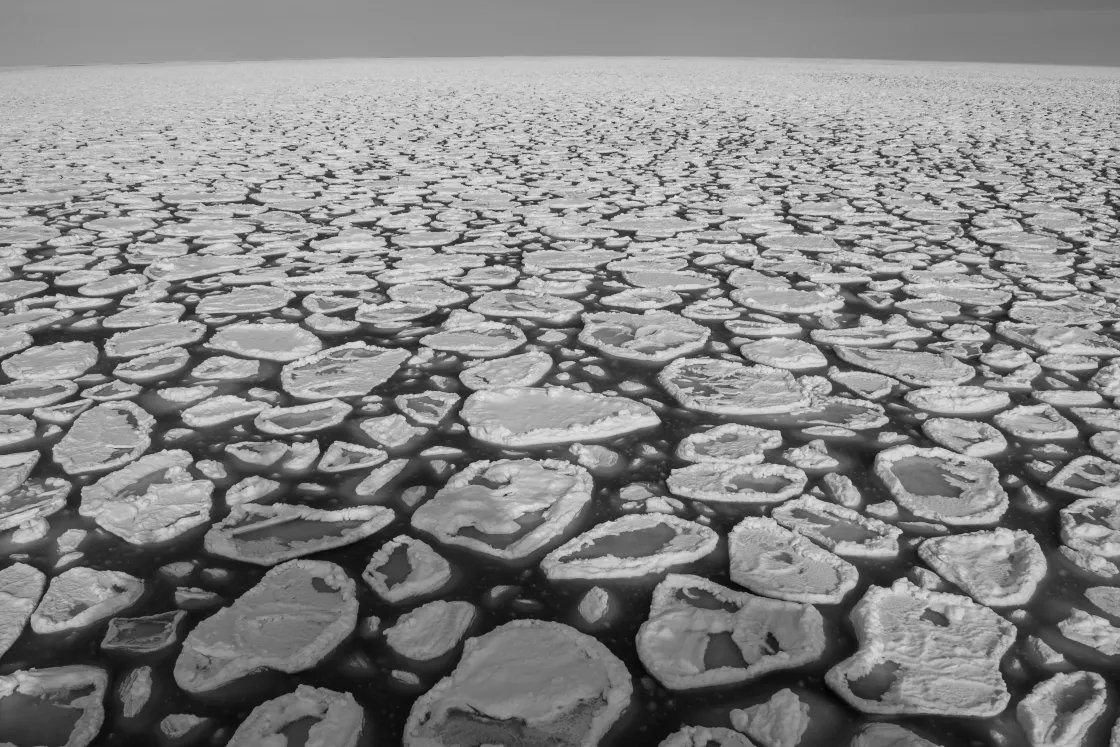
Once the threshold is reached, tiny needle-shaped frazil crystals appear in the water. They rise, collect at the surface and stick together. In quiet conditions, the early slush can become a thin, smooth layer. In rougher water, wave action gathers the crystals into round disks called pancake ice.
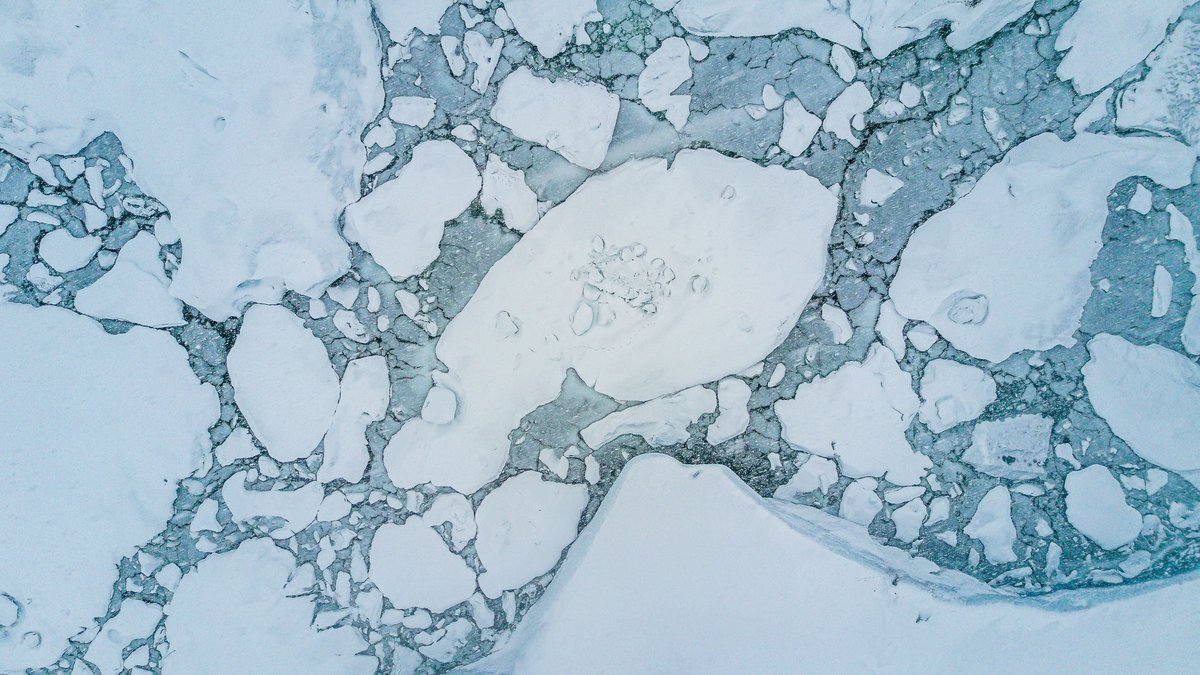
Frazil crystals gradually join into sheets. Winds and currents can push thin sheets over one another, a process called rafting. Later, ice continues to grow from its underside as heat leaves the water. Slower growth creates vertical crystals known as congelation ice. The cover remains mobile, so floes may crack apart, collide, or pile into ridges while it thickens.
Ice that survives one winter is called first-year ice. Some ice endures the following summer and enters the next cold season as multiyear ice. Summer melting flushes out more brine, leaving older ice with more air pockets and less salt. Its history is recorded in its texture as well as its thickness.
The crystals collect at the top because ice is less dense than the liquid water around it. The young ice therefore floats and growth continues mainly along its underside. Pressure ridges reveal the same buoyancy on a larger scale: a visible crest can rise above the surface while a much larger keel extends below it. Ice’s floating geometry is central to the ocean’s winter response.
Brine changes the water beneath the ice
Salt does not fit easily into the crystal structure of freezing ice. As frazil forms, much of that salt is pushed into concentrated liquid called brine. Brine rejection leaves the newest ice relatively fresh compared with the seawater around it. Some brine stays temporarily trapped between crystals.
Over time, gravity, cracks and meltwater help the brine drain through brine channels into the ocean. The surrounding water becomes saltier and denser, so it can sink and contribute to local ocean circulation. Older ice has had more time to lose brine and develop air pockets. Salt drainage is one reason age changes the physical character of sea ice.
The exchange also links a thin surface layer to deeper water. Where large amounts of sea ice form, repeated brine release can help make dense water that sinks. The outcome depends on the local geography, currents and amount of mixing. Scientists include these details when they study polar circulation, because salt and heat travel together through the system.
Ice slows the loss of ocean heat
After a continuous cover forms, it becomes a lid between the cold air and the comparatively warmer ocean. Heat must travel through the ice before escaping to the atmosphere. The NSIDC sea-ice overview notes that the cover insulates ocean water, except where openings called leads allow direct exchange.
Thickness changes the pace. A thin sheet lets ocean heat pass through more readily, so water below can keep cooling and add ice at the bottom. As the sheet grows thicker, that route becomes slower. Snow adds another insulating layer. It slows winter growth and can also delay melt when warmer weather returns.
Leads create a very different patch of the winter ocean. A newly opened lead releases heat and moisture directly into frigid air. It can refreeze quickly, adding fresh sea ice and more brine to the surface water. Winds may close the crack again, or keep it open long enough to reshape the local ice cover.
Why water remains beneath thick sea ice
A floating cover grows at the surface, where the ocean loses heat to cold air. Its increasing thickness creates a thermal barrier, so each added layer slows the next layer’s growth. Water below stays liquid while it remains warmer than its local freezing point. Currents, mixing and heat arriving from deeper water can also keep some places from building ice or can melt ice from below.
Surface freezing allows a polar sea to carry thick ice without turning into a solid block from surface to seafloor. The ocean is deep, moving and supplied with heat from below the ice. Open-water areas called polynyas can persist when warmer water rises or when winds keep newly formed ice moving away. The ice cover and the liquid ocean continuously influence each other.
Seasonal timing supplies another limit. The cold season has only so many days for heat to leave the ocean before sunlight returns and air temperatures rise. A sheet may grow through winter, thin through summer and then begin another cycle. The result is a layered, mobile cover above a large liquid reservoir rather than a one-time freezing event.
Arctic and Antarctic sea ice follow different seasons
Sea ice grows through autumn and winter, then retreats through spring and summer in both hemispheres. The timing is opposite north and south of the equator. The Arctic usually reaches its annual maximum around March and its minimum around September. The Arctic seasonal record also shows that ocean temperatures lag behind changes in air temperature.
Geography gives the two regions distinct ice stories. The Arctic is an ocean basin largely enclosed by land, a setting that has supported persistent multiyear ice. Antarctica is a continent surrounded by the Southern Ocean, where winds and currents spread seasonal ice far outward in winter and where much of it melts during summer. NSIDC’s polar comparison shows why regional conditions matter as much as the thermometer reading.
Regional freeze and melt patterns matter for wildlife, shipping, weather and climate observations. A map of sea ice is a snapshot of conditions shaped by the season and by local forces. Even during winter, ocean currents can carry heat into regions where new ice is forming. Long records help scientists separate a brief weather-driven swing from a larger pattern. The basic answer remains clear: the ocean can freeze at its surface. Its salt, depth, motion and changing seasons keep the process dynamic.
Freshwater follows a different freezing pattern. Argo’s lake guide explains how quickly lake ice forms and why depth, wind and snow alter the timing.