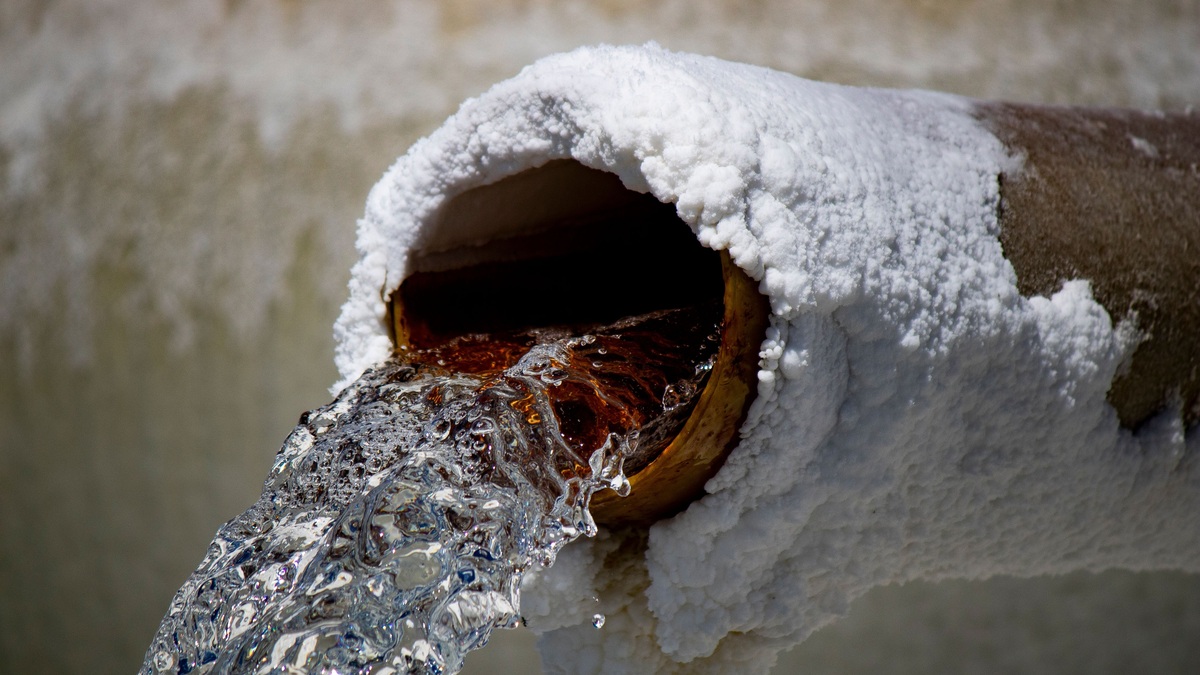
An artesian well taps a confined aquifer whose water is under enough pressure to rise inside the well above the top of the aquifer. If the pressure lifts water above the land surface, the well flows without a pump. Many artesian wells do not flow at the surface and a deep well is not automatically artesian.
The mechanism depends on hydraulic pressure rather than suction. Recharge enters the aquifer where its permeable layer is exposed at a higher elevation. Less-permeable layers restrict escape, allowing the confined water to retain enough hydraulic head to rise when a well provides an opening.
A confined aquifer creates artesian pressure
An aquifer transmits water through connected pores or fractures. In an unconfined aquifer, its upper saturated boundary is the water table. A confined aquifer lies beneath a layer such as clay or shale that transmits water much more slowly. The USGS explanation of groundwater storage shows how the arrangement of permeable and confining materials controls underground water. Water within the permeable layer can then remain pressurized.
The aquifer must still receive recharge somewhere. Its water-bearing formation may reach the surface uphill, where rain or snowmelt enters. Groundwater moving down through the formation gains pressure at lower elevations because the recharge area has greater hydraulic head.
The USGS explanation of artesian water stresses that confinement and pressure define the system. Ordinary conversation sometimes labels every deep rock well artesian, but depth alone says nothing about whether water is confined.
Water rises to the potentiometric surface
Drilling through the confining layer gives water a path upward. It rises in the casing until the water column balances the aquifer’s pressure. The level reached in a tightly cased well represents the local potentiometric surface, an imaginary pressure surface mapped from many measurements.
If that surface lies below the land, water rises partway but requires a pump for use. If it lies above the ground at the well, water can discharge naturally. The term flowing artesian well identifies this second case. It is a subset of artesian wells rather than the definition of all of them.
Flow does not provide unlimited water. Discharge lowers pressure around the well and heavy regional pumping can lower the potentiometric surface. A formerly flowing well may stop flowing while still containing water. A pump may then be needed to lift it the remaining distance.
The pressure level can also vary with season or long-term recharge. Monitoring must use a consistent reference elevation. A depth below the casing top becomes meaningful only after that point is surveyed and the well’s pumping status is recorded.
How an artesian well differs from other wells
A water-table well is open to an unconfined aquifer. Its standing water level generally follows the nearby water table and pumping creates a localized cone of depression. An artesian well responds to pressure in a confined system, so its water level may stand far above the screened interval.
Both types need sound casing, an appropriate screen or open interval and protection from surface contamination. Artesian pressure does not guarantee purity. Groundwater can contain dissolved minerals, naturally occurring contaminants or pollution introduced in the recharge area.
A spring can also discharge under groundwater pressure without a drilled casing. The distinction is the engineered opening. Wells are constructed to reach a selected aquifer, while springs occur where geology and topography bring groundwater naturally to the surface.
Why some artesian wells flow strongly
The height difference between the recharge area and the well contributes hydraulic head. Aquifer permeability controls how readily water can reach the opening. The resistance of the confining layers helps retain pressure, while fractures or other leaks can reduce it.
Well diameter does not create artesian conditions, although construction influences discharge. A highly transmissive aquifer can supply water rapidly enough to sustain a strong flow. In a less productive formation, the initial rise may be impressive but the rate can decline as pressure near the well drops.
Nearby pumping matters because pressure changes spread through confined aquifers. Their cones of depression may extend over a broad area. A municipal well can affect domestic artesian levels at considerable distance, depending on aquifer properties and the duration of withdrawal.
Flowing water still needs to be controlled
An uncontrolled flowing well wastes groundwater and can erode soil around the casing. It may also connect aquifers with different water quality if construction is poor. Valves and properly sealed casing allow the owner to stop the discharge when water is not being used.
Rules for construction and abandonment are usually set by state or local authorities. Old wells need proper sealing so they do not become vertical pathways for contamination. The EPA’s private-well resources remind owners that private drinking-water wells are generally the owner’s responsibility under federal law.
Testing remains essential. Clear, cold water can still contain bacteria, nitrate, arsenic or other constituents that cannot be identified by taste or appearance. A local health or water agency can specify suitable tests based on geology and nearby land use.
Argo’s introduction to alluvial aquifers shows a common unconfined setting, while river baseflow illustrates another way groundwater reaches the surface. Artesian wells belong to the same water cycle, but their visible rise comes from pressure retained in a confined layer.
What the flowing well reveals underground
An artesian well is evidence of a hydraulic connection between a higher recharge zone and a confined aquifer at the well site. It does not prove the water came from a distant mountain, nor does it establish a particular age. Tracers, chemistry and groundwater models are needed to resolve those questions.
Pressure is also distinct from the amount of water stored. A thin confined aquifer may have high head but limited capacity. A thick aquifer can hold abundant water yet have insufficient head to flow at the surface. Sustainable yield depends on recharge, natural discharge and pumping across the entire system.
The operating principle can be stated precisely: a well penetrates a confined aquifer and hydraulic head raises water above the aquifer’s roof. When that head exceeds land elevation, gravity carries water out of the casing. The result looks effortless at the surface because the energy was supplied by elevation and water pressure elsewhere in the aquifer.
Common artesian-well misconceptions
Artesian water is not a special chemical type. The label describes its hydraulic setting. Its mineral content reflects the rock it contacted and the time spent underground, so two artesian aquifers can produce very different water. Bottling the water does not change the physical definition.
A flowing well is also not a perpetual-motion system. Recharge at higher head supplies potential energy and discharge releases it. If withdrawal exceeds replenishment or nearby pumping reduces pressure, flow weakens. Closing a control valve conserves head and prevents unnecessary loss.
Confined does not mean sealed forever. Water enters through recharge areas and can leak across confining layers. Faults, poorly abandoned wells or permeable windows may connect formations. Those pathways help determine water age and vulnerability to contamination.
Finally, pressure is not proof of a vast underground lake. Most groundwater remains within pores or fractures. The rising column in the casing makes the pressure visible, much as a piezometer displays head in other hydraulic systems.
Monitoring protects the pressure system
Wellhead protection remains necessary even when the producing interval is confined. A damaged casing can give shallow water a direct route downward, bypassing the slow confining layer that otherwise offers protection. Regular inspection preserves the hydraulic separation on which the well depends.
Measuring flow and pressure over time can reveal regional changes before a supply fails. A declining artesian head across several wells points toward reduced recharge, increased withdrawal or both. One erratic well may instead have a valve, casing or measurement problem that requires local inspection.