The hidden strain of a simulated lunar mission appeared in saliva, urine and sleep records within a single week. Five young crew members living in a sealed Moon-like habitat developed higher levels of cell-damaging chemicals and the stress hormone cortisol as their sleep became shorter and less restful.
The findings come from a peer-reviewed study published in the European Journal of Applied Physiology. Researchers followed the EMMPOL 6 crew from the first day of confinement to the final day, collecting biological samples each morning while wearable devices recorded movement, heart rate and sleep.
The experiment was small and took place on Earth, yet the rapid changes offer a warning for missions that keep crews isolated under artificial schedules. Future astronauts may spend weeks or months inside compact vehicles and surface habitats, where sleep loss can combine with heavy workloads and psychological pressure.
Inside the EMMPOL 6 habitat
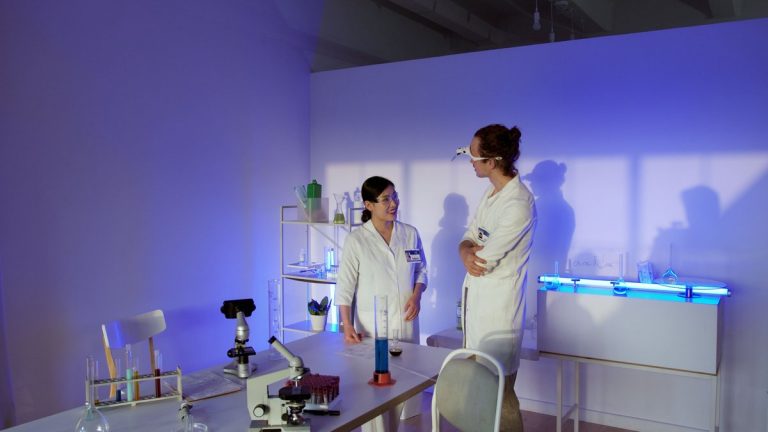
The EMMPOL 6 experiment took place at the Analog Astronaut Training Center in Poland in October 2021. Four men and one woman, with an average age of about 22, spent seven days inside a habitat designed to resemble a small lunar settlement. The mission formed part of the Euro Moon Mars projects connected with the International Lunar Exploration Working Group.
Within the 57-square-meter habitat, the crew shared working and dining rooms, a bedroom, a bathroom and a small exercise area. Natural light and outside ventilation were absent. Artificial light remained present during sleep, while poor air circulation allowed carbon dioxide levels to rise. Conditions inside the habitat reproduced several pressures that may affect crews during long journeys, including confinement, isolation, disrupted schedules and limited personal space.
Each participant held a mission role, such as commander, medical officer, data officer, or communications officer. Their days included research tasks and scheduled exercise. Mission control also introduced emergency drills involving events such as air leaks, fires and solar storms, forcing the crew to stop planned work and respond under pressure.
Daily samples tracked the crew’s stress
Every morning, the crew medical officer collected saliva and urine shortly after the participants woke and before they ate breakfast. Samples were gathered from T0, the first mission day, through T6, the last day. Researchers used them to measure hormones and signs of chemical stress inside the body.
Laboratory teams at the University of Padova and the Italian National Research Council examined several markers. They measured reactive oxygen species in saliva, antioxidant capacity, cortisol and hormones linked with appetite and growth. Urine tests tracked lipid damage, inflammation and kidney-related markers.
Alongside the biological tests, wearable devices recorded steps, exercise time, resting heart rate and estimates of sleep stages. Crew members also rated their own sleep quality. The devices were consumer fitness bands, so the research team treated their results as descriptive measurements rather than clinical-grade readings.
Oxidative stress rose within days
By day five, the crew’s production of reactive oxygen species, often shortened to ROS, had risen sharply. ROS levels were 114 percent higher on T5 than on the first day. By T6, the increase reached 158 percent compared with T0.
Reactive oxygen species are highly active chemicals produced during normal metabolism. The body usually controls them with antioxidants. When production rises beyond the available defenses, the resulting oxidative stress can damage fats, proteins and genetic material inside cells.
The crew’s total antioxidant capacity fell by about 10 percent on the final day. Urinary 8-isoprostane, a marker of damage to fats in cell membranes, rose by 49 percent compared with the start of the mission. The study abstract summarized the central result directly: “Oxidative stress increased in a short period of time.”
Inflammation followed a different course. Levels of interleukin-6, a widely used inflammation marker, showed no significant change. The participants were young and healthy and the mission lasted only one week, which may have limited wider biological effects. Stable kidney-related markers also suggested that the crew maintained hydration and basic kidney function during the experiment.
Cortisol climbed by the final day
Salivary cortisol was about 70 percent higher on T6 than on T0. Cortisol helps the body respond to pressure by changing energy use and supporting alertness. Its release normally follows a daily rhythm, with levels often rising around waking and changing through the day.
Life inside the habitat placed that rhythm under strain. Mission time became separated from ordinary clock time, while mission control shifted sleep and wake periods away from the usual cycle of daylight and darkness. Artificial light remained present in the bedroom and the crew faced demanding work with occasional simulated emergencies.
Several forces could have contributed to the hormonal rise. Psychological pressure from confinement may have played a role, while heavier exercise and shorter sleep could have added physical stress. The study design cannot separate the contribution of each factor because they changed together during the same week.
Leptin and insulin-like growth factor 1 showed no statistically significant changes. Leptin is involved in hunger and energy balance, while insulin-like growth factor 1 supports growth and tissue maintenance. A balanced diet, shared meals and regular water intake may have helped keep those measures stable.
Shorter sleep followed higher cell stress
Sleep deteriorated as the mission continued. By the last day, daily sleep duration was 81 percent lower than it had been on T1, according to the study’s recorded comparisons. Self-rated sleep quality fell by 57 percent between the same days, while estimated rapid eye movement sleep changed sharply during the week.
Rapid eye movement, or REM sleep, is a stage linked with vivid dreaming and several forms of brain processing. The wearable estimates showed a 69 percent increase on T2 compared with T0, followed by a 90 percent decline between T2 and T6. Consumer devices have limited accuracy for identifying sleep stages, so the REM figures require particular care.
Researchers found that shorter sleep was associated with higher ROS production. The correlation between sleep duration and ROS was negative, meaning ROS tended to rise as sleep hours fell. Shorter sleep was also linked with higher levels of 8-isoprostane, the marker of lipid damage.
A correlation cannot prove that sleep loss directly caused the chemical changes. Stress, exercise, artificial lighting and the altered schedule may have influenced both sleep and oxidative stress. Even so, the paired daily measurements suggest that sleep protection deserves close attention during confined missions.
Exercise increased during confinement
Physical activity formed a major part of the mission plan. The crew was encouraged to exercise for about one hour each day, using a treadmill, an exercise bike, stretching mats and body-weight movements. Participants aimed to keep their heart rates within a set training range.
During several parts of the mission, the crew devoted more time to exercise. The researchers reported significant differences in exercise duration, with activity time on T3 and T4 roughly 64 percent and 61 percent above the level recorded on T6. Emergency drills and a crowded work schedule sometimes reduced the time available.
Regular movement probably helped the participants maintain stable body mass and basic physical measures during confinement. Their average body weight changed very little, from 65.9 kilograms at the beginning to 65.8 kilograms at the end. Blood oxygen levels and resting heart rates also remained within a generally stable range.
Exercise can also increase ROS production because active muscles use more oxygen and release more metabolic byproducts. The observed oxidative stress may therefore reflect a combined response to heavier activity, restricted sleep and psychological pressure. A larger study with controlled exercise levels could help separate those influences.
What the results could mean for space crews
A long analog astronaut mission can reproduce parts of life in a spacecraft or planetary base while remaining close to medical support on Earth. The EMMPOL 6 habitat reproduced confinement, artificial schedules, group living and mission pressure. Actual spaceflight adds microgravity, radiation exposure, launch forces and limited options for evacuation.
Future crews traveling to the Moon or Mars will need reliable ways to detect health changes before performance declines. Saliva and urine collection could support that goal because the methods are less invasive than repeated blood draws. Small wearable sensors may also help mission doctors follow sleep and movement over time, although medical decisions require devices with stronger scientific validation.
The daily measurements suggest that circadian rhythm protection may be as important as physical training. Stable sleep schedules, controlled lighting and enough recovery time could reduce the chemical strain associated with long work periods. Exercise plans may also need to balance fitness benefits with the crew’s total workload.
The article, which is indexed in PubMed, places the findings within a wider field of studies on submariners, sailors, divers, polar crews and other people living in isolated environments. Similar settings allow researchers to examine stress responses without exposing participants to the hazards of spaceflight.
Five participants limit the findings
Five people provide only an early view of how crews may respond. Individual differences can strongly affect sleep, cortisol, exercise habits and reactions to confinement. The group also included four men and one woman within a narrow age range, so the results cannot describe astronauts of different ages and backgrounds.
The lack of a separate control group creates another limitation. Researchers could compare each participant with their own earlier mission measurements, yet they could not compare the crew with a similar group living under normal lighting and sleep schedules. Measurements before and after the mission were also limited, with post-mission step data available from only three participants.
Consumer fitness bands added uncertainty to the sleep and activity results because the research team could not access the raw sensor data. Manufacturer algorithms produced the reported estimates and the devices were not validated for medical use. Laboratory measurements of saliva and urine offered stronger evidence for the biological changes, while the wearable data supplied useful context.
The open full text describes the work as a pilot study and larger experiments will be needed to test the findings. Future research could include longer missions, balanced participant groups, clinical sleep equipment and reference periods before and after confinement. Separating sleep restriction from exercise and psychological stress would also help researchers identify which mission conditions produce the greatest biological load.